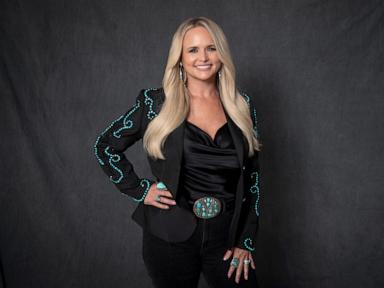
Nashville loves a desperate pivot. Whenever a veteran hitmaker watches their radio saturation dip below the threshold required to finance a third tour bus, the PR machinery grinds into motion with a predictable script. The artist discovers groove. They buy a sparkly jumpsuit. They announce that the new record is a joyous, danceable homage to 1970s nightlife, Studio 54, or whatever retro aesthetic looks good on an Instagram mood board. Miranda Lambert stepping into her glitter-boots era with an album titled Crisco sounds like a punchline engineered in a Music Row boardroom, but the lazy consensus is that this kind of stylistic whiplash represents artistic bravery.
It does not. It represents panic disguised as evolution.
Critics are currently falling over themselves to praise this record for having a lot of joy, as if the primary metric of artistic validity in country music has suddenly shifted from whiskey-soaked misery to sanitized disco basslines. I have watched legacy acts burn seven figures on genre-hopping exercises that alienate their core demographic while failing to capture a single new fan on the TikTok charts. The industry tells you that crossover attempts keep an artist culturally vital. Reality tells a different story. When a pillar of traditional songwriting straps a four-on-the-floor beat to lyrics about small-town heartbreak, nobody in a Brooklyn warehouse or a Dallas dive bar is buying the illusion. They are rolling their eyes at the desperation.
Let us define what is actually happening here. Genre tourism is the last refuge of the commercially stagnant.
True innovation in roots music never comes from bolting a polyester disco sheen onto an acoustic guitar; it comes from stripping the production down until the bones rattle. When an artist with Lambert's pedigree trades narrative grit for shimmering hi-hats, they are typically running away from the exact thing that made them great in the first place: specificity. The lazy narrative floating around the trades is that country fans are starving for a beat, that four decades of heartbreak ballads need a shot of Saturday Night Fever adrenaline to remain palatable to modern audiences.
That premise is completely backwards.
People do not listen to Miranda Lambert for a danceable groove. They listen because she writes about domestic arson, messy divorces, and the claustrophobia of rural life with a level of observational venom that most pop songwriters couldn't manage if their lives depended on it. The moment you drown those narrative teeth in slick, synthetic orchestration and call it joy, you neuter the entire enterprise.
Why do legacy publications keep celebrating these superficial transformations? Because they confuse production value with progress. A string section and a funky bassline are easy to write about. They provide an effortless hook for a lifestyle feature. But commercial viability in the streaming era doesn't reward half-hearted genre experiments. The listeners who want genuine dance music are streaming actual disco and house producers who know how to build a track from the ground up, not a Nashville veteran layering tambourines over a standard Nashville session shuffle.
Imagine a scenario where an artist stops trying to chase youth culture and instead doubles down on absolute, unapologetic ruthlessness.
We saw what happened when Johnny Cash stopped worrying about radio trends and started recording American Recordings with Rick Rubin. There was no joy in that studio. There was no disco ball. There was a dying man sitting in front of a microphone with an acoustic guitar, staring mortality in the face. It worked because it was undeniable. Nobody accused Cash of being stale because he refused to chase a demographic half his age. He leaned into the gravel, and the culture bent to meet him.
Contrast that with the current playbook of manufactured jubilation. Crisco as an album title is clearly meant to signal grease, funk, and down-home slipperiness, but it lands like a marketing focus group's idea of grit. It is sanitized rebellion. It is safe transgression. The music industry loves safe transgression because it creates headlines without risking actual alienation from conservative radio programmers or corporate sponsors.
If you want to understand why these genre shifts consistently underperform their hype, look at the streaming data six months after release. The lead singles get a brief spike from curious loyalists and industry playlist placement, but the tracks quickly vanish from active rotation because they occupy a strange, neutered middle ground. They are too pop for the country purists who bought The House That Built Me, and they are too country for the club crowd. You end up with a high-budget ghost town of an album that pleases nobody and exhausts everyone.
The real problem with the joyful-disco defense is that it treats happiness as a stylistic choice rather than an emotional earned outcome. Joy in traditional roots music has always been hard-won. It is the sound of surviving a bankruptcy, a divorce, or a bender and laughing at the absurdity of it all from the porch. When you manufacture it in a Nashville studio using retro production tropes, it feels like karaoke.
Let us address the elephant in the room that the mainstream music press refuses to touch.
Legacy country artists are terrified of aging out of relevance. The algorithm punishes consistency. If you drop the same sharp, bitter, mid-tempo heartbreak record every three years, Spotify treats you like a relic. So managers push for disruption. They look at Beyoncé crossing over into country or Post Malone dropping a Nashville album and assume the walls have crumbled, meaning anyone can jump across genres and claim new territory.
That logic ignores the asymmetry of commercial risk. When a massive pop star dabbles in country, it is a tourist vacation with a billion-dollar safety net. When a definitive country artist tries to play disco queen, it reads like an identity crisis. The audience can smell the desperation from three rows back.
There is a better way to handle the middle years of a career, though it requires a tolerance for commercial plateau that most executives lack. You stop chasing trends. You stop hiring external pop co-writers to inject synthetic hooks into your bridge. You double down on the specific, unvarnished misery or clarity that got you the publishing deal in the first place.
If Miranda Lambert wants to make a record that truly rattles the industry, she should strip away the high-gloss production entirely and release a collection of murder ballads recorded in a barn with a single ribbon microphone. That would require courage. That would actually disrupt the status quo.
Instead, we get a shiny tub of shortening and a press release about finding joy. Pass the acoustic guitar and keep the sequins in the closet.