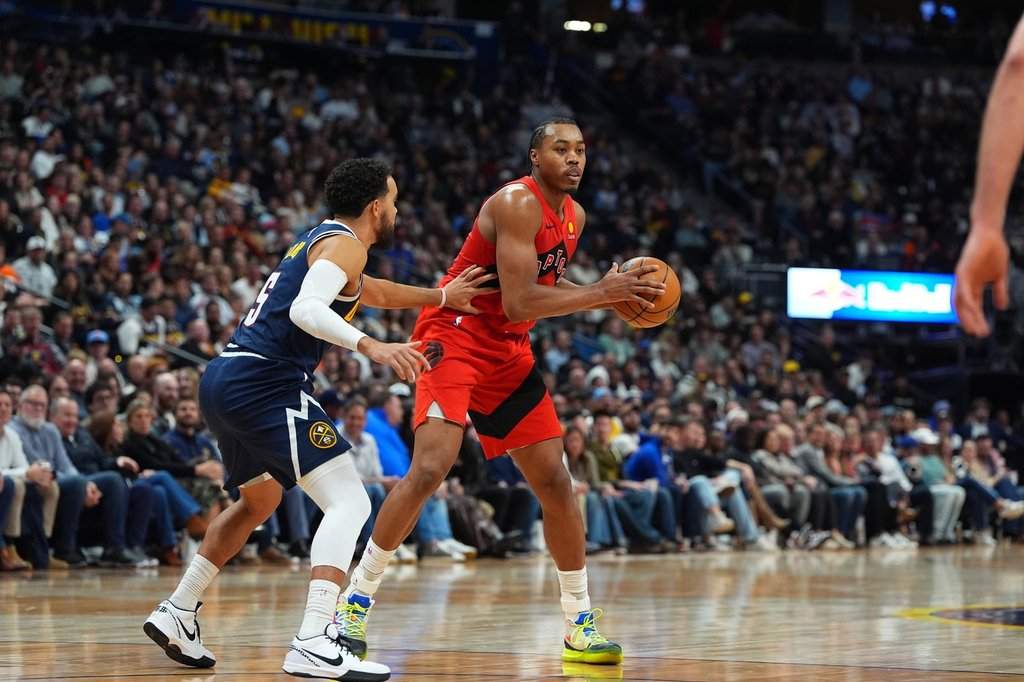
When Scottie Barnes, Immanuel Quickley, and Collin Murray-Boyles all sit out, the Toronto Raptors stop looking like a cohesive rotation and start looking like a survival drill. That exact reality played out on November 9, 2026, at Scotiabank Arena, where a depleted Toronto squad fell 118-102 to the visiting Memphis Grizzlies.
Most quick injury recaps stop at reading off the inactive list and moving on. Honestly, that misses what actually broke on the court. Without Barnes, Quickley, and Murray-Boyles—plus Kawhi Leonard and Nate Bittle already sidelined—Toronto had to trot out its sixth different starting lineup just ten games into the 2026-27 regular season. You can't build sharp defensive habits or clean half-court spacing when your core pieces keep disappearing.
What Missing Barnes, Quickley, and Murray-Boyles Cost Toronto
Losing one regular hurts. Losing three rotation contributors at once changes the math of every single possession.
Barnes brought a left groin strain into the night after missing Toronto's previous outing in Milwaukee, stripping the Raptors of their primary defensive connector and versatile playmaker. Quickley sat with right hamstring tightness and soreness, removing steady perimeter shot-making and secondary ball-handling. Murray-Boyles was ruled out due to illness after being listed as questionable hours before tip-off, taking away physicality and frontcourt energy.
To fill the void, Toronto started Jamal Shead, Ja'Kobe Walter, RJ Barrett, Kyle Anderson, and Jakob Poeltl. Shead handled the load admirably with a double-double of 20 points and 11 assists in nearly 36 minutes, while Poeltl put up 18 points, seven rebounds, and four blocks, and Jamison Battle knocked down five three-pointers off the bench for 18 points. Still, volume isn't efficiency. Barrett took 21 shots to score 19 points and finished minus-23, while Walter went 4-for-13 from the field and finished minus-21. When your top creators are out, everyone else gets pushed into roles that stretch their weaknesses.
Why Memphis Punished the Gaps
Memphis didn't need magic to take advantage—just crisp execution and size. Ty Jerome led the Grizzlies with 27 points on 9-of-19 shooting, including five threes, while Cameron Boozer posted 22 points, seven rebounds, and eight assists. Jerami Grant added 17 efficient points off the bench on 6-of-9 shooting, Jaylen Wells hit four triples for 14 points, and Toronto native Zach Edey chipped in eight points and nine boards against his hometown team.
Look closely at the box score from that night and two differences jump right off the page. First, Memphis shot 53.2% from the floor and 47.1% from three-point range, compared to Toronto's 43.3% overall and 34.2% from deep. Second, the Grizzlies controlled the glass 44-34 and turned 17 Raptors giveaways into 26 points off turnovers. Even when Toronto made a push early in the fourth—trimming the gap to 94-92 on an 11-5 run capped by a Shead steal and breakout layup—a single Memphis timeout settled things right back down.
Common Mistakes Fans Make Reading Early Injury Reports
When a team drops a mid-November game short-handed, it's easy to overreact in either direction. I've seen plenty of fans panic like the season is over, and just as many dismiss the loss completely because starters were out. Both reactions miss useful context.
- Treating every soft-tissue absence the same: Groin and hamstring issues in November are often managed cautiously so a two-game absence doesn't turn into a six-week layoff. Barnes's groin recovery and Quickley's hamstring tightness were day-to-day concerns early in the month rather than season-ending structural blows.
- Ignoring lineup churn: Lineup continuity matters hugely in the NBA. According to official box score and game reports from that November 9 matchup, Toronto's starting five against Memphis was already its sixth different starting group through ten games. You can evaluate individual effort there, sure, but judging long-term team identity off patchwork lineups is a trap.
- Overlooking opponent form: Memphis came into Toronto at 6-3 after opening the season with six straight wins, and left at 7-3 behind balanced scoring and spacing. Getting beat cleanly by a sharp, well-spaced road team when missing key rotation pieces isn't shocking.
Where Things Stand Since That Matchup
That November 9 loss dropped Toronto to 5-5 on the season, and the injury log has kept testing the roster's patience since then. Barnes returned after a four-game absence around mid-November, saw his groin issue come back up later in the week, and was later removed from the injury report, while Murray-Boyles has also dealt with subsequent availability questions.
For basketball analysts, fantasy managers, and die-hard Raptors followers, the practical takeaway is pretty straightforward. Don't anchor your season outlook on a single short-handed loss, and don't read too much into inflated usage numbers from emergency lineups. Instead, track three things over the next stretch of games: whether Barnes and Quickley can string together healthy weeks without soft-tissue setbacks, how Shead and the younger wings translate confident reps once the rotation settles, and how the team responds in the next meeting with Memphis on December 23, 2026, at FedExForum. Check official pregame injury reports closer to tip-off rather than relying on morning shootaround guesses, and compare full-strength stretches before deciding what this Raptors group truly is.