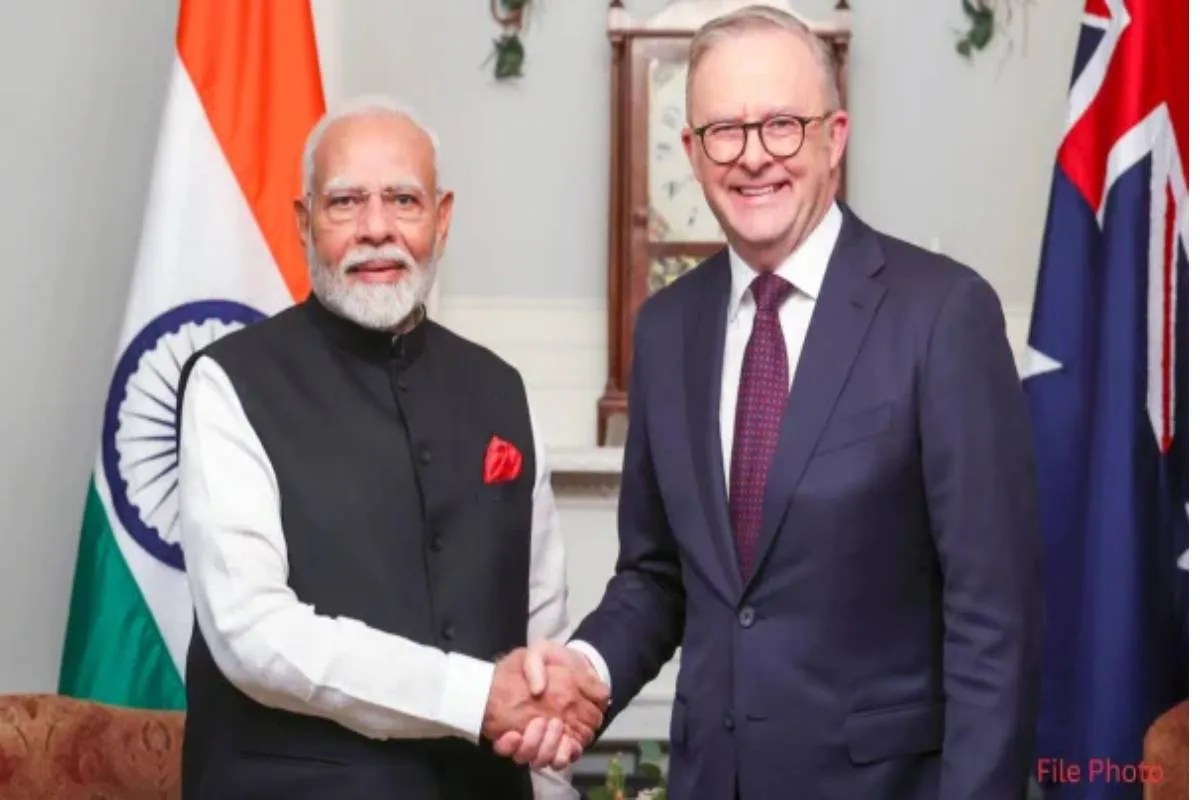
The flags are out in Clayton, and the local grocery stores are buzzing. If you walk down the main strip of Melbourne's "Mini India" right now, you won't just smell samosas and filter coffee; you'll feel an unmistakable electricity. Indian Prime Minister Narendra Modi has arrived in Australia for a three-day official visit, his first time touching down in Melbourne in over a decade. While the media loves to hyper-focus on the massive stadium events, something much bigger is happening beneath the surface.
Australian Prime Minister Anthony Albanese didn't mince words before the visit. He called India a critical economic partner and noted that the relationship has never been more consequential. That's not just standard diplomatic fluff. India is currently the world’s fourth-largest and fastest-growing major economy. For an Australia looking to diversify its trade away from an unpredictable Beijing, Canberra needs New Delhi just as much as New Delhi needs Australian resources.
The Clayton Buzz Is Real
Go to Clayton if you want to understand the actual human weight of this geopolitical dance. It's an area dense with subcontinental heritage, student housing, and thriving family businesses. For residents like Smit, a university student originally from Surat, the visit brings a massive sense of cultural pride right to his doorstep. People are genuinely excited to have the leader of their home country visiting their adopted city.
Melbourne has quietly grown to house the largest Indian-born community in Australia. The last time Modi visited the country in 2023, the focus was entirely on Sydney’s Harris Park. This time, Melbourne takes center stage. The "Melbourne Meets Modi" event at Marvel Stadium is pulling in crowds estimated between 25,000 and 30,000 people. It's a rockstar reception that very few foreign leaders can pull off on international soil. Albanese famously called Modi "The Boss" during his last trip, and that crowd-pulling power hasn't faded one bit.
Uranium and Critical Minerals on the Table
Strip away the cultural celebrations, and the actual bilateral talks are heavily focused on resource security. Energy-hungry India wants to drastically scale up its nuclear power capacity to meet massive domestic demands. Australia happens to sit on roughly 28% of the world’s known uranium resources. While both nations signed a nuclear cooperation agreement back in 2015, actual trade has been practically non-existent due to persistent legal and regulatory hurdles. This summit is a direct attempt to cut through that red tape.
Then there is the electric vehicle market. India wants to corner a massive share of global EV manufacturing, but it lacks the raw materials. Australia has lithium and critical minerals in abundance. By working one-to-one, both countries are trying to build an economic shield against China’s dominance over global supply chains.
Dealing With the Friction
It's not all smooth sailing, and pretending otherwise is foolish. Every major diaspora event comes with its own set of internal tensions. Human rights groups and organizations like Amnesty International have actively called on the Albanese government to bring up India's domestic record regarding journalists and religious minorities during the bilateral meetings. There are also planned local counter-protests regarding immigration levels.
A mature relationship doesn't mean agreeing on everything. It means navigating these messy friction points while keeping the broader economic and strategic goals on track. Both leaders know the stakes are too high to let disagreements derail the entire summit.
What Happens Next
The days of viewing India through the narrow lens of cricket and curry are officially dead. This visit proves that the bilateral relationship has transitioned into a hard-nosed, strategic alliance built on mutual economic necessity.
Watch the outcomes of the India-Australia CEOs Forum over the coming weeks. The real test of this summit won't be the applause inside Marvel Stadium. It will be whether or not we see actual signed supply contracts for critical minerals, an acceleration of the comprehensive economic cooperation agreement, and a clear pipeline for Australian uranium heading to Indian ports. If those deals lock in, the footprint of this visit will shape the Indo-Pacific economy for the next decade.