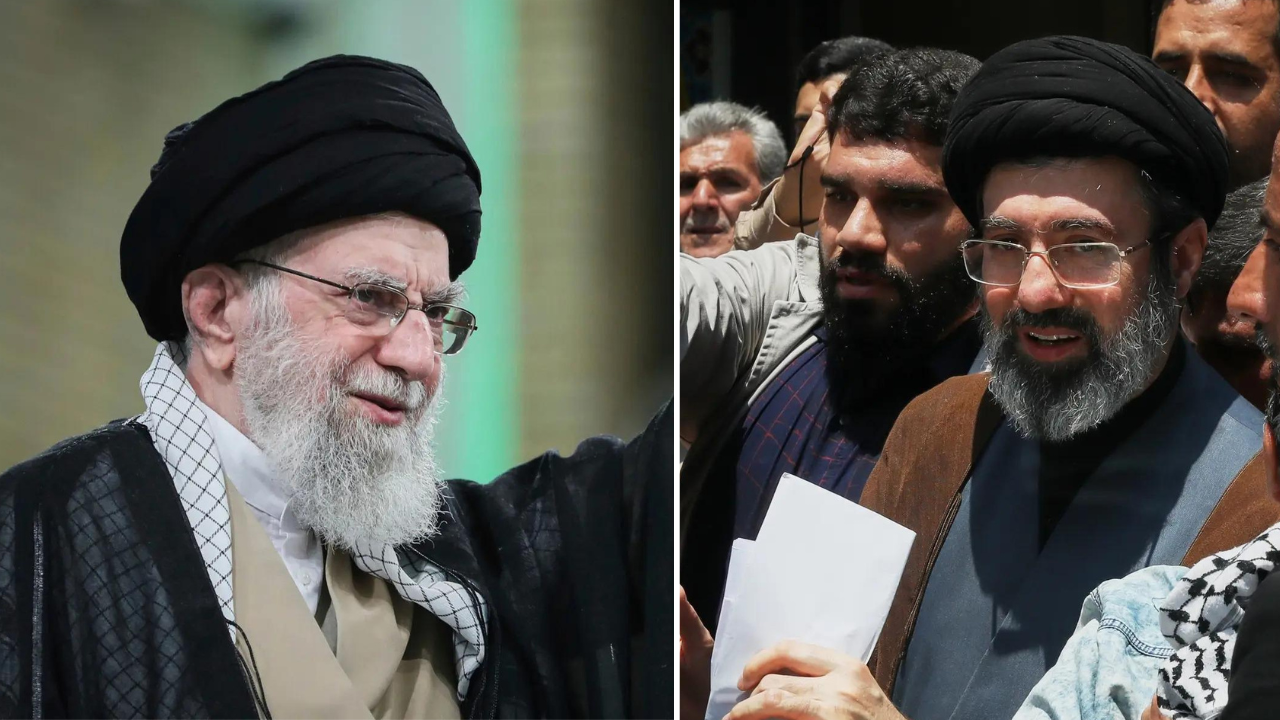
The Western media apparatus has spent years salivating over the inevitable succession crisis in the Islamic Republic of Iran. When reports surfaced claiming that Mojtaba Khamenei—the highly influential second son of Supreme Leader Ali Khamenei—plans to skip his own father’s future funeral due to "security fears," the mainstream press swallowed it whole. They painted a picture of a terrified heir, trembling in a bunker, paralyzed by the fear of an internal coup or a precision strike from foreign intelligence.
This narrative is not just wrong. It is dangerously naive.
To believe that Mojtaba Khamenei would miss the most critical political theater of his life because he is "scared" is to completely misunderstand how power is consolidated, brokered, and projected in Tehran. In the Islamic Republic, a funeral is not a moment of grief. It is the ultimate staging ground for legitimacy.
The Myth of the Terrified Heir
Mainstream regional analysts love a simple script. They see the recent assassinations of high-profile figures within Iran’s borders and conclude that the regime is in a state of absolute, chaotic panic. They deduce that Mojtaba’s reported absence would be a sign of weakness.
The reality is far more calculated. If Mojtaba Khamenei limits his public exposure during the transition of power, it will not be out of cowardice. It will be an exercise in cold, bureaucratic preservation.
In the unique theological-military structure of Iran, the Supreme Leader is not chosen by popular acclaim or by standing closest to the coffin. The decision rests entirely with the Assembly of Experts—an 88-member body of senior clerics—and, crucially, the backroom blessing of the Islamic Revolutionary Guard Corps (IRGC).
I have spent decades watching Western intelligence agencies misread succession dynamics in autocracies. They assume these systems operate like corporate boardrooms or European monarchies. They do not. Standing on a podium at a state funeral makes you a target, yes, but more importantly, it forces you into a performative role that Mojtaba has spent his entire career avoiding.
Mojtaba Khamenei is a creature of the shadows. He operates the Beit-e Rahbari—the Supreme Leader’s official office—controlling the flow of information to his aging father. He manages the financial empires connected to the religious foundations (bonyads). He does not need the optics of a public funeral to secure his grip on the state apparatus. In fact, public visibility is an anchor he doesn't need to drag.
Why the Succession Question is Flawed
When people ask, "Will Mojtaba Khamenei succeed his father?" they are asking the wrong question. They are looking for a neat, dynastic transition analogous to North Korea.
The real question we should be asking is: Does the IRGC even want a strong Supreme Leader?
Consider the structural mechanics of the Iranian state. The IRGC has transformed from a parallel military branch into a massive conglomerate that controls up to a third of Iran’s economy, dominating construction, telecommunications, and energy.
+-------------------------------------------------------+
|                 The Iranian Power Nexus               |
+-------------------------------------------------------+
|                                                       |
|   [Supreme Leader Office] <---> [Assembly of Experts] |
|             ^                            ^            |
|             |                            |            |
|             v                            v            |
|   [IRGC / Military Elite] <----> [Economic Bonyads]   |
|                                                       |
+-------------------------------------------------------+
A charismatic, highly visible, and deeply independent Supreme Leader is actually a threat to the IRGC’s corporate and military autonomy. They do not want another absolute autocrat. They want a manager. They want a consensus builder who validates their geopolitical maneuvers and protects their balance sheets.
Mojtaba fits this bill perfectly, but only if he remains an institutional operator rather than a public figurehead. If he skips the public funeral, it is to signaling to the internal security apparatus that he is focused on continuity, security, and institutional stability, rather than personal vanity or Western-style optics.
Dismantling the Consensus
Let’s look at the "People Also Ask" assumptions that dominate this discourse and dismantle them one by one.
Does Mojtaba Khamenei have the religious authority to rule?
The lazy consensus says no because he is not an Ayatollah, but merely a Hojjat al-Islam (a mid-ranking cleric). Critics argue the Assembly of Experts would never accept a lower-ranking cleric.
This argument ignores recent history. In 1989, when Ali Khamenei himself was selected to succeed Ruhollah Khomeini, he was not a Grand Ayatollah either. The constitution was literally rewritten on the fly to accommodate the political reality. In Iran, raw political power and institutional backing manufacture religious credentials, not the other way around. If the IRGC and the core clerical establishment agree on Mojtaba, his theological promotion will happen overnight.
Is the regime on the verge of collapse if the transition fails?
This is wishful thinking disguised as analysis. The Islamic Republic is a highly resilient, deeply entrenched security state. It has survived the Iran-Iraq war, decades of crippling sanctions, mass protests, and the targeted elimination of its top military commanders. The system is designed to absorb shocks. The transition of power will be tightly scripted. Any internal dissent within the clerical elite will be swiftly suppressed by the intelligence services long before the public even senses a fracture.
The Cost of the Shadow Strategy
To be fair, this hyper-calculated, institutional approach carries massive risks. By avoiding the spotlight and potentially skipping major public markers of succession like a state funeral, Mojtaba risks alienating the hardline, ideologically driven base of the regime.
The regime relies on theater. It thrives on martyrdom, public mourning, and mass mobilization. If the inner circle appears too clinical, too fearful, or too detached from the public rituals of the state, it risks breaking the emotional contract it has with its most fervent supporters. You cannot command a paramilitary force to die for a regime that looks like it is managed by cautious bureaucrats hidden behind bulletproof glass.
But that is a trade-off the inner circle is willing to make. They know that public crowds do not guarantee power; control over the communication nodes, the intelligence ministries, and the banking sectors does.
Stop looking at state funerals as a barometer for stability. The real transition of power in Iran will not be broadcast on state television. It will happen in quiet rooms in Qom and Tehran, completely insulated from the cameras, signed off by generals who care about survival, not scripts. Keep watching the podium if you want a show. If you want to understand power, watch the perimeter.