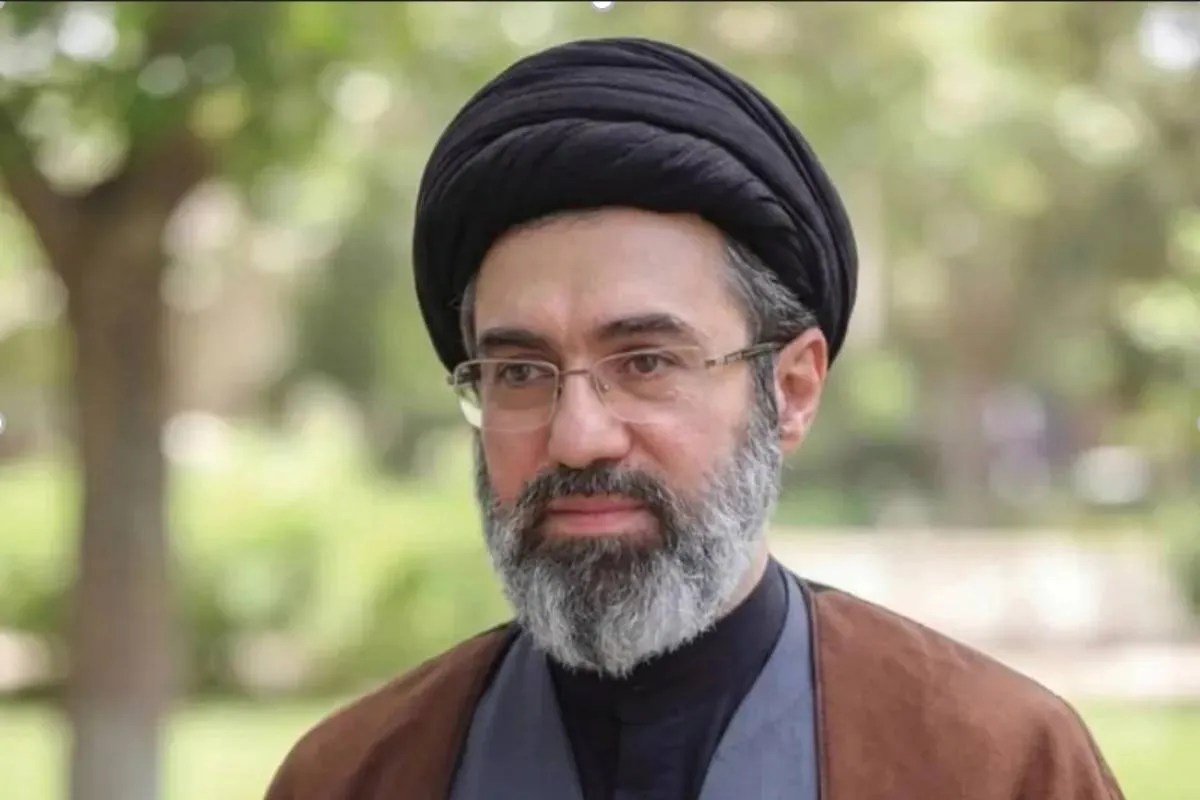
Mainstream media outlets love a good Shakespearean succession drama. Whenever the rumor mill grinds out reports of supreme leader transitions in Iran, the collective press rushes to publish the exact same predictable narrative. They focus on the public mourning rituals, gaze intently at the seating charts of regional proxies, and breathlessly ask the same shallow question: Is this the moment Mojtaba Khamenei steps out of the shadows to seize the throne?
This obsession with a hereditary clerical dynasty is a fundamental misreading of how power actually operates in Iran.
The lazy consensus treats the Islamic Republic like a traditional monarchy where the Supreme Leader simply hands a scepter to his second son. It treats the upcoming mourning ceremonies and state funerals as a political debutante ball for Mojtaba.
It is a neat, easily digestible storyline. It is also completely detached from the brutal, factional reality of the Iranian deep state.
The Illusion of the Clerical Monarchy
The assumption that Mojtaba Khamenei is the automatic heir apparent ignores the structural mechanics of the Iranian regime. The Islamic Republic was built on the explicit rejection of hereditary rule. The 1979 revolution was a violent repudiation of the Pahlavi monarchy. For Ali Khamenei to openly engineer his son’s ascension would destroy the thin veneer of ideological legitimacy that the system still clings to.
More importantly, it fundamentally misunderstands the Assembly of Experts. This body of senior clerics is not a rubber-stamp parliament waiting to crown a prince. While it is heavily vetted, it is a battleground for competing conservative factions.
The Reality Check: A hereditary succession would hand a massive propaganda victory to the regime’s domestic opposition. It would signal to the Iranian public that the Islamic Republic has simply replaced the Shah with a turbaned royal family.
I have watched analysts fall into this trap for decades. They look at Mojtaba’s influence behind the scenes—his control over portions of the security apparatus and his ties to the Islamic Revolutionary Guard Corps (IRGC)—and assume that backroom leverage translates directly into supreme spiritual authority. It does not.
The IRGC Does Not Want a Strong King
The most critical flaw in the mainstream narrative is the misinterpretation of the IRGC’s true motives. Global security analysts frequently claim that the IRGC wants Mojtaba in power because he is close to their ranks. This is backward logic.
The IRGC is a sprawling economic and military conglomerate. It controls major infrastructure, black-market trade networks, and regional proxy forces. It does not want a highly influential, deeply entrenched Supreme Leader who can micromanage its operations or challenge its financial dominance.
- What the IRGC actually wants: A weak, malleable figurehead.
- What Mojtaba represents: A highly connected, ambitious operator with his own entrenched network.
The Revolutionary Guard would much prefer an older, less dynamic cleric from the traditional judicial or bureaucratic ranks—someone who will stay out of their balance sheets and let them run the country's security architecture. By hyping Mojtaba as the definitive next choice, the media overlooks the silent, institutional coup that the IRGC has been executing for years. The future of Iran is not a radical monarchy; it is a praetorian state masked by a weak religious council.
Dismantling the "Public Debut" Fallacy
Every time a major public gathering or funeral occurs in Tehran, foreign intelligence desks scrutinize the video feeds like Sovietologists watching the Kremlin balcony in 1980. They expect Mojtaba to make a definitive public statement, step into the spotlight, and signal his readiness to rule.
This expectation shows a total ignorance of how power is preserved in Iran.
In Tehran’s political ecosystem, visibility is a vulnerability. The moment a figure is openly crowned as the "heir apparent," they become a massive target for every rival faction within the intelligence services, the judiciary, and the parliament. Ebrahim Raisi’s sudden death in a helicopter crash in 2024 upended the conventional succession timeline precisely because he was the visible, designated shield.
Mojtaba Khamenei has survived and maintained his influence precisely because he operates in the dark. He does not need a public coming-out party at a state funeral. To force him into the open is to weaken his position, not strengthen it.
The True Path to Power in Tehran
If you want to know who will actually run Iran over the next decade, stop looking at who stands closest to the coffin during state ceremonies. Stop tracking who gets the most airtime on state television.
Instead, look at the appointments within the bonyads—the massive, untaxed charitable foundations that control up to 20% of Iran’s GDP. Watch the mid-level promotions within the IRGC’s intelligence wing. Track the shifting alliances within the judiciary.
The downside of this analytical approach is that it is incredibly boring. It requires digging through dense institutional histories, financial tracking, and factional infighting rather than writing sensationalist headlines about a "secret prince" taking the stage. But it has the distinct advantage of being accurate.
The world expects a dramatic, singular moment of transition. The reality will be a quiet, bureaucratic consolidation of power by the security apparatus, using a compromise candidate you have barely heard of to maintain the status quo.
Stop asking if Mojtaba will show his face to the world. Start asking why the world still thinks his face is the one that matters.