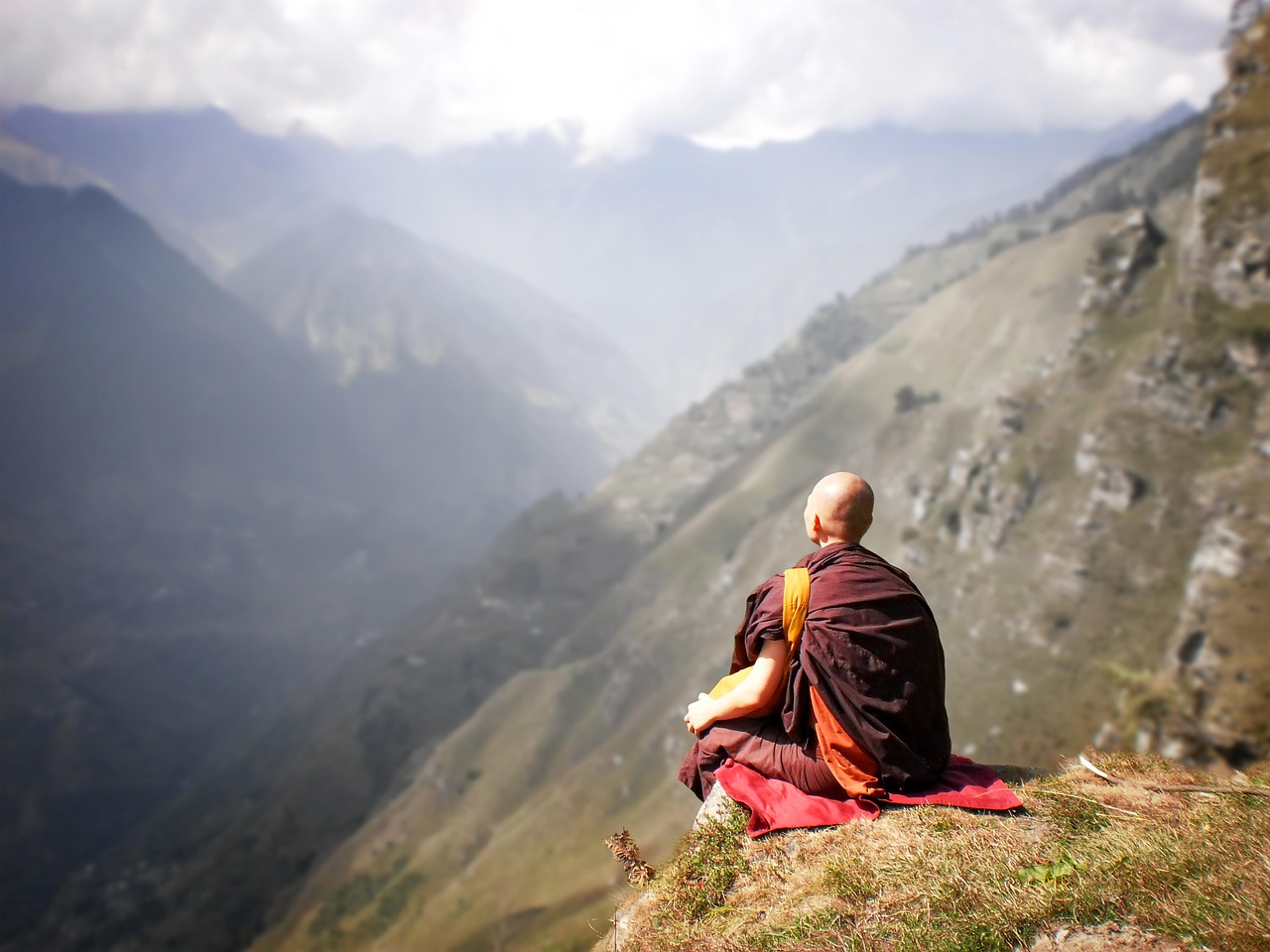
The air in Dharamsala smells of burning pine, damp earth, and ancient butter lamps. At five thousand feet, the shadow of the Dhauladhar mountains presses down hard against the stone courtyards, reminding anyone who sits here that the earth is older than empires, and much harder to break.
Step inside the quiet chamber where the Fourteenth Dalai Lama receives visitors, and the noise of the century drops away. Yet, even behind these prayer wheels and saffron robes, the world outside insists on knocking.
A congressional delegation from Washington, led by Representative Brian Mast, recently climbed these winding mountain roads. They did not come merely to offer polite diplomatic pleasantries. They came to listen. And what the Tibetan spiritual leader told them cut straight through the sterile, calculated vocabulary of international relations. The message was stark, simple, and entirely unvarnished. An upcoming meeting between United States President Donald Trump and Chinese leader Xi Jinping matters. It matters profoundly.
To understand why an exiled monk living in an Indian hill station cares so deeply about a handshake between two modern titans, we have to look past the spreadsheets of tariffs and the military posturing in the South China Sea. We have to look at the human cost of great power politics.
Imagine waking up one morning to find that your language has been outlawed in your children's schools. Imagine your history being rewritten by decree, your monasteries turned into tourist museums, and your neighbors spirited away in the dark because they whispered a prayer for an exiled leader. This is not a hypothetical exercise. For millions of Tibetans inside the People's Republic of China, this is the weather they walk through every single day.
When Washington and Beijing sit across a mahogany table, the fate of those millions hangs in the balance, suspended by a thread of political will.
We often talk about geopolitics as if it were a board game played by faceless algorithms. We use terms like spheres of influence, bilateral friction, and strategic deterrence to sanitize the reality. But behind every diplomatic standoff are real human pulses. There are mothers wondering if their sons will ever return from political detention. There are elders who die with their eyes fixed on the horizon, waiting to see their homeland just one last time.
The Dalai Lama has spent decades navigating this excruciating reality. He is a man who lost his country when he was barely twenty-four years old. He has watched superpowers rise, fall, and reinvent themselves, all while his people fought a quiet, agonizing battle to keep their culture from being scrubbed clean off the map.
When he tells American lawmakers that the Trump-Xi dialogue is crucial, he is not playing partisan politics. He is sounding an alarm.
Think of it like two massive freight trains hurtling down the same track from opposite directions. Most people stand on the platform and argue about the speed of the engines or the brand of the steel. The monk on the hill is looking at the village sitting directly in the middle of the rails. If those two trains collide, the village vanishes. If they manage to brake, even slightly, the villagers get another day to breathe.
Diplomacy is rarely about sudden salvation. It is about the management of catastrophe.
When Representative Mast and his fellow lawmakers sat down with the Tibetan leader, they were dipping their hands into a current that runs deeper than any single administration in Washington. American policy toward Tibet has long been a bipartisan friction point with Beijing, a rare island of agreement in an otherwise polarized Capitol Hill. Lawmakers on both sides of the aisle recognize that standing up for human rights and religious freedom is not just a moral luxury; it is a test of character for the free world.
Yet, moral clarity in a conference room is cheap. Executing it while negotiating trade deficits, technology supply chains, and nuclear non-proliferation is entirely different.
This is where the weight of the upcoming summit rests. President Trump enters negotiations with a transactional, high-stakes style that treats every interaction as a deal to be won or lost. President Xi approaches the table with the long, unyielding memory of a civilization that measures time in dynasties, viewing sovereignty as absolute and non-negotiable.
Between these two opposing forces lies the fate of a stateless people.
If the conversation between Washington and Beijing is reduced entirely to commerce, human rights become a footnote scribbled in invisible ink. Tibet becomes an inconvenience, a diplomatic ghost haunting the hallways of international summits, easily traded away for concessions on rare earth minerals or agricultural exports.
The Dalai Lama’s insistence on the importance of this meeting is a reminder that you cannot separate economic security from human dignity. You cannot build a stable global order on top of cultural erasure.
Consider what happens when a superpower decides to look away. The silence from the outside world does not bring peace to the occupied valleys; it only emboldens the machinery of assimilation. Surveillance cameras multiply on temple rooftops. Boarding schools strip children of their native tongue, replacing it with the language of the state. Step by step, a distinct civilization is gently, methodically dismantled in the dark.
This is why the delegation's pilgrimage to Dharamsala matters. It is a signal, faint but persistent, that the world has not completely forgotten the people behind the headlines. It is a bridge built out of words and shared presence, connecting the halls of American power to the quiet suffering of the Himalayas.
We live in an era that worships speed and instant gratification. We scroll past human tragedies in seconds, our attention hijacked by the latest digital outrage. We prefer our international news neatly packaged into soundbites, stripped of historical context and emotional weight.
But history does not care about our short attention spans. It keeps a ledger.
When the cameras turn on and the American president shakes hands with the Chinese leader, thousands of miles away from the snow-capped peaks of Tibet, remember the old man sitting in his chair in Dharamsala. Remember the prayer wheels spinning in the mountain wind.
The outcome of that meeting will not just shape stock markets or trade agreements. It will echo through the valley floors and the stone corridors of a suppressed nation, deciding whether a people’s culture survives into the next century, or quietly fades into the dust of forgotten empires.
The giants are talking. The world holds its breath. And in the quiet high country, the waiting continues.