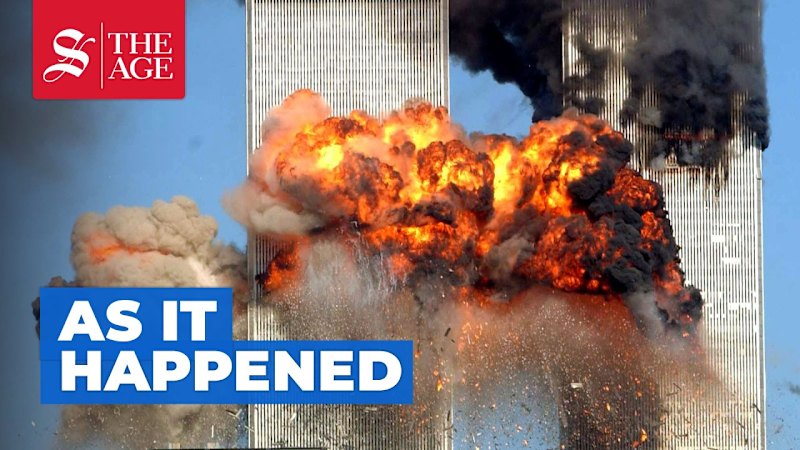
September 11, 2001, began as a brilliant late-summer Tuesday across the American Northeast, but by mid-morning, the illusion of continental invulnerability had evaporated into the Manhattan sky. At 8:46 AM, American Airlines Flight 11 struck the North Tower of the World Trade Center, instantly transforming a routine workday into an unprecedented national crisis. Within minutes, the routine broadcast of morning news gave way to a live, horrifying documentation of destruction that would permanently alter geopolitics, civil liberties, and human psychology. This minute-by-minute catastrophe did not just destroy physical architecture; it rewrote the operating system of global society, establishing a permanent state of emergency that persists decades later.
Understanding the magnitude of that morning requires stepping away from the generalized memory of the date and examining the chaotic sequence of operational failures, split-second decisions, and systemic shocks that defined the hours between dawn and dusk. The events of September 11 unfolded not as a single cinematic moment, but as a cascading series of system collapses across aviation, intelligence, emergency response, and government command structures.
The First Fractures in the Sky
Long before the towers fell, the commercial aviation network experienced a silent, terrifying hijacking sequence. Transponders were turned off. Communications with air traffic control went dead. Flight crews faced a tactical reality for which no training manual existed.
Commercial aviation operated on a baseline assumption of security that prioritized passenger compliance during hijackings. Perpetrators weaponized this exact protocol. They assumed crews and passengers would follow historical precedent: cooperate, land at a designated airfield, and negotiate. That calculation shattered over New York, Pennsylvania, and Virginia.
Air traffic controllers across multiple regional centers realized simultaneously that standard procedures were failing. At Boston Center, managers tracked American 11 erratic behavior long before impact. Controllers watched radar returns merge and vanish, realizing that commercial airliners had transformed into guided missiles. The Federal Aviation Administration had no protocol for domestic aircraft commandeered by suicide operatives.
The Institutional Paralysis on the Ground
While smoke billowed from the North Tower, the federal government entered a state of profound institutional disorientation. The chain of command fractured under the weight of incomplete intelligence and communication blackouts.
The National Military Command Center, the White House Situation Room, and FAA headquarters operated in informational silos. Vice President Dick Cheney and other key officials scrambled into underground bunkers, trying to piece together a coherent picture from conflicting reports. At one point, conflicting radar tracks suggested multiple additional hijacked aircraft remained airborne, driving decisions that pushed the limits of domestic military engagement.
President George W. Bush, reading to schoolchildren in Florida when the first reports arrived, faced an immediate security dilemma. Air Force One became an airborne command post, flying erratic loops over the Midwest while secret service details and military aides tried to secure communications lines that kept dropping. The sheer speed of the attacks outpaced the bureaucratic machinery designed to protect the commander-in-chief.
Emergency Response in the Crucible
In Lower Manhattan, the response transitioned instantly from routine municipal emergency management to an apocalyptic rescue operation. Hundreds of firefighters, police officers, and paramedics rushed toward the burning towers, operating on the assumption of a structural fire and evacuation scenario.
Radio communications failed almost immediately. Analog repeaters inside the massive steel-and-concrete structures could not handle the volume of distress signals, and structural damage severed critical communication lines. Firefighters entering the lobbies had no functional link to battalion chiefs on the street or command units monitoring the structural integrity from outside.
First responders climbed stairwells laden with heavy gear, passing thousands of fleeing office workers. Many knew the risks, yet they pushed upward because saving lives superseded personal survival. When the South Tower collapsed at 9:59 AM, followed by the North Tower at 10:28 AM, hundreds of those first responders were caught inside the collapse zone. The institutional loss among the Fire Department of New York and the New York City Police Department created a generational void in emergency leadership.
The Information Ecosystem in Real Time
September 11 marked the true birth of the modern twenty-four-hour breaking news cycle, functioning in real time before the dominance of social media, yet moving with terrifying velocity. Cable news networks cut away from regular programming, relying on live camera feeds, frantic telephone interviews with eyewitnesses, and rolling chyrons that frequently mixed verified facts with catastrophic rumors.
Viewers across the globe watched the second plane hit United Airlines Flight 175 live on television, transforming a tragic accident hypothesis into undeniable, coordinated war. This visual saturation imprinted the horror directly onto the global consciousness. People trapped in offices could not escape the imagery; television monitors in airports, schools, and workplaces broadcasted the devastation continuously.
This instant media saturation created an environment of collective trauma. Analysts, politicians, and reporters speculated wildly during the initial hours, suggesting chemical attacks, widespread airborne threats, and synchronized assaults on every major American city. The information vacuum bred panic, leading to runs on gas stations, supermarket hoarding, and the immediate grounding of every civilian aircraft in North American airspace.
Ground Zero and the Immediate Aftermath
By the afternoon, lower Manhattan was covered in a thick, toxic gray dust cloud composed of pulverized concrete, asbestos, glass, and office materials. The physical footprint of the financial capital became a silent, smoking exclusion zone.
Thousands of stranded commuters walked across the bridges into Brooklyn and New Jersey, covered in ash, carrying briefcases and stunned expressions. The absence of aircraft in the skies created an eerie, unnatural silence over major metropolitan areas across the United States.
Political leaders returned to Washington under heavy military escort. By evening, President Bush addressed the nation from the Oval Office, declaring that the United States would make no distinction between the terrorists who committed the acts and those who harbored them. This speech laid the rhetorical cornerstone for the Global War on Terror, signaling a permanent shift from traditional law enforcement responses to transnational military intervention.
The Long Shadow of That Tuesday
The architectural and operational changes implemented in the wake of that morning reshaped daily life across the globe. Airport security transformed from casual baggage checks into militarized, bureaucratic checkpoints governed by the newly created Transportation Security Administration. Privacy standards eroded as intelligence agencies gained sweeping surveillance authorities through legislation like the Patriot Act.
Geopolitically, the events triggered two decades of military entanglement in the Middle East, altering the stability of nations from Afghanistan to Iraq and fundamentally shifting the economic priorities of Western governments. Trillions of dollars shifted toward homeland security, intelligence gathering, and military modernization.
Yet, beyond the geopolitical shifts, September 11 remains a stark reminder of human vulnerability in an interconnected, highly complex technological society. The vulnerability exposed that morning did not vanish with increased security measures; it simply evolved into new domains of cyber warfare, decentralized radicalization, and systemic fragility.
The towers are gone, replaced by reflective pools marking the absence where thousands of lives ended within minutes. The world that emerged from the smoke of that Tuesday is permanently altered, living in the shadow of a morning that proved how quickly the ordinary structures of civilization can dissolve.


