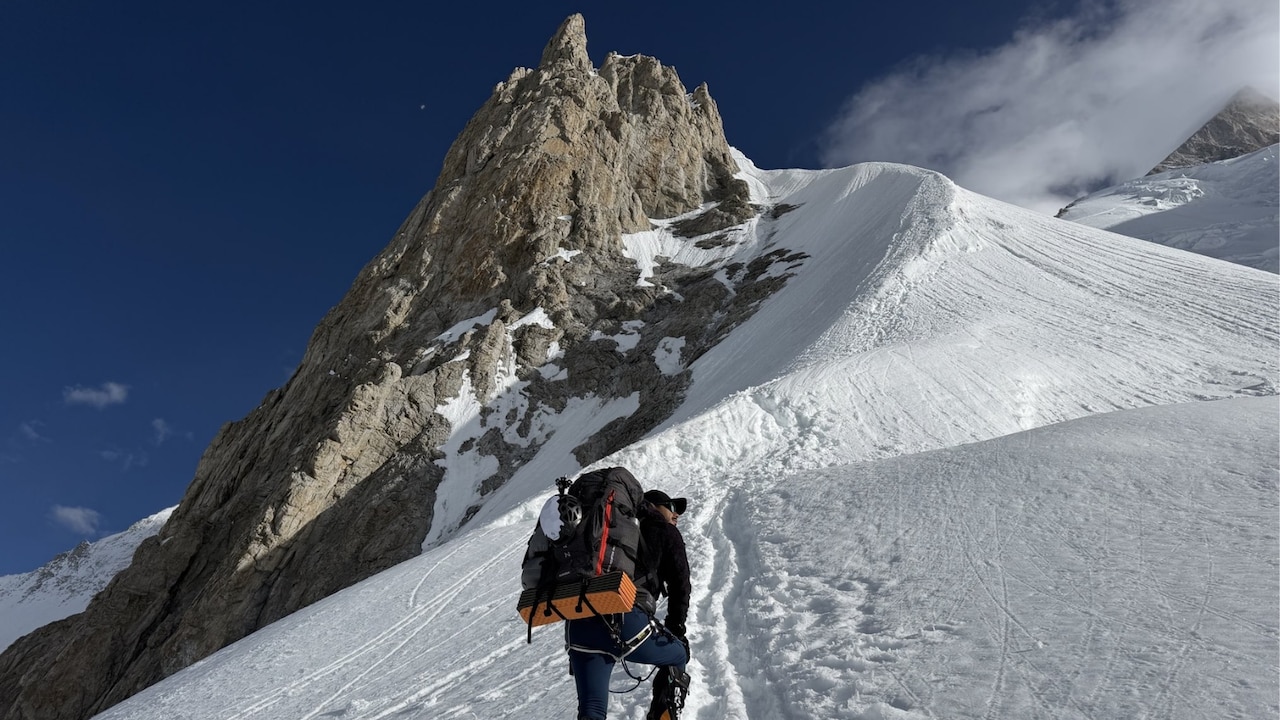
High-altitude mountaineering operates on strict risk-reward calculations, yet public discourse frequently reduces complex logistical choices to emotional or spontaneous acts. When elite climber Nirmal 'Nims' Purja chose to summit a peak in Pakistan-administered Kashmir, the decision triggered widespread debate across global media. Observers categorized the move through the lens of sudden inspiration or political statement. However, an operational deconstruction reveals that elite expedition planning relies on a precise matrix of environmental conditions, permit logistics, and personal brand economics.
The standard public narrative assumes that climbers operate in a vacuum of pure athletic ambition. This perspective ignores the financial, structural, and seasonal pressures governing commercial mountaineering today. By analyzing the variables that dictate high-altitude decision-making, we can map out why a seemingly abrupt route selection is actually the logical output of a calculated optimization function.
The Operational Framework of Modern Expeditions
Elite climbers managing high-profile careers do not select objectives based on single variables. Instead, they run an optimization problem that balances weather windows, geopolitical constraints, and financial sponsorship requirements.
The Environmental Variable
Weather windows in the Karakoram and the Himalayas are notoriously narrow. A climber attempting to maintain a continuous media presence and satisfy commercial partners cannot afford extended downtime waiting for optimal conditions on congested standard routes. When primary objectives face unfavorable snowpack, wind shear, or overcrowding, the cost of delay rises exponentially. Diverting to an alternative objective minimizes capital burn and maintains operational momentum.
The Regulatory and Permit Friction
Securing permits for major peaks involves navigating complex bureaucratic corridors. Bureaucratic delays can stall an entire season, rendering a climber's financial backing obsolete. Opting for peaks with streamlined access or leveraging existing institutional relationships allows expedition leaders to pivot rapidly. The choice of a secondary peak is frequently constrained by administrative feasibility rather than pure geographical preference.
Brand Economics and Attention Latency
Attention is a finite resource in the modern digital ecosystem. Maintaining relevancy requires continuous content output and high-visibility achievements. Prolonged radio silence during a failed attempt on a heavily scrutinized peak erodes audience engagement. A successful ascent of a technical or lesser-known peak provides a fresh narrative arc, satisfying sponsors and maintaining algorithmic visibility.
The Cost Function of Route Diversion
To understand why a mountaineer shifts objectives mid-season, we must examine the cost function that governs high-altitude operations. Every day spent on a mountain carries fixed and variable costs.
$$Total Cost = Fixed Logistics + (Daily Burn Rate \times Time) + Opportunity Loss$$
Fixed logistics include gear staging, base camp establishment, and high-altitude porter contracts. These sunk costs remain constant regardless of the summit outcome. The daily burn rate accounts for food, supplemental oxygen, satellite communications, and crew wages. When weather or logistical bottlenecks threaten to extend the timeline, the daily burn rate multiplies the financial pressure.
Opportunity loss represents the value of alternative projects foregone during the delay. For a commercial athlete, an extended stalemate on a blocked route prevents engagement with simultaneous media contracts, speaking engagements, or secondary brand partnerships.
When the cost function shifts due to external friction—such as route closures or geopolitical friction—the rational actor minimizes loss by reallocating resources to a viable alternative. The selection of a peak outside the original itinerary is therefore not a failure of planning, but a dynamic risk mitigation strategy.
Geopolitical Realities and Cross-Border Logistics
Climbers operating in regions with overlapping territorial claims must factor diplomatic friction into their operational calculus. The legal and administrative frameworks governing peaks in disputed areas like Azad Kashmir or Gilgit-Baltistan require careful navigation.
Local climbing administrations enforce distinct regulations regarding liaison officers, rescue insurance, and restricted zones. An expedition leader must weigh the probability of permit revocation against the potential reward of securing a first ascent or an off-season speed record. When traditional routes face administrative gridlock, alternative peaks within the same regional ecosystem offer a pragmatic workaround.
This dynamic explains why public declarations often contrast sharply with operational realities. A public statement framed around personal philosophy or spontaneity masks the underlying administrative navigation required to keep a multi-million-dollar personal brand functioning smoothly.
Strategic Allocation of Risk and Reward
The decision to scale a specific mountain involves weighing physical hazard against professional exposure. High-altitude mountaineering carries an inherent mortality risk that scales with technical difficulty and altitude.
Risk Tolerance Matrix:
--------------------------------------------------
Factor              | Standard Route | Alternative Peak
--------------------------------------------------
Technical Hazard    | High           | Moderate
Crowd Congestion    | Extreme        | Low
Media Return        | Diminishing    | High (Novelty)
Administrative Risk | Moderate       | Variable
--------------------------------------------------
When mainstream routes become saturated, the risk profile changes. Crowding introduces hazards unrelated to natural elements, such as bottleneck queues in the death zone, falling ice triggered by inexperienced parties, and depleted fixed ropes. Diverting to an uncrowded peak eliminates human-induced variables, even if the logistical path is less charted.
Execution Protocol for Dynamic Route Adaptation
For expedition leaders and strategic planners operating in high-stakes environments, rigid adherence to an initial plan when parameters change is a primary driver of failure. The following operational protocol governs successful pivots:
- Threshold Monitoring: Establish clear quantitative metrics for failure on a primary objective, such as specific wind speed limits, maximum allowable delay days, or budget depletion milestones.
- Pre-Cleared Contingencies: Maintain a roster of alternative objectives with pre-vetted permit pathways and logistical support structures before the expedition launches.
- Stakeholder Alignment: Secure advance consensus from sponsors and media partners regarding acceptable pivot criteria to prevent public relations friction during a mid-season change.
- Information Isolation: Filter external media noise and public speculation to ensure operational decisions are driven entirely by telemetry, weather data, and team capacity.
Deploy alternative logistics infrastructure immediately upon breaching the predefined threshold, reallocating human and capital resources to the secondary objective within a forty-eight-hour window.