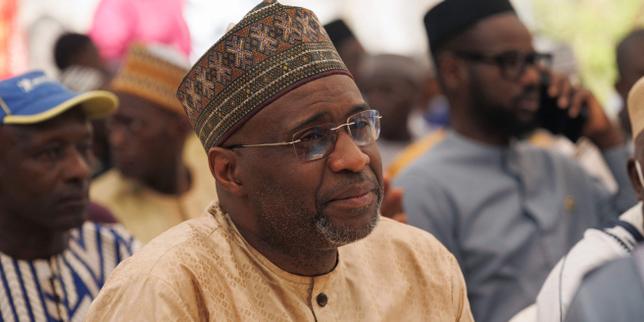
Stop pretending Moussa Mara matters.
Every international wire service and regional pundit spent the last week hyperventilating over the former Malian prime minister's legal status, treating his freedom like a thermometer for Bamako’s democratic pulse. They frame his continued liberty as a masterclass in survival, a constitutional triumph, or a sign of an impending regime wobble.
They are wrong. Dead wrong.
Focusing on whether Moussa Mara sleeps in his own bed or a cell misses the entire point of the Sahelian power matrix. Mara is not a political prisoner. He is not a dissident martyr. He is a symptom of a bloated technocratic class that mistook administrative resume-building for actual statecraft. When analysts treat his freedom as a barometer of justice, they fall for the oldest trick in the West African political playbook: mistaking elite theater for structural reality.
Let us look at the actual mechanics of how power functions in Bamako today, stripped of the romanticized narratives pushed by exiled politicians and NGO reports.
The Myth of the Persecuted Technocrat
The lazy consensus in international media paints Mara as the sharp-dressed, Harvard-adjacent accountant who dared speak truth to power and now faces the wrath of the transitional military authorities.
I have watched this script play out across a dozen capitals. A former minister gives a slick interview, drops a mildly critical op-ed in a French newspaper, and international observers immediately crown him the leader of the democratic resistance. It is lazy. It ignores the ledger of actual governance.
When Mara was prime minister under Ibrahim Boubacar Keïta, his defining legacy was not fiscal prudence or institutional strengthening. It was the disastrous May 2014 visit to Kidal. That trip—undertaken against the explicit advice of military commanders and UN peacekeepers—triggered a humiliating rout for the Malian army, cost dozens of lives, and permanently fractured the country's territorial integrity.
Yet, foreign commentators gloss over that disaster because Mara speaks fluent policy-speak. They prefer a polished technocrat who says the right things in Geneva over a general who speaks blunt truths in Bambara.
If you evaluate Mara through the lens of institutional competence rather than Western PR appeal, his freedom today isn't a victory for human rights. It is proof of irrelevance.
Why the Junta Leaves Him Alone
The current authorities in Bamako, led by Colonel Assimi Goïta, do not need to lock up Moussa Mara. Putting him behind bars would turn a spent force into a symbolic rallying point. Keeping him free, marginalized, and tweeting into the void is a far more effective containment strategy.
Think of it like corporate restructuring. When a failing enterprise gets a hostile takeover, the new board does not throw the previous chief financial officer in jail for every bad quarter. They simply lock him out of the server room, strip his budget, and let him write LinkedIn posts about his vision for the future.
Mara is locked out of the server room.
The transitional government’s legitimacy does not rest on whether a former technocrat can hold a press conference. It rests on security metrics, supply chains, and the redirection of resource rents away from foreign conglomerates. By obsessing over Mara's legal jeopardy, mainstream journalism performs a sleight of hand, keeping elite attention focused on palace gossip while the real game—sovereignty renegotiation and counter-insurgency restructuring—happens entirely outside the capital's cocktail circuit.
The Real Danger of the Bamako Commentariat
The obsession with figures like Mara highlights a fatal flaw in how international relations analyze the Sahel. We treat African politics as a soap opera starring individual personalities, ignoring the underlying material conditions.
Mali is not suffering because Moussa Mara is free or because he is threatened. Mali is restructuring its entire geopolitical orientation. It is evicting foreign troops, tearing up legacy defense pacts, and nationalizing mining audits. These are tectonic shifts.
Meanwhile, commentary on Mara reads like an obituary for an era of donor-dependent democracy that nobody inside Mali actually misses.
When citizens in Kati or Mopti look at the political landscape, they are not asking whether a former prime minister can travel abroad. They are asking whether the state can secure the roads, whether the currency will hold, and whether the wealth extracted from their soil will finally build schools instead of Swiss bank accounts.
Mara’s freedom is a distraction. It is a safety valve designed to give Western diplomats something to issue earnest communiqués about while ignoring the larger collapse of their own influence in the region.
What Real Political Analysis Looks Like
If you want to understand where Mali goes next, stop reading statements from politicians trying to stage a comeback from Paris or Brussels. Look at the logistics lines. Look at the renegotiated mining codes. Look at the shifting alliances of local militias and regional trade routes.
Moussa Mara is a footnote. Treat him like one.
The next time an article breaks about his latest legal hurdle or his newest manifesto, ask yourself who benefits from keeping your eyes fixed on the rearview mirror. It certainly isn't the people trying to build a functioning state out of the wreckage of the old regime.
The revolution in the Sahel is messy, violent, and entirely indifferent to the sensibilities of international careerists. Mara can stay out of prison forever, and it won't move the needle of history one millimeter.