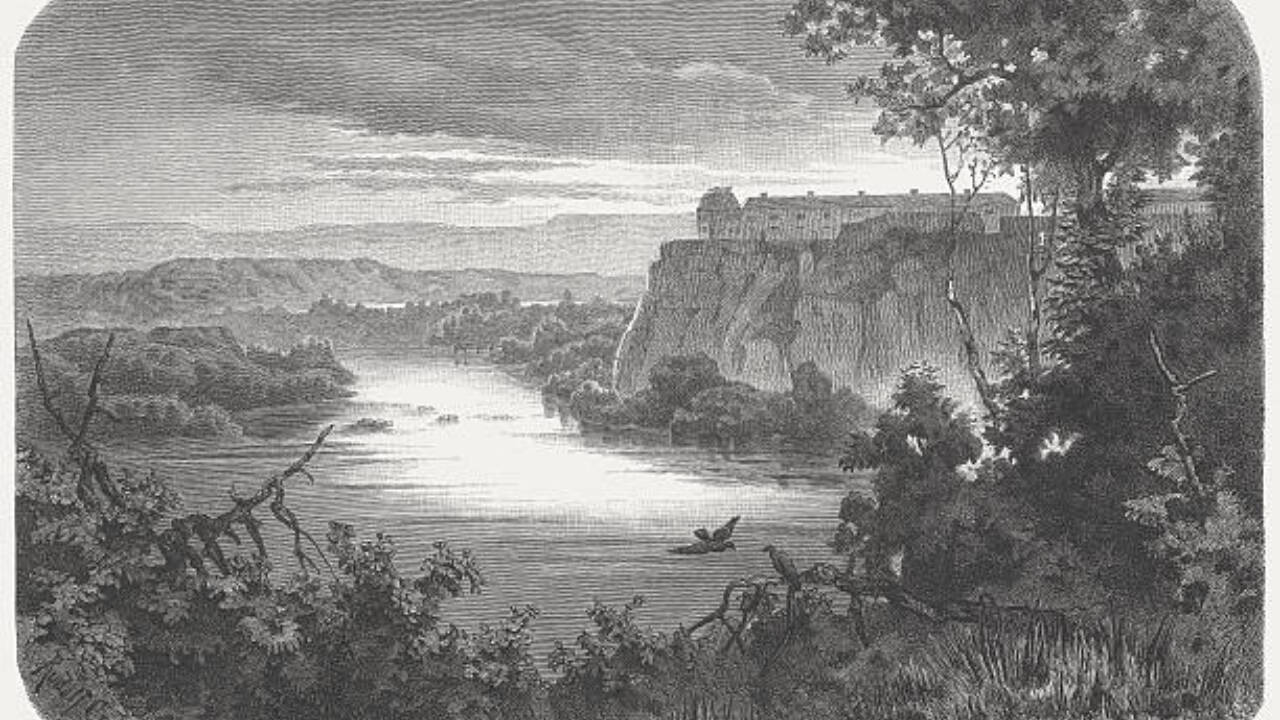
The frost gets into your knuckles before it gets into the ground. If you have ever stood on a bluff above the Minnesota River in late November, you know the particular kind of silence that settles over the valley. It is not the peaceful silence of a deep forest. It is the tense stillness of something holding its breath.
Below, the water moves sluggishly, choked with the gray silt of a million plowed acres upstream. For generations, people looked at this valley and saw an inconvenience. They saw a crooked ditch that flooded too often, a barrier to expansion, a flat and muddy basin just waiting to be straightened, paved, and put to work. Progress, they called it. Pour concrete. Build berms. Move the water out of sight and out of mind. Don't miss our previous coverage on this related article.
Then came 1976.
To understand what happened that year, you have to look past the dry record of land titles and congressional acts. You have to look at kitchen tables lit by amber pendant lamps, coffee cups stained dark by repetition, and neighbors who had never attended a municipal meeting in their lives suddenly standing shoulder-to-shoulder in cramped school gymnasiums. They were fighting for fifteen thousand acres of floodplain, timber, and marshland. Not because they were radical environmentalists marching with glossy banners, but because they understood a fundamental truth that developers kept missing: once you pave a sponge, you have to live with the flood. If you want more about the background here, The Guardian offers an in-depth breakdown.
Consider what happens when a river is cornered.
Water has a long memory. When you wall it in, straighten its curves, and pave over the natural sponges that hold its seasonal rage, the water does not simply disappear. It accelerates. It rises higher and faster, seeking the old paths carved by centuries of snowmelt and heavy spring rains. By the mid-seventwentieth century, the pressures of suburban sprawl were creeping outward from the Twin Cities metropolitan area. Bulldozers were idling just beyond the tree line. Plans were drawn up to carve highways, industrial parks, and subdivisions right through the heart of the Minnesota Valley.
The official narrative of the time was simple. Growth demanded sacrifice. If a few thousand acres of swamp had to be drained and filled to accommodate the march of progress, so be it.
The people who lived along the bluffs looked at those blueprints and saw something entirely different. They saw the end of the herons standing knee-deep in the backwaters. They saw the disappearance of the wild garlic and the oak groves where generations of children had skinned their knees. Most practically, they saw what would happen to their basements when the river had nowhere left to spread its shoulders.
Resistance did not begin in a boardroom. It began in conversations over backyard fences.
Imagine a dairy farmer named Arthur, whose family had worked the terrace soils above the bottomlands since the late nineteenth century. Arthur was not a man prone to dramatic speeches. Yet, at a packed county hearing in the spring of 1976, he stood up, placed a calloused hand on the wooden podium, and spoke plainly.
"You can pour all the concrete you want," Arthur told the assembly, his voice carrying the gravel of a life spent outdoors. "But when the spring thaw comes, the river is going to take it back. It always does. The only question is whether we give it room to breathe now, or whether we spend our grandchildren's money bailing out the ruins later."
That sentiment became the invisible anchor of a grassroots movement. Ordinary residents organized phone trees, baked pies for bake sales to fund printing costs, and testified until their voices cracked. They wrote letters to state legislators and federal representatives with the stubborn persistence of weeds pushing through asphalt. They didn't have millions of dollars or corporate lobbying firms. They had boots, clipboards, and an intimate, bone-deep knowledge of the land.
Their fight culminated in the establishment of the Minnesota Valley National Wildlife Refuge.
Signed into law in 1976, the refuge carved out a protected corridor stretching nearly thirty-four miles along the river. Today, that corridor encompasses roughly fifteen thousand acres. It is an extraordinary juxtaposition: a wild, sprawling sanctuary of wetlands, bottomland forests, and restored prairies nestled right against the humming arteries of a major modern metropolis. You can stand on a wooden boardwalk inside the refuge, hear the sudden, explosive whistle of a wood duck taking flight, and watch a commercial jet descending toward the nearby international airport in the distance.
That survival was not an accident of geography. It was a deliberate, hard-fought choice.
The refuge functions today as an ecological shock absorber. As the surrounding landscape grew denser with asphalt and rooftops, the protected floodplain absorbed millions of gallons of runoff that would have otherwise inundated homes and businesses downstream. It became a sanctuary not only for migratory birds navigating the Mississippi Flyway, but for urban dwellers seeking a quiet place to remember what the earth looks like when it is not encased in gray.
When you walk the trails of the refuge today, the history is quiet. There are no grand marble monuments to the farmers, teachers, and suburbanites who forced the government to draw a line in the mud and say: Stop here.
Instead, the monument is the land itself.
It is the red-tailed hawk circling lazily above the cattails. It is the quiet hush of snow falling through unlogged bur oaks. It is the water, moving slowly and without malice, spreading out into the marshes because it finally has the room to do what it has done for ten thousand years.
Progress often mistakes control for improvement. We look at a wild, untidy place and feel an urgent, nervous itch to fix it, to line it up, to make it yield a profit. But the story of the Minnesota Valley reminds us that true wisdom sometimes looks like restraint. It looks like stepping back, looking at a muddy river valley, and deciding that some things are worth protecting simply because they are already whole.
The frost deepens on the branches now. Down in the valley, the river bends around an undisturbed sandbar, carrying the silt onward toward the sea, moving through a landscape that refused to be forgotten.