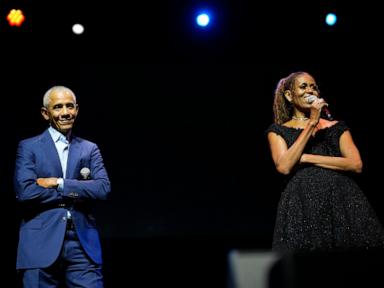
The upcoming opening of the Obama Presidential Center in Chicago features a heavy-hitting cultural lineup, with Bruce Springsteen, Bono, and Stevie Wonder confirmed to perform. While initial reports frame this as a standard celebrity celebration, the event is actually a high-stakes deployment of cultural soft power designed to solidify a political legacy. This isn't just a concert. It is a calculated convergence of Hollywood capital, global political influence, and legacy-building that establishes the Chicago campus as a global hub for the modern Democratic establishment.
Presidential libraries have long evolved past their original purpose. They used to be quiet archives where historians examined dusty policy papers. Today, they operate as active political command centers, permanent campaign offices, and institutional fundraising machines. By anchoring this specific launch with three of the most politically active rock icons of the last half-century, the Obama Foundation is signaling that its post-presidency operations will remain deeply enmeshed with global cultural elites.
The Architecture of Cultural Influence
To understand why these specific names matter, you have to look at the financial and ideological machinery connecting them to the former president. Bruce Springsteen, Bono, and Stevie Wonder are not just popular musicians; they are institutions of political activism who have spent decades lending moral authority to specific globalist and progressive agendas.
The Billionaire Donor Ecosystem
Securing talent of this caliber requires deep roots in the entertainment industry. The Obama Foundation's fundraising apparatus relies heavily on major media executives and West Coast philanthropists who view the Chicago center as a critical outpost for ongoing ideological influence.
The relationship between Barack Obama and Bruce Springsteen, for instance, has long moved past mere mutual admiration. Their joint podcast and subsequent book venture demonstrated a clear commercial and ideological partnership. When Springsteen takes the stage in Chicago, he is validating the Obama brand to a working-class demographic that the modern Democratic party has struggled to retain.
Globalism on the Midway Plaisance
Bono’s inclusion serves a distinct, international purpose. The U2 frontman represents the intersection of Western celebrity and global development policy, particularly regarding African aid and debt relief. His presence aligns directly with the Obama Foundation’s international leaders program.
- The U2 Connection: Bono brings a network of European corporate elites and non-governmental organizations (NGOs) to the table.
- The Policy Signal: His participation highlights the center's intent to influence international relations, positioning the South Side of Chicago as a crossroad for global diplomacy rather than just a local museum.
The Economic Reality for the South Side
Beyond the glitz of the opening night roster lies a complex, often fraught relationship with the surrounding neighborhood of Jackson Park. The construction of the center has been a flashpoint for local community organizers who fear that the influx of global attention and wealth will displace working-class residents.
Displacement and the Housing Battle
Local activist groups spent years pushing for a signed Community Benefits Agreement to protect long-time residents from skyrocketing rents and property taxes. While the city eventually passed a housing ordinance aimed at preserving affordable housing in Woodlawn, skepticism remains high.
The juxtaposition is stark. Inside the gates, some of the wealthiest musicians in human history will perform for elite donors who paid five- and six-figure sums for access. Outside the gates, residents worry whether they can afford to live down the street from the monument in five years. The glitter of Hollywood star power often blinds observers to these immediate, material anxieties on the ground.
Redefining the Post-Presidency
Historically, former presidents retreated from the front lines of partisan politics. Dwight Eisenhower painted; Jimmy Carter built houses; George W. Bush took up portraiture. The Obama model is entirely different. It treats the post-presidency as an active, commercial, media-driven enterprise.
Through production deals with major streaming networks, high-yield speaking engagements, and global foundation fellowships, the Obamas have built a modern apparatus that wields immense sway over cultural narratives. The star-studded opening of the presidential center is the physical manifestation of this network. It proves that the formal end of a presidency does not mean the end of executive-level influence over American life.
The Evolution of the Presidential Library
The physical design of the campus underscores this shift. The archives themselves—the actual papers and physical records of the administration—will not be housed on-site in their traditional form. Instead, the facility will feature a digital focus, leaning heavily into spaces for community organizing, youth leadership forums, and public gatherings.
This decision sparked resistance from traditional historians who argued that separating the physical documents from the museum breaks with a tradition established by the National Archives and Records Administration (NARA). However, it fits perfectly with the foundation's goal: prioritizing an active, forward-looking political academy over a backward-looking historical archive.
The Messaging Strategy Behind the Music
Stevie Wonder provides the essential historical bridge for the event. His music has been intertwined with the American civil rights movement for decades, most notably through his campaign to make Martin Luther King Jr. Day a national holiday.
By utilizing Wonder, the organizers tie the Obama legacy directly into the lineage of the 1960s civil rights victories. It is a powerful, visual shorthand that elevates the center from a political museum to a sacred monument of American progress. It disarms critics by framing any opposition to the center’s construction or operation as an opposition to that broader historical march.
The Corporate Underwriting of Political Legacies
An event of this scale requires immense capital, much of it drawn from corporate boards and tech oligarchs. The funding of the center reflects the modern composition of the political coalition that propelled Obama to the White House twice: a mix of Silicon Valley wealth, Wall Street capital, and entertainment industry elites.
| Donor Sector | Strategic Objective at the Center |
|---|---|
| Silicon Valley Tech | Funding digital literacy initiatives and tech-focused community spaces to build goodwill amidst antitrust scrutiny. |
| Wall Street Finance | Underwriting executive leadership programs to maintain access to influential political networks. |
| Hollywood Entertainment | Partnering on content creation and multimedia exhibits to secure cultural distribution rights. |
This corporate backing ensures that the center will not merely be a museum but a major player in civic funding and urban development for decades to come. It also guarantees that the programming will remain closely aligned with corporate interests, despite the grassroots rhetoric that often accompanies the foundation's public statements.
The Permanent Campaign
As the stage is assembled in Jackson Park, the true nature of the modern presidential library becomes clear. It is the ultimate tool of political permanence. Long after a president leaves the Oval Office, and long after their specific legislative victories have been amended or repealed, the cultural monument remains.
By deploying Bruce Springsteen, Bono, and Stevie Wonder, the Obama Foundation is ensuring that the opening of this center dominates international news cycles, effectively drowning out local policy disputes and structural criticisms. The music serves as a beautiful, resonant shield. It protects a carefully curated legacy, transforms a physical campus into a temple of cultural soft power, and reminds the world that presidency may end, but the network endures.


