The velvet carpet in Mumbai did not smell like London. It smelled like wet concrete, diesel exhaust, crushed marigolds, and the salt tang of the Arabian Sea pushing against a concrete seawall that was never built for the water levels projected for 2050.
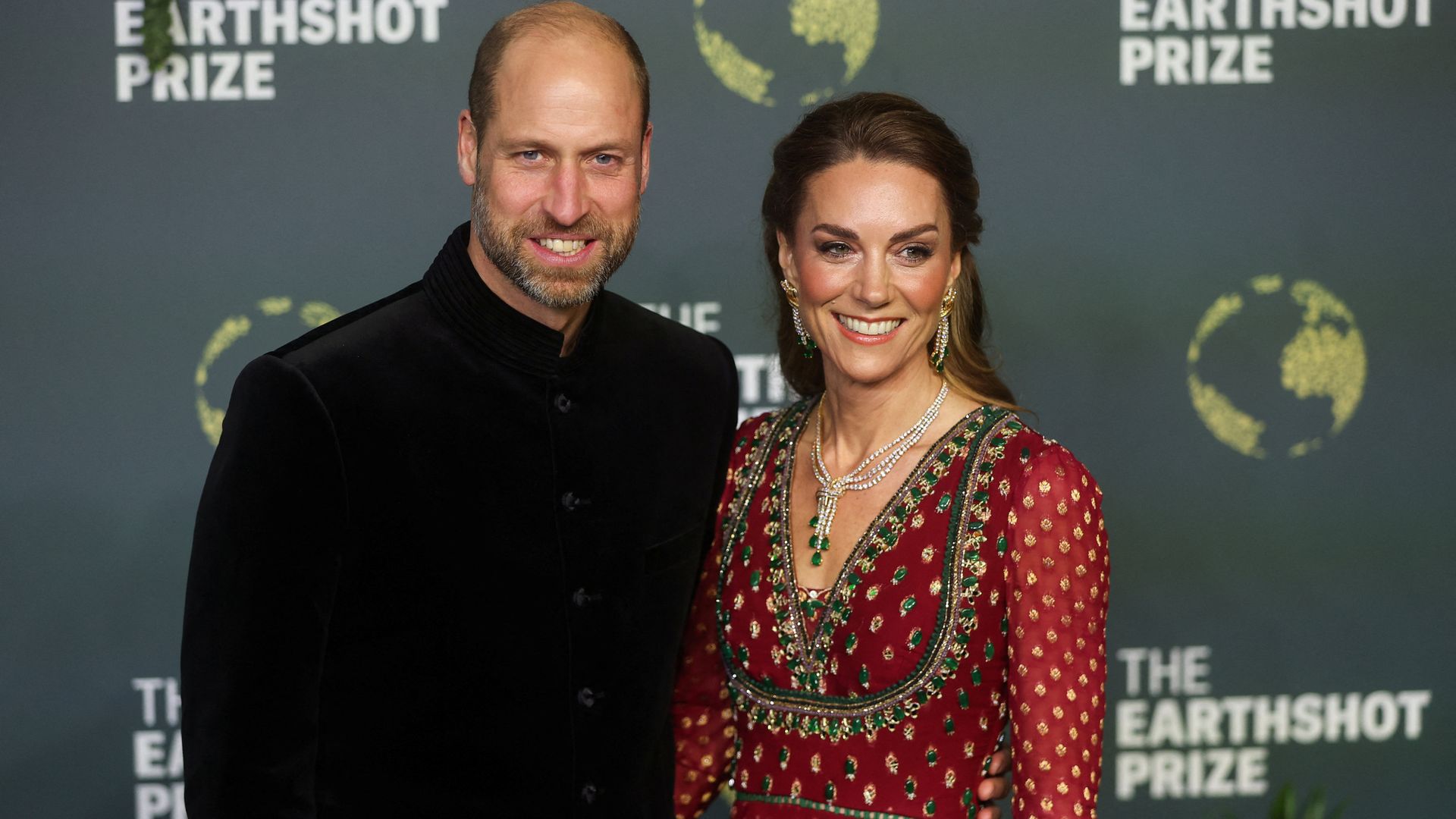
Camera flashes popped against the humid November air. Prince William and Catherine, Princess of Wales, walked the green carpet—the Earthshot Prize’s signature refusal to roll out red—smiling for lenses that had traveled four thousand miles to capture a specific kind of royal alchemy. To the casual observer scrolling past the photographs the next morning, it looked like every other charity gala. Tuxedos. Recycled couture. Polite applause in an air-conditioned ballroom.
Look closer at the air around the spotlights.
In Mumbai, you do not have to manufacture urgency for an environmental award. You breathe it. When the Prince and Princess of Wales brought the 2026 Earthshot Prize ceremony to India’s financial capital, they were not just changing the backdrop for a television broadcast. They were placing a five-million-pound bet on a city that lives on the knife-edge of every crisis the prize claims to solve.
To understand why this specific night mattered—and why the standard breathless coverage of royal fashion missed the actual story—you have to step outside the banquet hall and walk three miles north into the dense, pulsing grid where 20 million people negotiate their survival every single morning.
The Illusion of the Green Carpet
I have spent years covering climate conferences in glass convention centers where the thermostats are set to sixty-eight degrees and the bottled water comes in recyclable aluminum cans. In those rooms, the end of the world feels like a spreadsheet. We talk about gigatons and carbon offsets as if they were weather patterns happening on another planet.
Mumbai strips away that insulation within four minutes of stepping out of Chhatrapati Shivaji Maharaj International Airport.
Consider a hypothetical day in the life of Aarav, a composite character drawn from dozens of small-scale manufacturers and coastal workers across Maharashtra. Aarav runs a textile dyeing workshop near the Mithi River. His margins are razor-thin. If he filters his wastewater properly, his costs jump by eighteen percent, and his buyers in Europe will immediately take their orders to a cheaper competitor. If he dumps it untreated, the river turns the color of bruised plums, killing the mangroves that protect his own neighborhood from storm surges.
That is the trap. Not villainy. Math.
When the Earthshot Prize launched back in 2020, critics sneered at the premise. Five winners a year. One million pounds each. Ten years to "repair the planet." Against the trillions of dollars flowing into fossil fuels and industrial agriculture, five million pounds looked like trying to put out a forest fire with a watering can. Even inside environmental circles, there was a quiet, nagging doubt: Was this just royal public relations dressed up in green tulle?
It is an honest question. I asked it myself during the early years in London and Boston. Watching celebrities step out of electric SUVs to applaud entrepreneurs felt dangerously close to moral theater.
Yet standing in Mumbai in late 2026, halfway through the prize’s ten-year lifespan, the math looks different. Not because five million pounds fixes the atmosphere, but because of what happens when royal visibility collides with the brutal economics of scale.
Why India Refused to Be a Backdrop
Previous Earthshot ceremonies in London, Boston, Singapore, and Cape Town each carried a distinct diplomatic message. London was the origin story. Boston was the Kennedy nod—the "Moonshot" ancestry that gave the prize its name. Singapore turned the gaze toward Southeast Asian innovation. Cape Town grounded the mission in the Global South.
Mumbai is something else entirely.
India is the most populous nation on earth, the third-largest emitter of greenhouse gases, and simultaneously one of the lowest per-capita emitters among major economies. It is a country trying to lift hundreds of millions of people out of poverty while the climate crisis actively destroys the infrastructure needed to do it. When monsoon rains dump three months of water onto Mumbai in forty-eight hours, it is not an abstract meteorological event. Trains stop. Hospitals flood. Daily wage earners lose a week of food.
Hosting the ceremony here was a high-wire act. If William and Catherine arrived with the tone of Western saviors lecturing a developing nation on carbon footprints, the event would have been dead on arrival. Indian commentators, scientists, and activists have spent decades pushing back against climate colonialism—the demand that poorer nations halt their own development to clean up a mess created largely by two centuries of Western industrialization.
The ceremony survived because it flipped the script.
Instead of positioning the British monarchy as the benefactor rescuing the Global South, the Mumbai stage treated India as the world’s primary laboratory for survival. By 2026, Indian innovators had consistently dominated the Earthshot finalist pools—not out of charity, but because necessity forces invention faster than venture capital ever could. When water is scarce, you invent atmospheric water generators. When crop waste chokes the air of New Delhi every November, you figure out how to turn rice straw into biodegradable packaging before the farmers burn it.
Inside the venue, the cameras lingered on Catherine, returning to major international royal duties with the quiet poise that makes tabloids sell out in minutes. They lingered on William, leaning forward during the winner announcements with the intensity of someone who knows his legacy will be judged not by ribbons cut, but by whether his signature project actually moved the needle.
But the real electricity in the room did not come from the royal box. It came from the finalists sitting twenty feet away.
The Mechanics of a Million-Pound Bet
To understand what an Earthshot Prize actually buys, you have to ignore the trophy and look at the bottleneck every climate startup hits around year three.
Scientists call it the "Valley of Death." An engineer builds a working prototype in a lab. Maybe it is a solar-powered cold storage unit that keeps tomatoes from rotting in rural Maharashtra, or a clean-burning cookstove that stops indoor smoke from scarring women's lungs. The prototype works. Ten units work.
Then comes the cliff. To build ten thousand units, you need factories, supply chains, regulatory approvals, and corporate buyers willing to take a risk on an unproven vendor. Traditional banks look at a young environmental company and see risk. Venture capitalists demand tenfold returns within five years—a timeline that rarely aligns with fixing soil degradation or cleaning coastal oceans. So the invention dies in a warehouse, and the status quo wins again.
Think of the Earthshot Prize not as a reward for past achievement, but as a crowbar wedged into that specific bottleneck.
A million pounds is useful capital, certainly. In India, where engineering talent and manufacturing go further per dollar than in Silicon Valley, a million pounds can build an entire assembly line. Yet every past winner will tell you the money is secondary. What actually breaks open the Valley of Death is the phone call the morning after the broadcast.
When a small water-purification startup in Pune or a seaweed-packaging collective in coastal Tamil Nadu shares a stage with the future King of England, procurement officers at multinational corporations suddenly return their emails. Government ministers who ignored their permit applications for eighteen months suddenly ask for a photo opportunity. The royal spotlight acts as an instant due-diligence stamp, compressing five years of credibility-building into ninety seconds of live television.
Consider what happens next. A winner scales from fifty units to five thousand. Costs drop by forty percent. Suddenly, the clean alternative is no longer a moral choice for wealthy consumers; it is the cheapest option on the market.
That is how systems actually change. Not through guilt. Through price parity.
The Weight in the Room
Still, let us not pretend the evening was free of tension. You could feel it in the pauses between applause lines.
Outside the perimeter, Mumbai’s air quality index hovered in the unhealthy range—a stubborn gray haze hanging over the Queen’s Necklace curve of Marine Drive. Just weeks earlier, global climate negotiations had once again stalled over financing commitments from wealthy nations. For every brilliant solution celebrated on the Earthshot stage, there are a dozen fossil fuel subsidies quietly renewed behind closed doors.
Watching the ceremony unfold, I found myself wrestling with a familiar exhaustion. We have never lacked brilliant ideas. We have solar panels cheaper than coal, batteries denser than we imagined a decade ago, and agricultural techniques that can pull carbon back into the soil while doubling yields. What we lack is speed.
William seemed acutely aware of that clock. Halfway through the Earthshot Decade—five years down, five years left until 2030—the language surrounding the prize has shifted from wide-eyed optimism to something grittier. The speeches in Mumbai carried less poetry and more impatience. The message was unmistakable: the pilot phase of saving the planet is over. Either these solutions scale across cities like Mumbai right now, or they become museum pieces.
Catherine’s presence anchored the emotional weight of that urgency. Having navigated her own public health battle in recent years, her return to global environmental advocacy carried an unspoken subtext about fragility and resilience. People do not protect statistics. They protect what they love, and they fight hardest when they realize time is finite. In the quieter moments of the evening—when the cameras caught her speaking with young Indian climate fellows away from the main podium—the pageantry dissolved into two human beings comparing notes on a shared emergency.
Five Doors Opening at Once
The genius of the Earthshot structure lies in its five categories, which refuse to treat climate change as a single-issue carbon problem:
- Protect and Restore Nature acknowledges that forests, mangroves, and peatlands are the most efficient carbon-capture machines ever built—and we are bulldozing them for short-term cash.
- Clean Our Air confronts the invisible killer that claims millions of lives annually, hitting hardest in dense urban corridors from Delhi to London.
- Revive Our Oceans recognizes that the sea absorbs ninety percent of the excess heat we trap, quietly cooking the ecosystems that feed three billion people.
- Build a Waste-Free World attacks the absurd linear economy where we dig up resources, use them for twelve minutes, and bury them for ten thousand years.
- Fix Our Climate targets the raw physics of energy, cement, steel, and methane—the heavy machinery of modern civilization.
In Mumbai, those five categories stopped looking like neat organizational buckets and started looking like a survival kit for a single city.
Walk along the Mahim Creek at low tide and you see why. Mangroves trap plastic waste washed down from upstream neighborhoods while buffering the shoreline against cyclones. Diesel trucks idle on flyovers above, pumping fine particulate matter into the lungs of commuters. Fishing communities along the Koliwada coast watch their catches shrink as warming waters push marine life further offshore. Everything is connected. Pull one thread, and the whole fabric shifts.
When a winner in the waste-free category demonstrates how agricultural residue can replace single-use plastics, they are simultaneously reducing air pollution from crop burning, preventing plastic from choking coastal mangroves, and giving rural farmers a second income stream. One lever moves four walls.
What the Cameras Missed
Long after the final trophy was handed over and the broadcast feed cut back to studio anchors in London and New York, the air-conditioning inside the Mumbai venue began to shut down.
Staff members stacked chairs. Catering crews rolled carts of untouched hors d'oeuvres toward the service elevators. Out in the foyer, a cluster of finalists—engineers in slightly rumpled suits who had spent the last six months worrying about payroll—stood talking with an impact investor from Singapore and an energy executive from Bengaluru. Nobody was looking at the royal exit. Nobody was checking social media. They were sketching supply-chain numbers on the back of a printed program.
That unglamorous huddle by the elevator is the entire point of the exercise.
The glitter is bait. The couture, the celebrity presenters, the royal titles—all of it is a carefully engineered lure designed to hijack global attention for two hours and point it at people who usually work in obscurity. If it takes a prince in a velvet jacket to make a billion-dollar pension fund notice a chemical engineer from Chennai, then bring on the velvet jacket.
Outside, the night traffic along the Western Express Highway roared on without pause, thousands of headlights streaming through the warm coastal haze toward tomorrow morning. Somewhere along the Mithi River, the tide turned, pushing dark water back toward the sea.