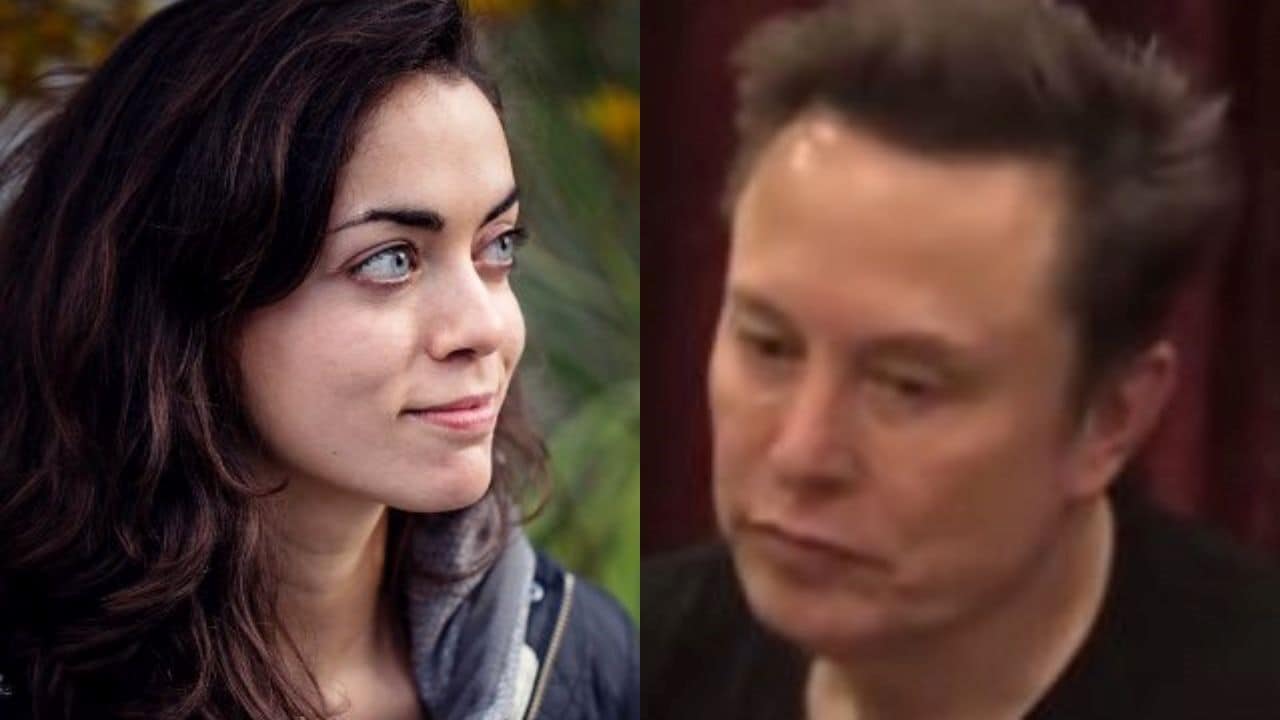
The media is obsessed with the wrong fight. While every legal analyst on the planet analyzes the gavel-swinging theater of "Musk v. Altman," they are missing the forest for the courtroom benches. They treat this like a high-stakes chess match between two titans. It isn't. It’s a funeral for an ideal that died years ago, and the judge in California is just the one signing the death certificate.
The "lazy consensus" suggests this is a battle for the soul of AI—OpenAI’s transition from a non-profit "save the world" entity to a profit-hungry behemoth. That narrative is a fairy tale. The soul of AI was sold the moment the first billion-dollar compute bill arrived. You cannot build the most expensive technology in human history on a foundation of bake sales and good intentions.
The Fallacy of the Non-Profit Heavyweight
Let’s dismantle the biggest myth first: the idea that OpenAI could have ever stayed "open" while remaining competitive. I have watched boards struggle with $50 million burn rates; OpenAI is staring down the barrel of billions.
When Elon Musk sues Sam Altman for "betraying" the founding mission, he is ignoring the cold, hard physics of capital. Training a frontier model like GPT-4 or its successors requires an amount of hardware—specifically H100s and eventually the Blackwell chips—that no non-profit structure can sustain without becoming a vassal state to a massive cloud provider. In this case, Microsoft.
Musk’s argument relies on the "Founding Agreement." But in the world of high-velocity tech, a founding agreement is a suicide pact if it doesn’t account for the $100 billion infrastructure requirement of AGI. The court is being asked to decide if OpenAI breached a contract, but the market already decided that the contract was obsolete in 2019.
Why the Judge’s Decision is Irrelevant
The pundits are holding their breath for the "final call." They think the judge will either force OpenAI to open-source its weights or revert to a non-profit status.
Neither will happen.
If the judge rules for Musk, OpenAI doesn't suddenly become a transparent, altruistic workshop. Instead, it enters a state of legal paralysis that helps exactly one person: Elon Musk. This isn't about "saving humanity." This is about corporate sabotage disguised as a moral crusade. By tying OpenAI up in discovery, Musk gains the one thing money usually can’t buy: time for xAI to catch up.
If the judge rules for Altman, the precedent is set: mission statements are marketing, and fiduciary duty to "humanity" is a PR line that can be deleted once the Series A closes.
The real loser isn't Musk or Altman. It’s the developer who actually believed "Open" meant something.
The Myth of "Open" Weights
Everyone asks, "Should OpenAI open-source their models?" It’s the wrong question.
The right question is: "Does open-sourcing a model even matter when you can’t afford to run it?"
Releasing the weights of a frontier model is like giving someone the keys to a nuclear reactor but no uranium. Unless you have the compute clusters of a nation-state or a "Magnificent Seven" tech giant, a "free" frontier model is a paperweight. We are moving toward a world where "Open Source" is a luxury brand used by Meta to undermine Google, not a democratic tool for the masses.
I’ve seen this play out in the enterprise space. Companies clamor for Llama 3 or other open models because they want "control." Then they see the AWS bill for hosting those models at scale and run straight back to the managed APIs of OpenAI or Anthropic.
The Governance Hallucination
The competitor article focuses on the board’s role and the judge’s ability to interpret "AGI." This is a technical impossibility being forced into a legal framework.
Imagine asking a judge to define the exact moment a soul enters a body. That is essentially what the court is doing by trying to define when "AGI" (Artificial General Intelligence) has been reached. According to OpenAI’s own charters, Microsoft loses access to the IP once AGI is achieved.
The conflict of interest is staggering. OpenAI has every financial incentive to move the goalposts of AGI forever. Microsoft has every incentive to agree that we are "close but not there." And the judge? The judge is looking at a pile of technical jargon and trying to find a legal hook in a field where the definitions change every six months.
- The "Safety" Shield: Both sides use safety as a cudgel. Altman says they must be closed to prevent misuse. Musk says they must be open to ensure transparency.
- The Truth: Safety is the most effective regulatory moat ever devised. If you can convince a judge (and the government) that your tech is too "dangerous" to be open, you effectively ban competition by law.
The Actionable Reality for the Rest of Us
Stop waiting for the "final call" to decide how you’ll build your company or your career. If you are waiting for a courtroom in California to dictate the ethics of AI, you’ve already lost.
- Assume everything is proprietary. Don’t build a business that relies on the "goodwill" of a provider. If your entire value proposition is a wrapper on GPT-4, you aren't a business; you’re an unpaid beta tester for Sam Altman.
- Compute is the only currency. In the Musk v Altman era, the person with the most GPUs wins. Legal arguments are just noise used to slow down the person with the most chips.
- Localize where possible. The only true "Open AI" is the one running on your own hardware, disconnected from the cloud. Everything else is just a rental.
The Inevitable Pivot
This lawsuit will likely end in a settlement that looks like a "win" for both while changing nothing for the public. Musk will get some form of credit or a nominal return to "transparency," and OpenAI will continue its march toward a multi-trillion-dollar IPO.
The judge isn't making a "final call" on the future of technology. They are refereeing a spat over who gets to own the toll booth on the road to the future.
The status quo isn't being challenged in that courtroom; it’s being codified. We are witnessing the birth of a new era of corporate law where "public benefit" is a variable in an equation, and that variable is always set to zero when the stakes get high enough.
If you want to see where AI is going, stop reading the court transcripts. Look at the power consumption of the data centers being built in the desert. That is the only verdict that matters.
Pick a side if you want the entertainment, but don't mistake the theater for the struggle. The "final call" was made the day we decided that AGI was a product to be sold rather than a discovery to be shared.
The trial is just the credits rolling on the era of AI idealism. Stop mourning it and start building for the world that actually exists.