Fear sells papers. It also sells missiles. The current obsession with "flashing red" warning lights regarding Britain’s lack of military readiness is a masterclass in missing the point. The punditry class is fixated on 20th-century optics—tank counts, troop numbers, and the romanticized notion of a "nation at war"—while ignoring the cold, hard reality of modern power.
Britain isn't "unprepared" because of a clerical error or a lack of patriotism. Britain is unprepared because the very definition of preparation has shifted, and our leaders are still looking for a fuse box while the entire grid has gone wireless. We are told that we are on the precipice of a total war for which we have no stomach. The truth is far more uncomfortable: the "war" is already happening, it’s being won by those who understand systems over steel, and the traditional military-industrial complex is a bloated corpse we keep trying to resuscitate with tax hikes.
The Infantry Obsession is a Death Trap
The most common lament in defense circles is the shrinking size of the British Army. We hear that 72,500 soldiers isn't enough to defend a mid-sized car park, let alone a nation. This is a classic "lazy consensus" rooted in the mud of the Somme.
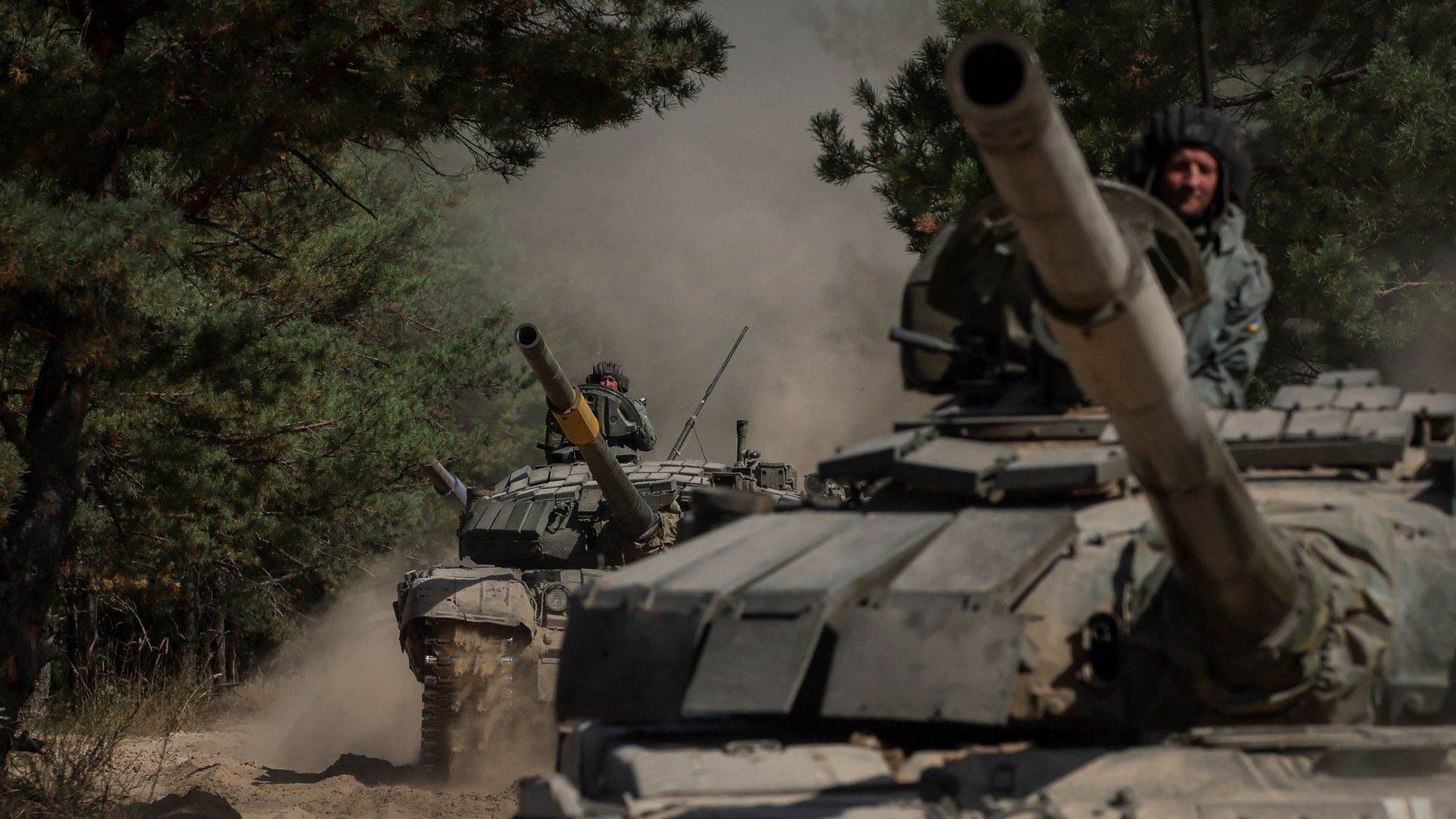
In a world defined by long-range precision fires, autonomous loitering munitions, and cyber-kinetic integration, a massive standing army of humans is often little more than a massive collection of targets. I have watched defense contractors pitch "solutions" that are essentially slightly faster versions of 1980s tech. They want more boots. Why? Because boots are expensive, require long-term contracts, and provide a predictable revenue stream for the next thirty years.
Look at the Nagorno-Karabakh conflict or the early stages of the Russian invasion of Ukraine. It wasn't "prepared" massive formations that shifted the tide; it was the rapid, decentralized application of low-cost tech. If you have 100,000 men and your opponent has 10,000 men and 50,000 $500 FPV drones, you don't have an army. You have a massacre. Britain’s "unpreparedness" in terms of manpower is actually an accidental opportunity to leapfrog the legacy weight that is currently dragging down the US and China.
The Industry of Inefficiency
We are told that Britain’s industrial base is too small to support a major conflict. The "experts" argue we need to reopen massive factories to churn out shells. This is nostalgic nonsense.
The defense industry as it exists today is built on a "cost-plus" model that rewards delay and penalizes innovation. If you build a missile for £1 million, you make a percentage. If you find a way to build it for £10,000 using off-the-shelf components and 3D printing, your profit disappears. Our lack of readiness is a direct result of a procurement system that favors "sovereign capability" (read: expensive local monopolies) over raw utility.
True readiness in 2026 doesn't look like a sprawling factory in the Midlands. It looks like a distributed network of software-defined manufacturing hubs. The "warning lights" are flashing because we are trying to solve a high-speed software problem with slow-motion hardware thinking. We don't need a "war economy" in the sense of ration cards and steel mills. We need a venture capital mindset applied to lethal autonomy.
The Sovereignty Delusion
Britain clings to the idea that it must be able to act alone. This is the ultimate strategic vanity. The "warning lights" are often used as an argument for more independent spending.
I’ve spent time in the rooms where these budgets are slashed. The dirty secret is that "sovereignty" is a marketing term used to justify buying overpriced domestic equipment that doesn't talk to our allies' systems. A truly prepared Britain would admit it is a specialized node in a global security network. We should stop trying to be a "mini-USA" with a handful of everything and instead become the undisputed world leader in a few specific, terrifying niches—undersea warfare, electronic disruption, and AI-driven command and control.
Instead, we buy a couple of aircraft carriers that require the entire rest of the Navy just to protect them. They are floating targets, symbols of a maritime empire that died seventy years ago. They are the ultimate example of "looking" prepared while actually increasing our vulnerability.
The Civilian Resilience Lie
The media loves to ask, "Is the public ready for war?" as if the answer matters. The premise is flawed. Modern war doesn't require a "Home Guard" or people growing vegetables in their back gardens. It requires a resilient digital infrastructure.
If a hostile actor wanted to cripple Britain, they wouldn't land troops on a beach in Kent. They would shut down the banking system, desynchronize the power grid, and poison the information environment until we started fighting each other in the streets.
Our "lack of preparation" isn't about military service; it's about the fact that our national infrastructure is a patchwork of legacy code and vulnerable physical nodes. We are building "defenses" against a frontal assault while our back door is wide open and the lock is made of plastic.
Reimagining the "Red Lights"
Imagine a scenario where we stopped funding the vanity projects—the carriers, the massive tank upgrades, the aging fighter jet programs. Imagine if that capital was diverted entirely into "asymmetric readiness."
- Mass Attrition: Building a million-unit drone stockpile that costs less than a single Type 45 destroyer.
- Decentralized Energy: Making the nation impossible to "switch off" by moving away from centralized grid targets.
- Cognitive Defense: Investing in the one thing no one wants to talk about: the fact that our population is currently being programmed by adversary algorithms every time they open a social media app.
The "warning lights" are a gift. They tell us that the old way is dead. The danger isn't that we aren't "prepared" for the last war. The danger is that we are so busy trying to fix the old machine that we haven't noticed the world has moved on to a completely different engine.
The Cost of Realism
The downside to this contrarian view is obvious: it’s politically radioactive. No politician wants to stand up and say, "We are scrapping the tanks and the carriers to buy software and cheap drones." It doesn't look good in a parade. It doesn't create thousands of unionized manufacturing jobs in swing seats.
But professional soldiers and industry insiders know the truth. The gap between what we have and what we need isn't a gap in funding; it’s a gap in imagination. We are being told to prepare for a "coming war" by the very people who failed to notice the current one started a decade ago.
Stop looking for "warning lights" on the dashboard of a car that’s already headed off a cliff. The only way to win is to stop playing the game of 20th-century prestige and start mastering the brutal, unglamorous mechanics of 21st-century survival.
We aren't unprepared because we are weak. We are unprepared because we are obsessed with looking strong in ways that no longer matter.
Britain doesn't need more soldiers. It needs fewer targets.