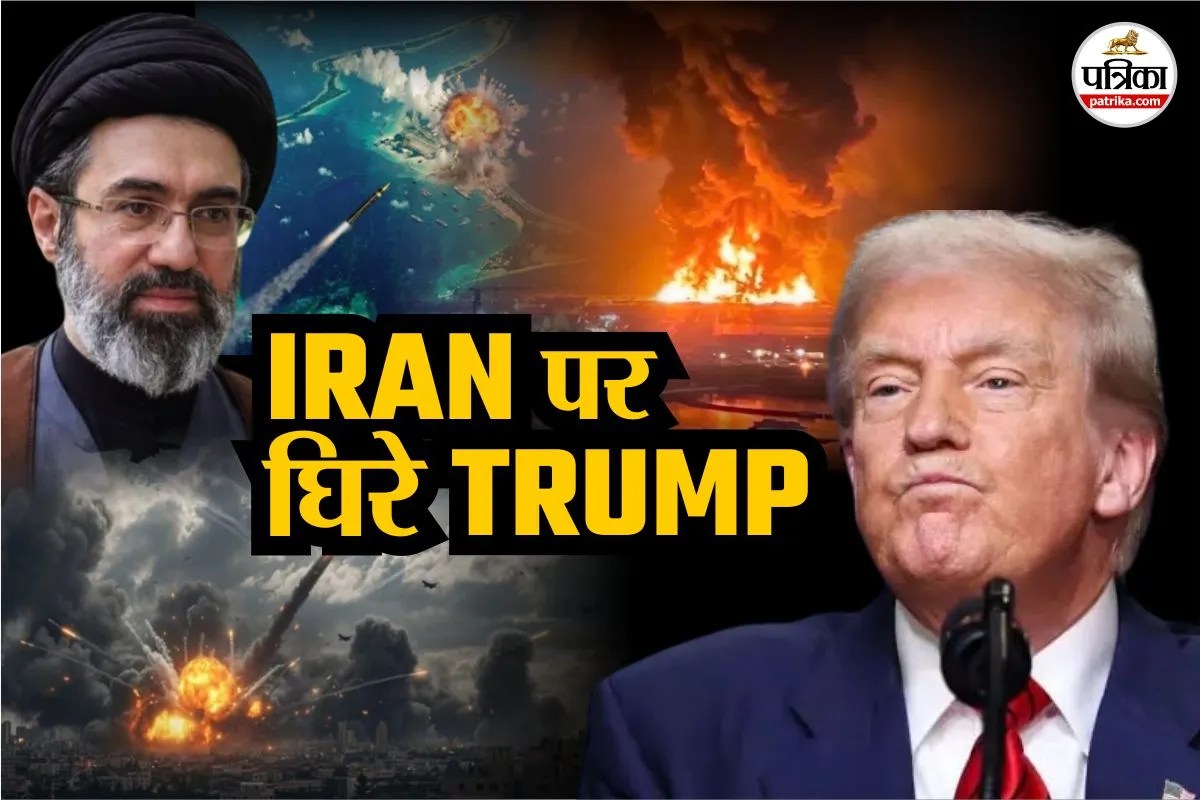
The prevailing narrative surrounding the 2020 escalation between the US and Iran is a masterclass in geopolitical delusion. Most analysts—and certainly the article in question—suggest that Donald Trump was "cornered" or "forced" into a ceasefire because he underestimated the Persian lion. They paint a picture of a hesitant Washington DC, trembling at the thought of a regional conflagration, eventually backing down to save face.
This isn't just wrong. It’s an inversion of reality.
If you want to understand the mechanics of power, you have to stop looking at what leaders say and start looking at what they break. The 2020 skirmish wasn't a stalemate. It was a clinical demonstration of asymmetric dominance that left Tehran with zero good options, a shattered myth of invincibility, and a desperate need to pretend they had won a "moral victory" just to keep their internal regime from fracturing.
The Deceptive Lure of "Proportional Response"
The biggest mistake amateur pundits make is applying the logic of a schoolyard fight to nuclear-adjacent statecraft. They see Iran firing missiles at the Al-Asad airbase and think, "Aha! Iran hit back, and the US didn't flatten Tehran, therefore Iran won the exchange."
This is the "proportionality trap." In reality, the US practiced Escalation Dominance. By taking out Qasem Soleimani—the undisputed architect of Iran’s regional shadow empire—the US didn't just kill a general. They deleted a unique human node of geopolitical influence that Iran spent thirty years building. Soleimani was the glue holding together the PMF in Iraq, Hezbollah in Lebanon, and the Houthis in Yemen.
When Iran responded with ballistic missiles that notably caused zero American fatalities, it wasn't an act of strength. It was a choreographed face-saving exercise. They signaled their intent, gave the US time to move troops to bunkers, and fired just enough metal to satisfy their domestic propaganda machine without triggering a regime-ending retaliation.
Imagine a scenario where a heavyweight champion knocks out the challenger’s manager, and the challenger responds by throwing a shoe at the champion’s bus. If you call that a "draw," you aren't paying attention to the scorecard.
The Economic Asymmetry Nobody Mentions
Geopolitics is downstream from the balance sheet. While the media focused on missile trajectories, the real war was being fought in the central banks.
The "consensus" view claims Trump was under pressure because of global oil prices. That’s a 1970s mindset. By 2020, the US was no longer the energy-dependent hostage it was during the Carter administration. Thanks to the shale revolution, the US had become a net exporter of petroleum products.
Iran, conversely, was hemorrhaging. Their inflation rate was north of 40%. Their currency, the Rial, was in freefall. The "maximum pressure" campaign wasn't a failure; it was a slow-motion strangulation. The US didn't need to go to war because they were already winning the siege. Why would you kick down a door when the person inside is already running out of oxygen?
The "ceasefire" wasn't a result of American weakness. It was a strategic pause by a superpower that realized it could achieve its objectives through 1s and 0s in the banking system rather than boots on the ground in the Zagros Mountains.
Dismantling the "Regional War" Boogeyman
The most common fear-mongering tactic used by the "de-escalation at all costs" crowd is the threat of a "total regional war." They argue that any strike on Iran would set the entire Middle East ablaze.
This ignores the fundamental shifts in Arab-Israeli relations. I’ve seen diplomats sweat over the idea of Arab "solidarity" with Iran, but the truth is the exact opposite. The Gulf states—Saudi Arabia, the UAE, Bahrain—were quietly (and sometimes loudly) cheering for the degradation of Iranian power.
The Abraham Accords didn't happen in a vacuum. They were the direct result of regional powers realizing that the "Iranian threat" was the only thing that mattered. The idea that a US-Iran conflict would unite the Muslim world against Washington is a fantasy. It would have been a targeted decapitation of the IRGC, while the rest of the neighborhood looked the other way or offered logistical support.
The Intelligence Failure of the Skeptics
Critics often point to the lack of "intel" or "imminent threat" as proof that the Soleimani strike was a blunder. This is a naive understanding of how intelligence works in the 21st century.
In high-stakes geopolitics, you don't wait for a signed confession before you act. You look at patterns of life, funding flows, and organizational momentum. Soleimani was in Baghdad to coordinate further attacks on US assets. The strike wasn't "reactive"; it was "disruptive." It broke the chain of command at a critical moment.
The logic that the US was "surrounded" or "trapped" in Iraq is a fundamental misunderstanding of the US military's global footprint. The US has the capability to project power into any square inch of Iranian territory from thousands of miles away. Iran, meanwhile, struggles to maintain influence beyond its immediate borders without relying on ragtag militias.
Stop Asking if the US "Won"
The question itself is flawed. In the modern era, "winning" isn't a flag-raising ceremony on a pile of rubble. It’s the maintenance of a favorable status quo.
By killing Soleimani and then refusing to get sucked into a ground war, the US achieved several things:
- It established a new "red line" that Iran now knows is real.
- It proved that the US can strike the highest-ranking Iranian officials with impunity.
- It forced Iran to burn its missile inventory on a symbolic gesture that changed nothing on the ground.
If you think the US was "forced" into a ceasefire, you're falling for the same PR stunt the Iranian regime uses to keep its population from revolting. They need you to believe they are a peer competitor. They aren't. They are a regional power playing a weak hand with extreme aggression, hoping that Western analysts will do their marketing for them.
The Cost of Conventional Wisdom
The real danger of the "Trump was cornered" narrative is that it encourages future Iranian adventurism. When we misinterpret a strategic de-escalation as a sign of weakness, we invite miscalculation.
The US didn't stop because it was afraid. It stopped because it had already extracted the maximum value from the exchange. It demonstrated that it could reach out and touch anyone, anywhere, at any time, and that Iran’s "missile shield" was effectively a collection of expensive fireworks.
True expertise means looking past the smoke and the shouting on social media. It means recognizing that a superpower doesn't need to win every headline to win the war. The US didn't retreat; it simply moved to the next phase of the siege.
The Iranian regime is still standing, but the pillars of its regional strategy are cracked, its economy is a ghost of its former self, and its greatest military mind is a memory. If that’s what "winning" looks like for Tehran, I’d hate to see them lose.
Go back and look at the map. Look at the base locations. Look at the carrier strike groups. Then look at the Iranian Rial’s value against the dollar. The "cornered" party was never in Washington. It was, and remains, in Tehran.
Don't let a clever headline convince you that the world's only superpower got bullied by a nation with the GDP of Florida. Context matters. Results matter. Everything else is just noise.
Stop looking for a surrender ceremony and start looking at the structural decay of the opponent. That’s where the truth is buried.
Stay sharp. The loudest voice in the room is usually the one with the most to hide.



