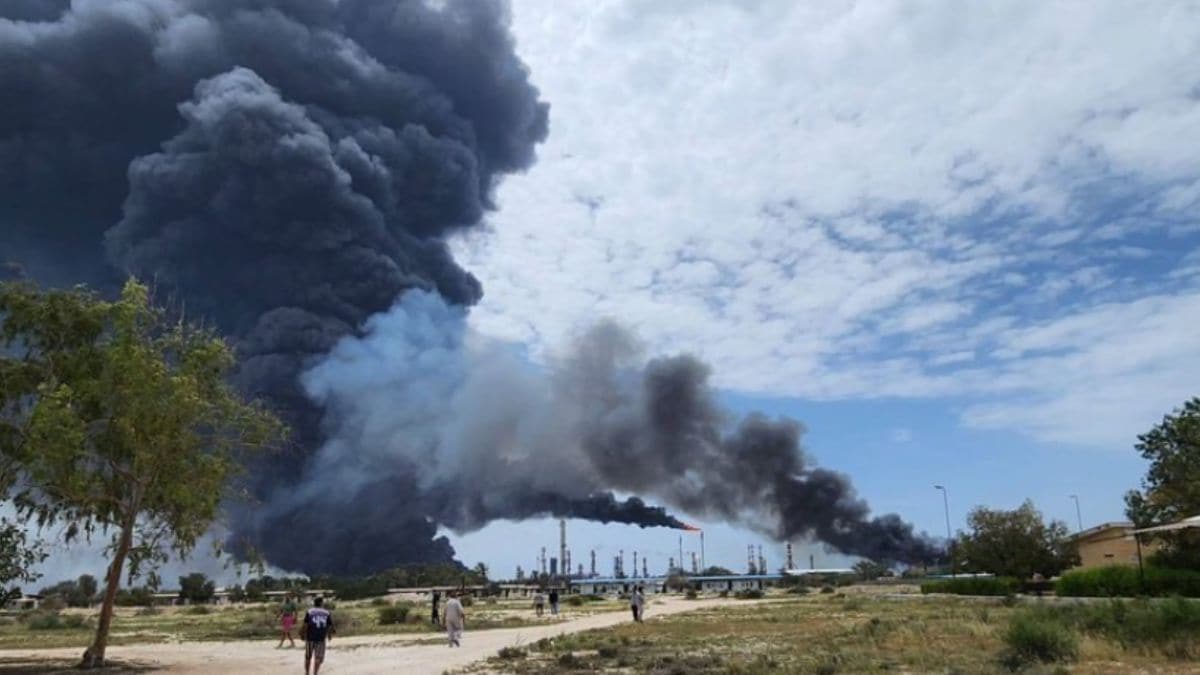
The headlines are screaming about a refinery strike in Iran and retaliatory volleys against Kuwait and the UAE. Mainstream analysts are already dusted off their "Oil at $150" scripts. They want you to believe we are one drone strike away from a global energy collapse. They are wrong.
This isn't a crisis of supply. It is a crisis of imagination. The "lazy consensus" in energy reporting assumes that because a missile hit a distillation unit, the global economy is about to grind to a halt. In reality, the physical oil market is yawning. Why? Because the geography of energy has shifted faster than the pundits can update their spreadsheets. For a different view, see: this related article.
The Empty Threat of the Strait of Hormuz
Every time a shadow-war heats up in the Persian Gulf, the same tired map of the Strait of Hormuz gets flashed on every news network. The narrative is always the same: Iran closes the Strait, the world starves for oil.
I have spent twenty years watching traders sweat over these maps. Here is the reality they ignore: closing the Strait is a suicide pact, not a strategic masterstroke. Iran’s own economy is tied to the very maritime lanes they threaten. More importantly, the world has spent the last decade building workarounds that the "ceasefire broken" crowd refuses to acknowledge. Further coverage on this trend has been provided by MarketWatch.
Saudi Arabia’s East-West Pipeline and the UAE’s Habshan-Fujairah line can bypass the Strait entirely, moving millions of barrels per day directly to the Red Sea or the Gulf of Oman. When a refinery in Iran gets hit, it doesn't subtract from the global crude pool; it actually forces more unrefined crude onto the market because the domestic processing capacity has been neutralized.
The "disruption" is a redistribution.
Why a Strike on Kuwait and the UAE Changes Nothing
The reports of strikes on Kuwait and the UAE are designed to trigger a specific type of algorithmic trading. Machines see "UAE" and "Strike" and they buy futures. It’s a Pavlovian response.
But look at the infrastructure. Modern refineries in the Gulf are built like fortresses, with redundant systems that make the 1970s look like the Stone Age. A strike on a storage tank is a PR victory, not a systemic failure.
Imagine a scenario where a drone successfully takes out a primary gathering center. In the old world, that meant months of downtime. In the current world of modular engineering and massive strategic reserves held by the IEA and private firms, the "shock" lasts about 48 hours.
The real story isn't the fire in the refinery. The real story is the 100 million barrels of "shadow supply" sitting in floating storage and Chinese bonded warehouses. We are drowning in oil, yet the media treats every spark in the desert like we’re running on empty.
The China Factor No One Mentions
The competitor pieces focus on "Regional Stability." They are asking the wrong question. They ask, "Will the ceasefire hold?"
The better question is: "Does China care if it doesn't?"
China is the primary buyer of Iranian crude, often moving through "tea house" refineries and ship-to-ship transfers that bypass every sanction on the books. If Iranian infrastructure is damaged, China simply pivots to its massive Russian or Iraqi contracts. The global flow is a hydraulic system; you squeeze one pipe, the liquid finds another.
By obsessing over the "ceasefire," analysts miss the structural shift where the Middle East is no longer the sole protagonist of the energy story. The Permian Basin in the US and the offshore finds in Guyana have fundamentally broken the OPEC+ stranglehold.
The Hard Truth About "Price Spikes"
You will see the price of Brent crude jump. Do not mistake volatility for value.
Price spikes in the wake of Middle Eastern kinetic action are almost entirely driven by the "fear premium"—a psychological tax added by paper traders who don't know a drill bit from a drill sergeant.
I’ve seen firms lose hundreds of millions trying to "hedge" against a Middle Eastern war that never produces a long-term supply deficit. The actual physical delivery of oil rarely falters for more than a few days. The "war" is fought on Bloomberg terminals, not on the docks of Basra or Jebel Ali.
The Failure of the Conventional Narrative
The mainstream media loves a "failed ceasefire" story because it has a clear villain and a clear victim. It’s easy to write. It’s also lazy.
They ignore the fact that Iran’s aging refinery fleet was already a mess of duct tape and Chinese spare parts. A strike there is often just an acceleration of an inevitable mechanical failure.
They ignore the fact that Kuwait and the UAE have some of the most sophisticated missile defense umbrellas on the planet. For every "strike" that makes the news, fifty are intercepted and buried in classified reports to avoid embarrassing the aggressor.
Stop Monitoring the Ceasefire; Start Monitoring the Inventories
If you want to know what is actually happening, stop reading the "Breaking News" alerts about missile counts.
- Watch the Crack Spreads: If the price of refined products (gasoline, diesel) isn't decoupling from the price of crude, the market doesn't believe the refinery strikes matter.
- Track the Tankers: Satellite data shows where the ships are moving. If the ships aren't stopping, the war is a footnote.
- Ignore the Rhetoric: Tehran, Kuwait City, and Abu Dhabi all have a vested interest in sounding more panicked (or more powerful) than they actually are. It's a theater of energy.
The status quo is a lie. We aren't living in a world of scarce energy threatened by regional "bad actors." We are living in a world of oversupply where regional skirmishes are used to justify price floors that the fundamentals no longer support.
Every time you hear "ceasefire broken," remember that the oil is still flowing, the tankers are still sailing, and the only thing truly being disrupted is your ability to see the market for what it actually is: a rigged game of psychological warfare where the "crisis" is the product.
Burn the playbook. Ignore the sirens.