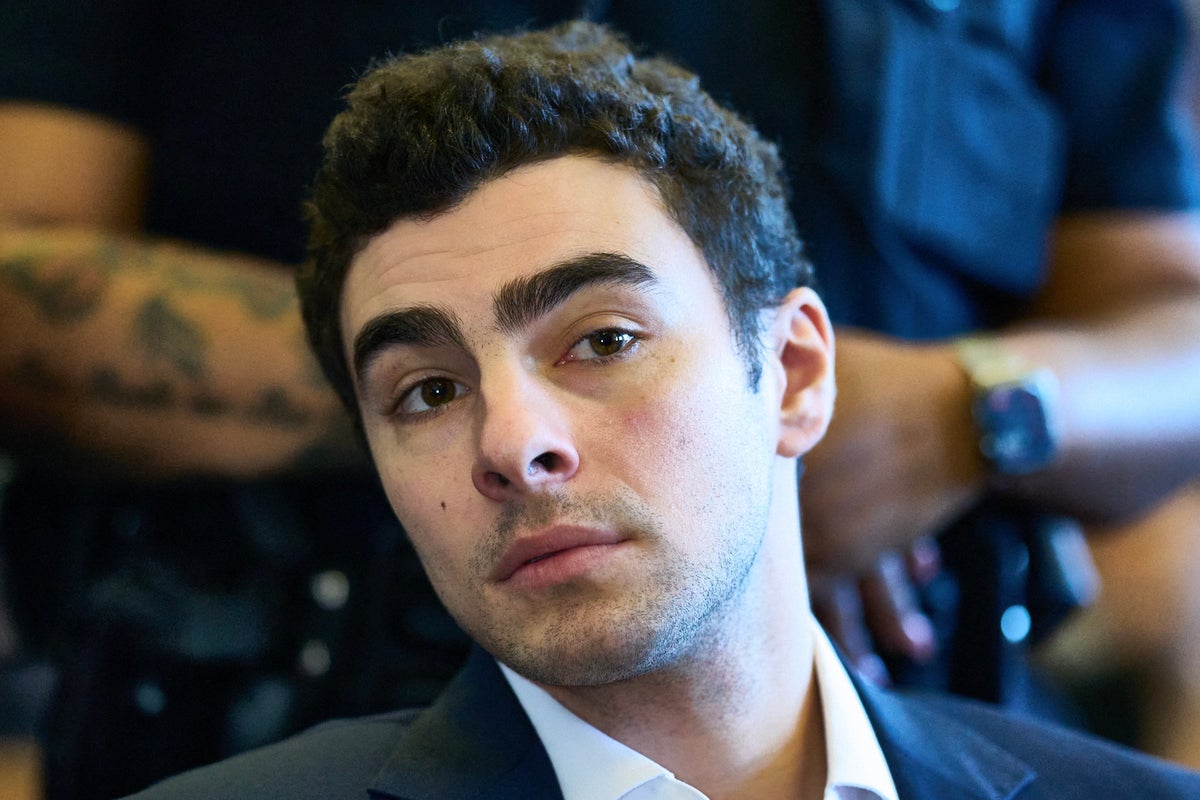
Luigi Mangione does not support violent actions. That is the official line from his defense team, delivered with the practiced sobriety of a high-stakes legal maneuver. It is a necessary pivot for a man facing the weight of the federal government and a second-degree murder charge in a Manhattan courtroom. But outside the sterile confines of the legal strategy, that sentence rings hollow against the backdrop of a 3D-printed gun, a handwritten manifesto, and the targeted execution of UnitedHealthcare CEO Brian Thompson. The defense is currently fighting a war on two fronts: one for Mangione’s life in a system that once sought the death penalty, and another for the soul of a public that has increasingly begun to view the defendant not as a killer, but as a symptom.
The central tension of this case has never been about whether Mangione pulled the trigger. The evidence—the matching shell casings, the Altoona McDonald’s arrest, the digital trail—is a mountain few expect the defense to climb. Instead, the real battle is over the "why." By claiming Mangione "does not support violent actions," his lawyer, Karen Friedman Agnifilo, is attempting to decouple the man from the movement that has sprouted around him. It is a desperate effort to keep the trial focused on the law rather than the ideology that turned a high-achieving Ivy League graduate into the face of a violent anti-corporate insurgency.
The Architect of an Unlikely Icon
Mangione was not the typical candidate for a radical break from society. He was the valedictorian of his high school, a graduate of the University of Pennsylvania, and a young man with every door open to him. Yet, the prosecution argues he spent months meticulously planning the assassination of Brian Thompson, a man who represented the pinnacle of the American insurance machine. This was not a crime of passion or a random act of street violence. It was a surgical strike against a specific symbol of systemic frustration.
The defense's new narrative suggests a man who may have been pushed to a psychological brink by his own chronic health issues—specifically a debilitating spinal condition—rather than a cold-blooded ideologue. They want the jury to see a victim of the very system he is accused of attacking. By stating he does not support violence, they are laying the groundwork for a defense that emphasizes mental health or "temporary" radicalization over a permanent commitment to terrorism.
This strategy, however, ignores the 262-word document found on Mangione at the time of his arrest. That paper didn't read like the ramblings of a man who abhorred violence. It read like a call to arms against a "parasitic" industry.
A Public Divided by a Deductible
While the legal team tries to soften Mangione's image, the public has already made up its mind, and the split is starkly generational. In the months leading up to the scheduled September and October trials, polling has revealed a disturbing trend. A majority of Americans under 30 view Mangione favorably, often casting him as a "Robin Hood" figure or a "folk hero." To them, the violence of the shooting is outweighed by the perceived violence of the insurance industry—the denied claims, the "death by paperwork," and the billions in profit extracted from the sick.
Older demographics view him with horror, seeing the assassination as an unforgivable breach of the social contract. But for a younger cohort that has only ever known a precarious, profit-driven healthcare landscape, Mangione has become a vessel for their collective rage. This is the "penal populism" that legal scholars warn about: a situation where the public’s desire for systemic justice begins to override the rule of law.
The insurance industry, for its part, has circled the wagons. Since the December 2024 shooting, major health insurers have scrubbed executive travel schedules and shifted investor meetings to virtual formats. They are terrified. They aren't just afraid of another shooter; they are afraid of the fact that a significant portion of their customer base felt a sense of "righteous anger" when their CEO was killed.
The Shadow of the Death Penalty
The federal government’s pursuit of Mangione has been anything but smooth. Initially, the Department of Justice, under a strict executive order regarding capital punishment, sought the death penalty. This was a move that many legal experts called "barbaric" and "unnecessary" for the killing of a single civilian. In January 2026, Judge Margaret Garnett dealt a massive blow to the prosecution by dismissing the capital-eligible charge.
This ruling changed the stakes. Mangione is no longer fighting for his life in the literal sense of the executioner’s needle, but he is fighting for the rest of his life behind bars. The dismissal of the death penalty also stripped the prosecution of its most powerful leverage. Without the threat of execution, Mangione has little incentive to take a plea deal that would involve a full admission of his ideological motivations. He can afford to let his lawyers tell the world he "does not support violence" while his supporters in the gallery wear green in a silent nod to the Mario Bros. character who shares his name.
The Liability of the Manifesto
The "manifesto" remains the most dangerous piece of evidence for the defense. Prosecutors have characterized it as a blueprint for domestic terrorism, focusing on phrases that justify the "removal" of corporate parasites. If the defense stick to the "no support for violence" line, they must find a way to explain away these words as the product of a fever dream or a desperate, non-literal cry for help.
They are essentially asking a jury to ignore the clear intent written in the defendant’s own hand. This is a high-wire act. If they lean too hard into the "peaceful" angle, they risk insulting the intelligence of the jurors who have seen the video of the shooter calmly reloading a jammed weapon. If they lean too hard into the "system made him do it" angle, they risk validating the very violence they claim he doesn't support.
The Industry on Trial
The reality is that when Luigi Mangione enters that courtroom in September, the American healthcare system will be sitting at the defense table next to him. Every denied claim, every automated rejection by an AI algorithm, and every premium hike will be litigated in the court of public opinion.
UnitedHealthcare and its peers have spent millions on PR campaigns to rebrand themselves as "partners in health" since the shooting. It hasn't worked. The "Free Luigi" hashtags and the murals appearing in cities like Seattle and Los Angeles suggest that the genie is out of the bottle. The shooting wasn't a "game-changer" in the sense of shifting policy, but it was a rupture in the social fabric.
The defense’s claim that Mangione is a man of peace is a tactical necessity, but it is also a profound irony. The very thing that makes him a hero to his supporters is the act of violence his lawyers must now disavow. They are trying to save the man by killing the myth, but the myth has already grown far larger than the person sitting in a Pennsylvania jail cell.
This trial will not settle the debate over healthcare in America. It will not fix the broken relationship between insurers and the insured. It will simply be a grim accounting of what happens when a society’s frustrations are allowed to rot until they turn into lead and gunpowder. The defense can say he doesn't support violence all they want. The world saw otherwise on a cold December morning in Manhattan.