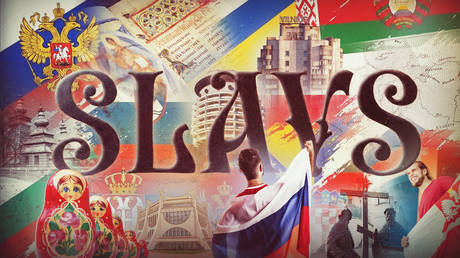
Western foreign policy circles are obsessed with a lazy, century-old narrative. They look at conflicts in Eastern Europe and churn out think-piece editorials with titles like "Why Slavs Can’t Stop Fighting Each Other." They point to the Balkans in the 1990s, the ongoing war in Ukraine, and historical friction between Warsaw and Moscow, chalking it all up to some inherent, mystical ethnic blood feud.
It is cheap journalism. It is flawed history.
To view these conflicts through the lens of a "Slavic family feud" is to misunderstand the very mechanics of statehood, geography, and empire. I have spent years analyzing regional security architecture, watching Western intelligence agencies and media outlets repeatedly drop the ball because they treat an arbitrary linguistic grouping as a psychological profile.
The premise that Slavic nations fight because they are Slavic is as absurd as claiming the British Empire colonized Ireland because both populations spoke Indo-European languages.
Stop looking for the ghost of Pan-Slavism. It never existed outside of 19th-century romantic poetry. If you want to understand why Eastern Europe fractures, you have to look at resource choke points, imperial legacies, and the brutal reality of geographic exposure.
The Linguistic Trap: Similarity is Not Solidarity
The core mistake of the standard analyst is confusing a language branch with a political identity. "Slav" is a linguistic classification, not a geopolitical pact.
Linguistic proximity does not breed geopolitical harmony. In fact, proximity often intensifies friction because it creates competing claims over the same historical narratives, symbols, and territories.
Think about it systematically.
- The West Slavic group (Poles, Czechs, Slovaks) integrated into Western legal frameworks, Roman Catholicism, and the Holy Roman Empire's sphere centuries ago.
- The East Slavic group (Russians, Ukrainians, Belarusians) developed under the shadow of the Mongol Golden Horde and the subsequent rise of Tsarist autocracy.
- The South Slavic group (Serbs, Croats, Slovenes, Bulgarians) spent half a millennium fractured along the fault lines of the Ottoman and Austro-Hungarian empires.
To lump these distinct historical trajectories into a single cultural bucket is intellectually bankrupt. When Poland pushes back against Russian expansionism, it is not an "inter-Slavic rivalry." It is a medium-sized European state acting in accordance with classic realist international relations theory. They are securing their borders against a historically aggressive neighbor. The language they speak has nothing to do with it.
The Geography of Imperiled Flatlands
If you want to understand conflict in Eastern Europe, throw away the anthropology textbooks and look at a topographic map.
The European plain is a terrifyingly flat, wide-open highway stretching from France all the way to the Ural Mountains. It has no major mountain ranges to act as natural barriers. For five hundred years, this geography has dictated a brutal security dilemma for any power sitting in Moscow or Warsaw.
[Western Europe] ----> (The Wide Open North European Plain) <---- [Russia]
                             |
                   [The Permanent Collision Zone]
Without natural geographic barriers like the Alps or the Pyrenees, states on the European plain survive through strategic depth. Russia’s historical security strategy has always been to push its borders as far west as possible to create a buffer zone against invaders (Napoleon, Imperial Germany, Nazi Germany). Conversely, the nations caught in that buffer zone—Poland, Ukraine, Belarus—face a permanent existential threat to their sovereignty.
This is not a cultural inclination toward violence. It is structural geography. Any group of humans living on that flatland for half a millennium would build the exact same heavily militarized, hyper-vigilant state structures.
Dismantling the "People Also Ask" Consensus
Look at the standard questions that dominate internet search results and geopolitical forums regarding Eastern European stability. The premises themselves are rotten.
"Why do Slavic nations have deep-seated historical hatred toward each other?"
They don't. This question assumes an emotional, irrational driver for state behavior. States do not have emotions; they have interests. Poland and Ukraine share a deeply bloody history, including the catastrophic Volhynia massacres of World War II. Yet, when Russia invaded Ukraine, Poland became one of Ukraine’s staunchest allies. Why? Because Polish strategists understand a fundamental truth: a free Ukraine is a shield for Poland. Interests trump historical trauma every single time.
"Is Pan-Slavism a real political force?"
Pan-Slavism was an 19th-century branding exercise. Imperial Russia utilized the concept of "protecting our Slavic brothers" as a convenient geopolitical justification to expand its influence into the Balkans and undermine the Ottoman Empire. The moment those Balkan nations achieved independence, they immediately pursued their own national interests, often turning directly to Western powers for alignment. The "brotherhood" was dropped the second the treaties were signed.
"Why can't Eastern Europe achieve regional unity?"
Because regional unity requires a single, accepted security guarantor or a massive economic incentive that outweighs local sovereignty. Western Europe integrated because the United States acted as a military shield via NATO, and the Marshall Plan tied their economies together against a common Soviet threat. Eastern Europe has never had that luxury. It has historically been the arena where massive empires (Ottoman, Austro-Hungarian, Russian, German) collided. You cannot build regional unity when your territory is the designated battlefield for global superpowers.
The Imperial Legacy vs. The Sovereign State
The defining feature of modern Eastern European friction is not ethnicity. It is the messy, painful deconstruction of the Soviet empire.
When an empire collapses, it rarely leaves clean borders. It leaves behind administrative lines that suddenly turn into international frontiers, stranded minority populations, and deeply integrated economic infrastructure that has been violently ripped apart.
Imagine a scenario where the United States suddenly fractured into fifty independent countries. Within a decade, you would see resource wars over the Colorado River, trade blockades along Interstate 80, and military standoffs over naval bases in Virginia. No one would call that an "Anglo-Saxon blood feud." They would correctly identify it as a structural collapse of a centralized power.
Russia’s current political elite views the post-1991 borders not as permanent sovereign realities, but as historical aberrations. Conversely, nations like Ukraine, Moldova, and the Baltic states view those borders as their absolute line of survival. When these two worldviews collide, kinetic warfare is the inevitable result. It is a textbook post-imperial border war, identical in dynamic to the conflicts that tore through post-colonial Africa or the deconstructed Ottoman Empire in the early 20th century.
The Cost of the Counter-Intuitive Truth
Stepping outside the consensus narrative comes with a cost. It forces us to abandon the comforting idea that these conflicts can be solved through cultural dialogue, diplomatic summits, or "fostering mutual understanding."
The uncomfortable truth is that the structural drivers of conflict in Eastern Europe cannot be talked away. As long as Russia demands a sphere of influence that denies its neighbors total sovereignty, and as long as those neighbors seek integration with the global economy to protect themselves, tension is the baseline reality.
Admitting this means acknowledging that peace in the region is not maintained by changing hearts and minds. It is maintained by hard deterrence, clear economic borders, and the cold calculation of military capability.
Stop looking for cultural flaws in the populations of Eastern Europe to explain their history. Start looking at the map, the energy pipelines, and the structural wreckage of collapsed empires. That is where the answers live. Everything else is just lazy sociology.