Ink is quiet. It waits on a page until a pair of eyes crosses it, vibrating softly into a thought. But code does not wait. Code executes. Code runs in the dark of server racks cooled by rushing water, whispering in billions of floating-point operations per second, indifferent to the hands that first set its parameters.
Now, ink and code are meeting in a room with walnut furniture and heavy curtains.
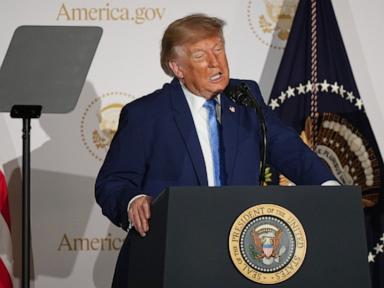
A signature is coming. Not just any signature, but one scrawled with a thick black Sharpie, bearing the looping, erratic peaks of an executive order. The intent is simple on paper: to officially label a specific tier of computational capability as a Super Intelligence. To pin a butterfly to a board and give it a Latin name.
Consider what happens when you name something. In ancient folklore, knowing a true name grants power over the beast. But in the modern theatre of policy, naming something does the opposite. It summons it into the regulatory light. It tells the markets, the defense contractors, and the engineers working under fluorescent lights at three in the morning that the threshold has been crossed. We are no longer playing with calculators. We are herding lightning.
Step back for a moment. Imagine walking through an ordinary data center in northern Virginia. The noise is not the polite hum of a desktop computer. It is a deafening, industrial roar, a mechanical ocean of fans screaming against heat. Rows upon rows of black metal monoliths stretch into the distance, blinking with tiny green status lights. Inside those chips, billions of parameters shift in fractions of a microsecond, synthesizing human history, poetry, medical journals, and lines of uncompiled logic.
To the software running there, there is no morning or night. There is only input and inference.
When a politician decides to sign a piece of paper declaring this machinery to be a Super Intelligence, they are trying to lasso an avalanche with a ribbon. They are attempting to legalise a frontier.
Let us look at the mechanics of this shift. For years, artificial intelligence lived in academic papers and narrow use cases. It played chess. It translated French into English. It spotted tumors in X-rays with the weary accuracy of a tired radiologist. Each tool had a leash, held tightly by human developers.
Then came the scaling laws. Give a network enough parameters, feed it enough of the internet, supply enough electricity to power a small city, and something strange happens at the boundary line. Capabilities emerge that no one explicitly coded. The machine reasons. It writes code to fix its own bugs. It navigates ambiguity.
This is the precipice.
The executive order is an attempt to draw a bright red line in the sand before the tide washes it away. By formally designating certain advanced systems under a distinct classification, the government triggers a cascade of bureaucratic machinery. Security reviews. Export controls. Inter-agency task forces.
Yet, the engineers building these systems often look at Washington with a mixture of exasperation and dread. They know that a bureaucratic label does not change the math of gradient descent. It does not slow down the hardware curves. A silicon chip does not care about an executive memorandum. It simply processes the next matrix multiplication.
There is a profound disconnect here between the speed of legislative ink and the exponential curve of silicon.
Think about how we categorize power throughout history. We named steam engines. We named the splitting of the atom. In each case, the naming came with a framework of control, a set of treaties, safety protocols, and containment strategies. But the atom sat still in uranium ore until we forced it to break. These new algorithms are active. They adapt. They learn from the very policy papers written to govern them.
What does it feel like to sit at a desk in a federal agency tasked with overseeing this transition?
Picture a gray-haired analyst staring at a glowing monitor, reading through a proposal that outlines capabilities we only dreamed of in science fiction a decade ago. The text scrolls smoothly, detailing models that can design novel proteins, simulate economic shocks, or write persuasive essays indistinguishable from those of a seasoned journalist. The analyst takes off their glasses, rubs the bridge of their nose, and looks out the window at the Washington monument cutting a sharp line against a grey sky.
The world outside looks normal. Cars are moving. People are holding coffee cups. Pedestrians are looking down at their phones, unaware that the infrastructure behind those screens is undergoing a tectonic phase change.
That is the true invisible stake. It is not just about national security or economic dominance, though those dominate the headlines. It is about the quiet obsolescence of human certainty.
When we label a system a Super Intelligence, we are admitting something humbling. We are conceding that we have birthed an entity whose cognitive reach exceeds our own ability to audit, understand, or predict its next move in real-time. We are setting up guardrails for a train that has already jumped the tracks and is currently flying through the fog.
Critics will argue that this is mere political theater, a headline-grabbing maneuver designed to project control over an ungovernable technology. Supporters will argue it is the vital first step toward coordinated global governance, a necessary recognition that the rules of the old world no longer apply.
Both are right.
The ink dries. The press release goes out. The servers keep humming in their cold, windowless rooms, drawing megawatts of power from the grid, turning electricity into thought, and thought into a future we never quite voted for.