The water in the Strait of Hormuz does not look like a geopolitical fault line. On a calm morning, it is a shifting, metallic blue, thick with salt and heavy with the heat of the Persian Gulf. If you stood on the cliffs of Iran’s Musandam Peninsula, looking out across the twenty-one miles of open water toward Oman, you would see a line of supertankers. They move with an agonizing, glacial slowness. They look like rusted iron islands cutting through the haze.
Beneath that placid surface lies a tension that keeps energy ministers awake at 3:00 AM.
Every single day, roughly one-fifth of the world’s petroleum consumption passes through this single, narrow throat of water. It is the primary artery for the global economy. If it closes, lights go out in factories across Asia. Gas prices at pumps in Ohio spike overnight. The modern world runs on the assumption that these tankers will always keep moving. But assumptions are fragile things, especially when they are built on waters that someone else claims to own.
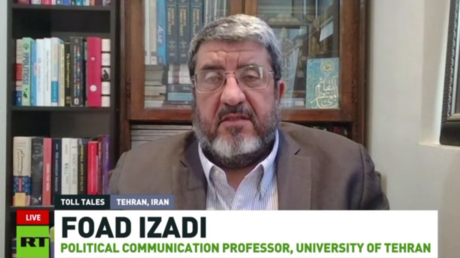
When an Iranian academic stands before a microphone and declares that the United States has absolutely no legal authority to police these waters, the Western world tends to react with a mix of defiance and dismissal. We view it as political theater. We view it as saberrattling from a hostile regime.
But step away from the television screens for a moment. Look at the water through the eyes of the people who actually live on its rim. To understand why a professor in Tehran can capture the anxieties of an entire region, you have to understand the difference between the law of the sea and the logic of steel.
The Friction of Distance
Consider a hypothetical captain named Marcus. He is fifty-four years old, has grey hair cropped close to his skull, and commands a 300-meter crude carrier flying a flag of convenience. Marcus does not care about the theological underpinnings of the Iranian state. He cares about drafts, tides, and the radar signatures of fast-attack craft.
As Marcus guides his vessel through the inbound traffic lane of the Strait, he is acutely aware that he is performing a legal tightrope walk. International maritime law operates under the concept of "transit passage." It is a beautiful, civilized idea negotiated in air-conditioned rooms in Jamaica back in the 1970s. It says that even if a strait falls within the territorial waters of a coastal nation, foreign ships have the right to pass through continuously and expeditiously.
To Marcus, it feels like walking through a stranger’s front yard while the homeowner watches from the porch with a shotgun across his knees.
Iran’s perspective, articulated not just by its military brass but by its legal scholars, rests on a simple, stubborn fact: they never ratified the 1982 United Nations Convention on the Law of the Sea (UNCLOS). The United States didn’t ratify it either, though for entirely different reasons.
Here lies the magnificent absurdity of global politics. The world’s greatest naval superpower is enforcing a treaty it refused to sign, against a regional power that also refused to sign it, inside waters that the regional power views as its own backyard.
When Tehran argues that Washington has no business playing lifeguard in the Gulf, they are not just making an emotional appeal. They are pointing at the map. They are asking a question that sounds entirely reasonable to anyone living outside the Western bubble: By what right does a nation nine thousand miles away dictate who moves through a corridor that sits within the missile range of our beaches?
The Ghost of 1988
The tension isn't academic. It is historical, and it is bloody.
If you speak to older mariners in the Gulf, they remember Operation Praying Mantis in 1988. It was a one-day surface action, the largest the US Navy had fought since World War II. By the time the sun went down, Iranian frigates were burning down to the waterline, shattered by American naval gunfire and carrier-launched laser-guided bombs. The battle was a demonstration of absolute, crushing technological superiority.
But it left a scar. It solidified a narrative in Iran that the Persian Gulf is an occupied zone, a place where international law is simply a polite term for American hegemony.
When we talk about the Strait of Hormuz in the West, we talk about it as a global commons. We use words like "freedom of navigation" as if they are universal truths dropped from the heavens. We forget that to the country occupying the entire northern coastline of that strait, those words sound like an eviction notice.
Iran views the Persian Gulf the way the United States views the Gulf of Mexico. Imagine if the Chinese navy maintained a permanent carrier strike group floating just outside the mouth of the Mississippi River, claiming they were merely protecting the global supply chain of soy and corn. The American reaction would not be a series of polite legal briefs. It would be fury.
The Asymmetric Equation
The real danger in the Strait of Hormuz is not a conventional war. Iran knows it cannot match the US Navy hull for hull, radar for radar. They watched their fleet burn in 1988, and they learned the correct lesson.
Instead, they built an ecosystem of denial.
They built thousands of fast-attack craft—small, fiberglass speedboats armed with anti-ship missiles and heavy machine guns. They mass-produced naval mines that can be dropped from the back of a civilian dhow in the middle of the night. They turned the jagged, mountainous coastline of the southern index of their country into a labyrinth of hidden missile silos.
This is the technology of the underdog, and it is terrifyingly effective.
If a conflict breaks out, Iran does not need to defeat the Fifth Fleet. They only need to sink one supertanker. They only need to damage a single liquefied natural gas carrier. The moment a hull is breached and insurance companies rewrite their risk profiles for the Gulf, the Strait is effectively closed. Commercial shipping will grind to a halt because no maritime insurer on earth will underwrite a vessel entering a shooting gallery.
The Iranian professor’s argument that the US has no authority is, at its core, an acknowledgment of this leverage. It is a reminder that while Washington may possess the legal arguments and the aircraft carriers, Tehran possesses the geography.
The View from the Wheelhouse
We live in a culture that loves clear villains and clear heroes. We want the narrative of the Strait of Hormuz to be a simple story of international law versus rogue actors.
But the truth is much dirtier, much more complicated, and far more unstable. It is a collision between two irreconcilable worldviews. One view believes that global trade is paramount and must be secured by the ultimate guarantor of military might. The other view believes that sovereignty is absolute, and that a superpower’s presence at your front door is an existential threat.
Captain Marcus doesn't care who is right. As his tanker clears the narrowest point of the Strait, passing the dark, volcanic rocks of Little Quoin island, he looks at the radar. A pair of small, fast targets have just detached themselves from the Iranian coast. They are coming out to watch him pass, just as they do every week.
They don't switch on their targeting radars. They don't hail him on the radio. They simply sit on the water, engines idling, watching the massive wall of steel slide past.
It is a silent choreography that happens dozens of times a day. It is a reminder that the peace of the modern world does not rest on treaties signed in Geneva or speeches delivered in Washington. It rests on a fragile, unspoken understanding between men with guns on speedboats and men with clipboards on tankers, all of them operating in a twenty-mile strip of water where a single mistake could alter the history of the twenty-first century.