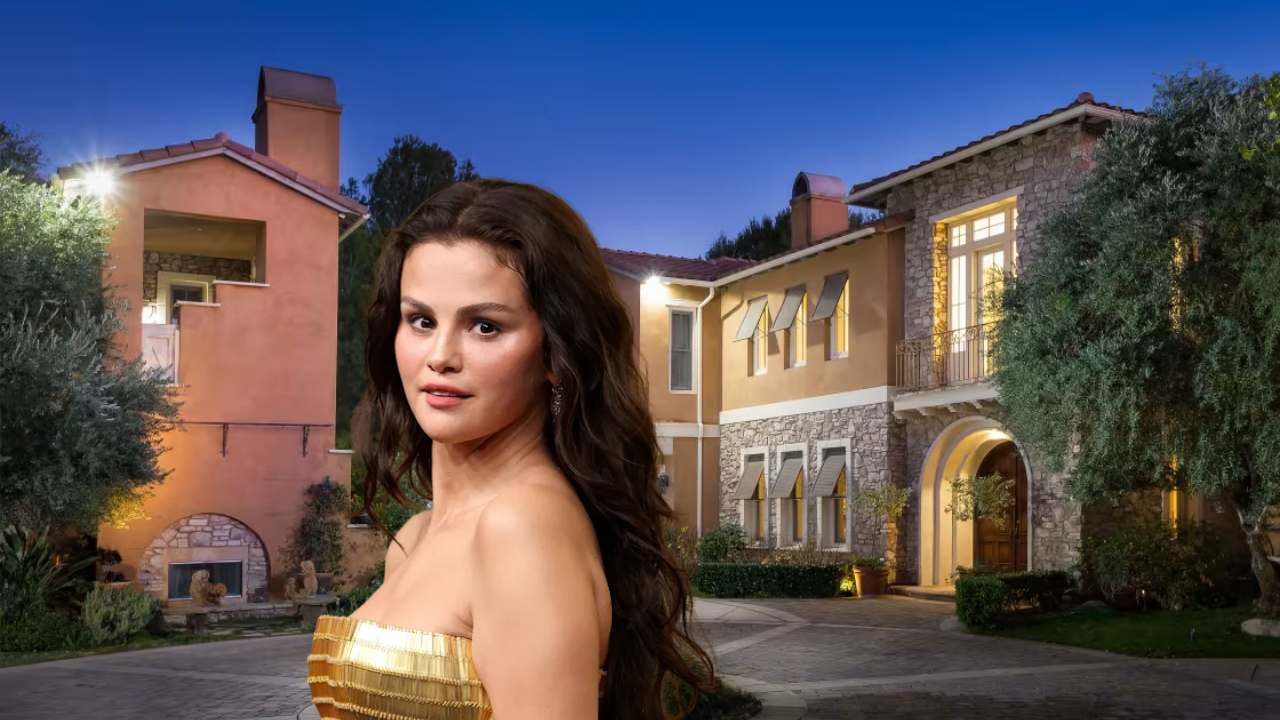
Celebrities buying historic European real estate always triggers the exact same breathless coverage. A-lister drops eight figures on a century-old stone structure. Real estate blogs gush over the crown molding. Lifestyle magazines treat the purchase like a masterclass in generational wealth.
They are wrong. Every single one of them.
When news broke that Natalie Portman acquired a €15.2 million mansion near the Eiffel Tower in the 7th arrondissement, the media followed the usual script. They highlighted the 1920s pedigree. They swooned over the views. They framed a massive liability as a trophy asset. If you look past the glossy PR narrative and examine the cold mechanics of ultra-prime Parisian real estate, you see a completely different picture. Buying a 100-year-old hôtel particulier in central Paris at that price point is rarely a shrewd financial play. It is an expensive vanity project wrapped in limestone.
The Myth of the "Blue-Chip" Historic Trophy
The lazy consensus in luxury real estate says you cannot lose money on prime Paris property. Scarcity drives value. They aren't making any more 1920s mansions next to the Champ de Mars. Therefore, the asset automatically appreciates.
This logic ignores how liquidity and carrying costs actually work at the top of the French market.
I have watched ultra-high-net-worth buyers get seduced by the romance of Paris for twenty years, only to choke on the operational reality six months after closing. A €15.2 million price tag is just the cover charge. In France, transaction costs—notary fees and transfer taxes—immediately tack on roughly 7% to 8% for an older property. Before Portman even unpacked a single box, over €1.1 million evaporated into state coffers. You start deep underwater, and climbing out takes years in a market known for glacial appreciation compared to New York, Miami, or London.
Then comes the building itself. A 100-year-old structure in the 7th arrondissement is not a modern turnkey villa. It is a museum piece governed by some of the strictest preservation laws on earth.
The Architectes des Bâtiments de France Chokehold
If your property sits within 500 meters of a historic monument—and anything near the Eiffel Tower certainly does—you do not truly own the exterior of your home. You are merely a well-funded custodian.
Want to upgrade the single-pane windows to stop your heating bill from looking like a small nation's GDP? You need approval from the Architectes des Bâtiments de France (ABF). Want to install modern central air conditioning to survive increasingly brutal European summers? Good luck hiding the condensers from heritage inspectors who can halt your renovation for eighteen months over the shade of gray paint you chose for the shutters.
- The Renovation Premium: Bringing a century-old Parisian mansion up to modern American luxury standards routinely costs €5,000 to €10,000 per square meter.
- The Timeline Trap: Permitting and heritage reviews routinely double standard construction schedules.
- The Sunk Cost: Buyers rarely recover 100% of a bespoke gut renovation in Paris because the next billionaire buyer will hate the previous billionaire's taste and rip it all out anyway.
What Everyone Gets Wrong About the 7th Arrondissement
Ask a tourist or a casual observer to name the most prestigious neighborhood in Paris, and they will point straight at the 7th. It has the Eiffel Tower. It has the embassies. It has wide boulevards and grand facades.
Ask a seasoned Parisian family office where the real smart money quietly parks capital, and you will get a very different answer.
The 7th arrondissement suffers from what insiders call the "museum effect." Because of its proximity to the tower, the streets are perpetually clogged with tour buses, street vendors, and influencer crowds taking the exact same photo from the exact same street corner. For a celebrity whose entire off-screen life revolves around privacy and security, living steps from France's biggest tourist magnet is a logistical headache.
Compare that to the quiet, gated private lanes of the 16th arrondissement—places like Villa Montmorency—or the discreet courtyard mansions of Saint-Germain-des-Prés in the 6th. Those pockets offer genuine seclusion, neighborhood vibrancy, and a much deeper pool of domestic buyers when it comes time to sell. The 7th is heavily reliant on foreign buyers—Americans, Middle Eastern royals, and international executives—chasing a postcard version of France. When currency fluctuations hit or geopolitical winds shift, that foreign buyer pool dries up overnight, leaving sellers sitting on the market for two or three years.
The French Tax Drag Nobody Talks About
Real estate articles love talking about purchase prices and square footage. They conveniently skip the tax code.
France does not roll out the red carpet for wealthy property owners. Even if a buyer structures the purchase through a Société Civile Immobilière (SCI)—the standard French real estate holding company—they cannot escape the Impôt sur la Fortune Immobilière (IFI), France’s annual real estate wealth tax.
If your net French real estate assets exceed €1.3 million, you pay an annual progressive tax topping out at 1.5% on the value above €10 million. On a €15.2 million mansion, that is an annual recurring bleed of well over €150,000 every single year, regardless of whether the property generates a dime of income. Add in the taxe foncière (property tax), which Paris municipal authorities hiked by over 50% in recent years to plug city budget deficits, and your annual holding costs easily cross €250,000 before you pay a single gardener, housekeeper, or security guard.
Imagine a scenario where you buy a stock that charges you a 1.5% management fee every year, imposes an 8% front-end load when you buy it, forces you to ask government permission before changing your brokerage account settings, and takes two years to liquidate when you want your cash back. Any financial advisor on Wall Street would tell you to run. Wrap that exact same financial profile in Haussmann-era stone, and people call it a smart investment.
People Also Ask About Celebrity Real Estate in Paris
When high-profile purchases hit the headlines, readers inevitably search for the same predictable questions. Most of those questions are built on flawed assumptions.
Is Paris luxury real estate a good investment right now?
If your goal is capital preservation over a thirty-year horizon, yes. Paris will never go out of style, and land in the city center is finite. If your goal is actual return on investment, no. Prime Parisian real estate is a store of value, not a growth engine. Between transfer taxes, wealth taxes, and maintenance on aging infrastructure, you need significant price appreciation just to break even in real, inflation-adjusted terms.
Why do American celebrities keep buying historic homes in France?
Because you cannot buy 1920s European provenance in Beverly Hills. When an actor reaches a certain tier of wealth, they stop optimizing for yield and start optimizing for lifestyle, status, and cultural capital. Portman lived in Paris for years while married to Benjamin Millepied and speaks fluent French; her connection to the city is real, not a whim. The purchase makes complete sense as a personal sanctuary. It only stops making sense when commentators try to spin it as a brilliant financial maneuver.
How much does it actually cost to maintain a €15 million mansion?
Industry rules of thumb suggest budgeting 1% to 2% of a historic property's value annually for maintenance, taxes, staffing, and insurance. At €15.2 million, you are looking at €150,000 to €300,000 per year just to keep the lights on, the roof watertight, and the taxman satisfied. Slate roofs, zinc flashing, and century-old plumbing do not care how famous you are; they fail on their own schedule.
The Case for the Contrarian Play
To be completely fair, there is one angle where buying a €15.2 million historic mansion in Paris makes total strategic sense, and it has nothing to do with real estate appreciation.
Currency and jurisdictional diversification.
If 90% of your net worth is tied up in US dollars, American equities, and California real estate, parking €15 million in physical European stone acts as an uncorrrelated hedge. If the dollar weakens or domestic tax policies shift aggressively, you hold an immovable, tangible asset in a completely different legal and monetary zone. Furthermore, for a global public figure who works across Europe, owning a fortified private compound eliminates the massive security and logistical friction of moving an entourage through luxury hotels like Le Bristol or the Plaza Athénée for months at a time. At €10,000 to €25,000 a night for top-tier suites, a few long film shoots in Europe quickly eat up the equivalent of a down payment.
The downside to my skepticism is obvious: trophies operate on emotional economics, not spreadsheets. You cannot put a discounted cash flow model on waking up to a view of the Eiffel Tower or raising your kids in a walkable European capital. If Portman holds that house for twenty-five years, the sheer passage of time will eventually erase the brutal entry taxes and renovation headaches.
How Smart Buyers Actually Approach Ultra-Prime Paris
If you have eight figures to deploy in the French capital and you care about both lifestyle and financial sanity, you do not buy a high-maintenance standalone mansion in a tourist zone. You follow a completely different playbook:
- Target top-floor lateral apartments over standalone mansions. A 300-square-meter penthouse with a wrap-around terrace in a well-managed copropriété gives you the views and the prestige while splitting roof, facade, and elevator maintenance costs across the entire building.
- Prioritize the 6th, 8th (Golden Triangle), or quiet pockets of the 16th. You get better daily livability, stronger local demand when you exit, and zero tour buses idling outside your front gate.
- Buy renovated, never raw. Let someone else endure the multi-year nightmare of dealing with French heritage architects and contractor delays. Paying a 20% premium for a freshly completed turn-key property is almost always cheaper than managing a gut renovation yourself.
- Separate lifestyle from portfolio. Treat the purchase as pure consumption—like buying a yacht or a private jet—and keep your actual wealth-building capital in liquid, productive assets that don't require government permission every time a pipe leaks.
Natalie Portman got a stunning piece of Parisian history, and she can easily afford every euro of the upkeep. Just don't confuse a gorgeous place to live with a smart place to put your money.