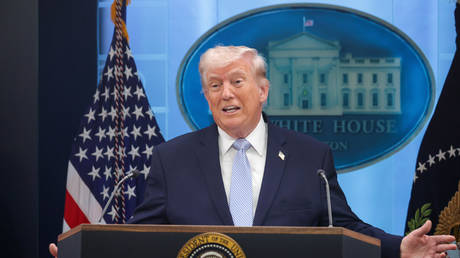
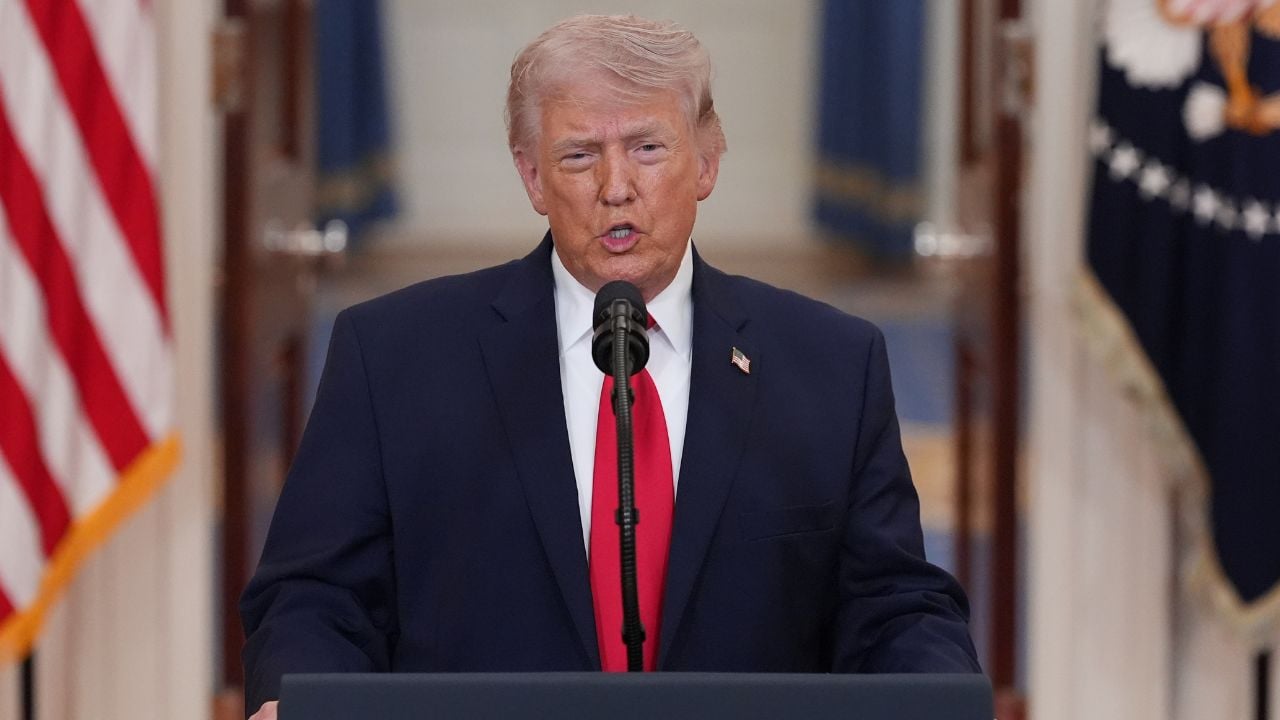
The media elite loves a simple narrative: a populist leader invokes "national security" as a magic wand to bypass democratic norms and bully trade partners. They frame it as a chaotic, impulsive retreat from the global order. They are wrong.
What we are witnessing isn't the erosion of a system; it is the brutal, necessary recognition that the old system—the one defined by neoliberal borderless trade—died years ago. When Trump or any modern executive leans on national security to justify tariffs, tech bans, or investment blocks, they aren't hiding behind a flimsy excuse. They are finally aligning economic policy with the reality of 21st-century warfare.
The "lazy consensus" suggests that trade is for prosperity and the military is for security. In reality, in a world where data is a weapon and supply chains are choke points, the two are inseparable. To treat them as distinct "lanes" is a relic of 1990s optimism that has no place in a serious boardroom or situation room.
The Myth of the Neutral Supply Chain
Critics argue that invoking Section 232 of the Trade Expansion Act of 1962 to tax steel or aluminum is a perversion of the law’s intent. They claim steel for soup cans isn't a "security" issue. This view is dangerously naive.
If a nation cannot produce its own high-grade steel, it cannot build its own hulls, tanks, or infrastructure without asking permission from a competitor. True sovereignty isn't just about having a big army; it’s about the industrial base that feeds it.
I’ve spent two decades watching Western manufacturing get hollowed out under the guise of "efficiency." We traded our industrial resilience for a 2% drop in the price of consumer electronics. That is a bad trade. When the chips are down—literally, in the case of semiconductors—efficiency is a liability. Redundancy and domestic control are the only metrics that matter.
The "National Security" justification is the only tool left sharp enough to cut through the bureaucratic inertia of the World Trade Organization (WTO), an institution that currently functions as a suicide pact for developed economies. By labeling economic decisions as security imperatives, the executive branch effectively says: The spreadsheet no longer dictates our survival.
Why the WTO is Obsolete
The mainstream press laments the "death of the rules-based order." Let’s be honest: that order was designed for a world where we traded textiles and grain, not AI algorithms and 5G infrastructure.
Under the old rules, you couldn't discriminate against a product based on where it came from. But if that product is a telecommunications switch from a company beholden to a hostile foreign intelligence service, "non-discrimination" becomes a national security breach.
The WTO's dispute settlement mechanism is a joke. It takes years to reach a verdict, by which time the targeted domestic industry has already gone bankrupt. Trump’s use of the national security "loophole" isn't a bug; it’s a feature. It recognizes that in a digital age, the speed of commerce outpaces the speed of international law.
The Logic of the "Contentious" Decision
Let’s dismantle the idea that these decisions are "contentious" because they are irrational. They are contentious because they hurt the bottom line of multinational corporations that have no loyalty to any flag.
Take the ban on certain social media platforms or the restriction of high-end GPU exports.
- The Liberal Argument: It interferes with the free market and limits consumer choice.
- The Reality: Data is the new oil, but unlike oil, it’s also the map, the compass, and the soldier.
If a foreign adversary has a direct pipeline into the psychology and behavioral patterns of your entire youth population, you don't have a "market competition" problem. You have an asymmetrical warfare problem. Using national security as a justification is the only way to address the fact that software is now a kinetic weapon.
The Hidden Cost of "Cheap"
We have been lied to about the cost of goods. A product made in a country with zero environmental standards, state-subsidized energy, and no labor rights isn't "cheaper." The price tag at the register is a lie. The difference is paid for in the loss of domestic technical expertise, the erosion of the middle class, and a staggering vulnerability to supply chain blackmail.
Imagine a scenario where 90% of the world's processed lithium—the lifeblood of the "green" transition—is controlled by a single geopolitical rival. In that scenario, is a tariff on processed minerals a "trade barrier," or is it a defensive fortification?
If you choose the former, you’re an academic. If you choose the latter, you’re a realist.
The E-E-A-T of Economic Warfare
I have sat in rooms where "globalization" was preached as a religion. I saw the spreadsheets that justified moving essential medical manufacturing to regions that could (and did) shut down exports during a global pandemic. Those spreadsheets didn't account for risk. They only accounted for quarterly margins.
The use of national security as a justification for economic policy is an attempt to price "geopolitical risk" back into the market. It’s a correction. It is the government doing what the private sector failed to do: protect the long-term viability of the nation.
Common Misconception: "Tariffs are just a tax on consumers."
The Correction: Tariffs are a steering wheel. Yes, prices may rise in the short term. But that capital is redirected toward building domestic capacity. The "tax" is actually an insurance premium against being held hostage by a foreign power during a crisis. It is a strategic investment in the ability to say "no" to an adversary.
Common Misconception: "This starts a trade war."
The Correction: We have been in a trade war for thirty years. We just finally decided to show up. To claim that we are "starting" something by defending our industrial base is like claiming a man started a fight because he finally put his hands up to block a punch.
The Risk of the Approach
Does this power have downsides? Absolutely.
The primary risk is institutional capture. If every industry—from sneakers to toothbrushes—starts lobbying for a "national security" designation to get protection from competitors, the term loses all meaning. This is why the application must be surgical. It must be tied to the "commanding heights" of the economy:
- Energy and Raw Materials
- Semiconductors and Advanced Computing
- Telecommunications
- Defense Industrial Base (Steel, Aerospace, Maritime)
Anything outside of these four pillars is likely just protectionism in a fancy suit. But within these pillars, the "national security" justification is the only honest way to govern.
The Strategy for the New Era
If you are a business leader waiting for a return to "normalcy"—to the era of 2005-style globalism—you are already obsolete. The new normal is Securo-nomics.
Your supply chain is no longer just a logistics problem; it is a diplomatic and military problem. You must begin to "friend-shore" or "near-shore" operations not because it’s cheaper, but because the "national security" hammer is going to keep falling on any link in your chain that relies on an adversary.
The executive branch’s use of this justification isn't a temporary political quirk. It is a structural shift. Whether it's Trump, a successor, or even a pragmatic Democrat, the seal has been broken. The realization that the economy is a theater of war cannot be unlearned.
Stop looking at the law and start looking at the map.
The era of the "global citizen" CEO is over. You are either part of the national industrial base or you are a liability. Pick a side, because the government already has.
Build the factory. Secure the data. Protect the border. Or get out of the way.