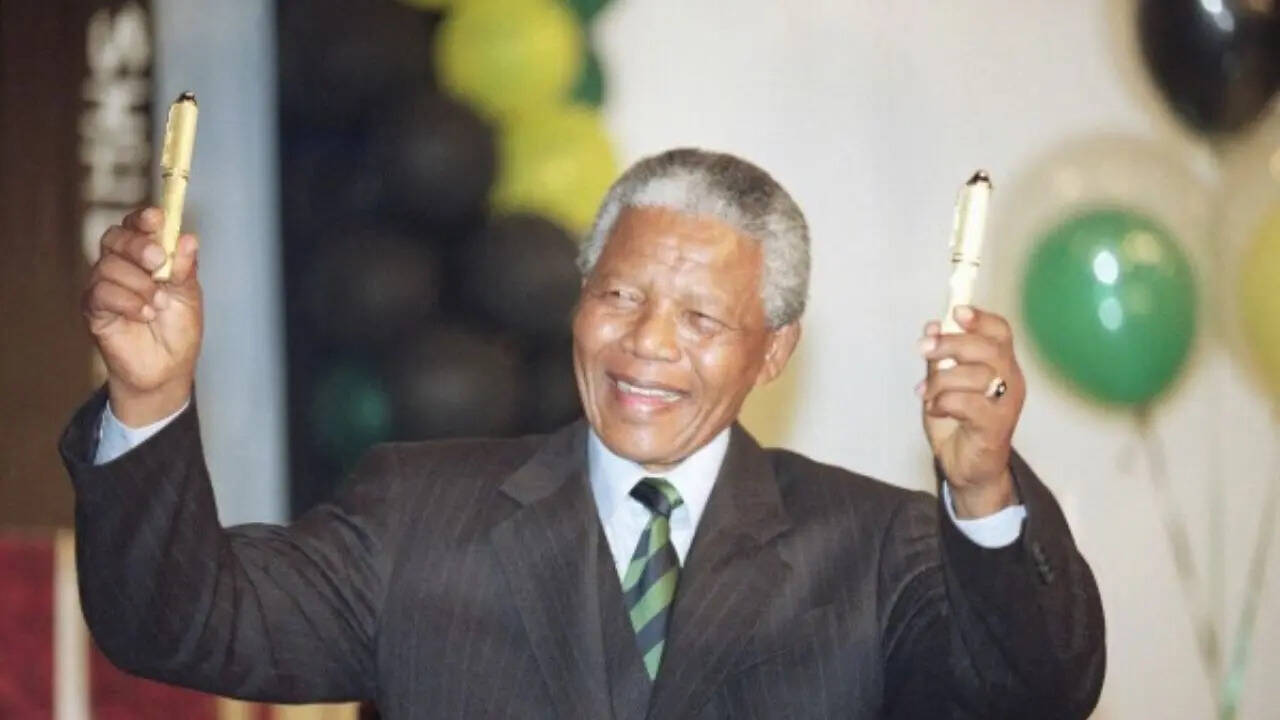
Nelson Mandela didn't spend 27 years in a limestone quarry just to have his words turned into a pretty Instagram caption. When he said that what counts in life is the difference we make to others, he wasn't being poetic. He was being practical. Most people live under the illusion that "making a difference" is a luxury for the wealthy or the retired. They think it's something you do after you've made your pile of cash or reached the top of the corporate ladder.
They're wrong.
Mandela’s philosophy suggests that your existence is essentially a hollow shell if it doesn't intersect with someone else’s well-being. It’s a gut-punch to the modern obsession with "self-care" and "personal branding." While we're busy optimizing our morning routines and staring at our own metrics, the world is waiting for us to actually do something for someone else. This isn't about being a martyr. It’s about recognizing that a life focused entirely inward eventually collapses under the weight of its own insignificance.
Why the mere fact of living is not enough
Most of us are just existing. We pay taxes, we consume calories, and we scroll through feeds. That’s "mere living." It’s the default setting. Mandela's quote hits hard because it challenges the idea that showing up is half the battle. In reality, showing up is 0% of the battle. The battle is what you do once you’re in the room.
If you look at the biological reality, survival is easy for most of us in the modern West. We aren't fighting off predators. We aren't hunting for every meal. Because survival is a given, we’ve mistaken comfort for achievement. We think that because we're safe and fed, we’re "living well." Mandela, who spent decades in a cell measuring 8 feet by 7 feet, understood that you can be alive but utterly stagnant.
True living requires friction. It requires you to rub up against the problems of the world and try to smooth them out. If you aren't changing the trajectory of another person’s day, week, or life, you're basically just a sophisticated carbon processor. That sounds harsh. It is. But if we want to honor the legacy of a man who literally broke rocks for his convictions, we should probably stop sugarcoating his message.
The Mandela Standard for Impact
Impact isn't always about grand gestures. People see Mandela and think they need to lead a revolution or win a Nobel Peace Prize to count. That’s a convenient excuse for doing nothing. If the bar is "end apartheid," then none of us will ever measure up, so why bother?
But that wasn't his point.
The "difference" he’s talking about is scale-independent. It’s about the shift in another person's reality because you exist. Think about the people in your life. If you disappeared tomorrow, would their lives just be lonelier, or would they be materially, emotionally, or spiritually worse off because the value you provided is gone?
Small scale impact is the only real scale
Huge movements are just a collection of small impacts. Mandela’s work started with individual conversations, legal defense for those who couldn't afford it, and localized organizing.
- The Mentor: Spending one hour a week helping a junior colleague isn't going to make the news. It will, however, change that person’s career trajectory over the next decade.
- The Neighbor: Checking on the elderly person next door during a heatwave.
- The Parent: Raising a child who isn't a jerk. Honestly, in today’s world, that’s a massive contribution to the lives of others.
We get blinded by the "Global Impact" myth. We want to save the world but we won't even save our neighbor the trouble of a difficult afternoon. Mandela’s life was a testament to the fact that you start where you are, with what you have.
The Psychological Reward of Usefulness
There’s a selfish reason to listen to Mandela, too. Science backs him up. Research from the Journal of Happiness Studies and various psychological reviews consistently show that "prosocial behavior"—basically being helpful—is a massive predictor of long-term life satisfaction.
When you help someone else, your brain gets a hit of dopamine and oxytocin. It’s called the "helper's high." Evolutionarily, this makes sense. Humans are social animals. Those who contributed to the tribe were protected by the tribe. We are literally hardwired to feel better when we're useful.
If you’re feeling a sense of malaise or "quiet desperation," the answer probably isn't another vacation. It’s probably finding a way to be useful. We’ve become so focused on our own "mental health" that we’ve forgotten that one of the best ways to fix your head is to use your hands to help someone else.
Moving Beyond the Quote
You can’t just agree with Mandela. Agreement is cheap. You have to operationalize it. This means looking at your daily schedule and asking where the "other people" part fits in. If your entire week is a loop of work-gym-Netflix-sleep, you’re failing the Mandela test.
It doesn't have to be complicated. You don't need a five-year plan for philanthropy. You just need to be observant.
Identifying the Gap
Look for the gaps in the lives of people around you. Maybe a friend is struggling with a project you're good at. Maybe a local charity needs someone who can actually write a decent email. Maybe your community garden is overgrown because everyone is too busy "living" to actually take care of it.
The difference you make is often found in the things other people are too "important" to do. Mandela wasn't too important to talk to his jailers. He wasn't too important to listen to his enemies. His greatness came from his humility, not his status.
Stop Thinking and Start Doing
We spend too much time "finding our purpose." Your purpose isn't hidden in a mountain retreat or a personality test. Your purpose is usually standing right in front of you, looking for help.
The "mere fact that we have lived" is a low bar. It’s the participation trophy of existence. To get past it, you have to accept that your time isn't just yours. It belongs, at least in part, to the people who need what you have to offer.
Start today by doing one thing that has zero ROI for you but a high ROI for someone else. Don't post about it. Don't put it on LinkedIn. Just do it. That’s how you start making the difference Mandela was talking about. It’s not about the legacy you leave when you die; it’s about the reality you create while you’re still breathing.
Pick one person in your circle who is struggling. Identify a specific, tangible way you can lighten their load in the next 24 hours. Do it without being asked. That’s the only way this quote actually matters. Everything else is just noise.