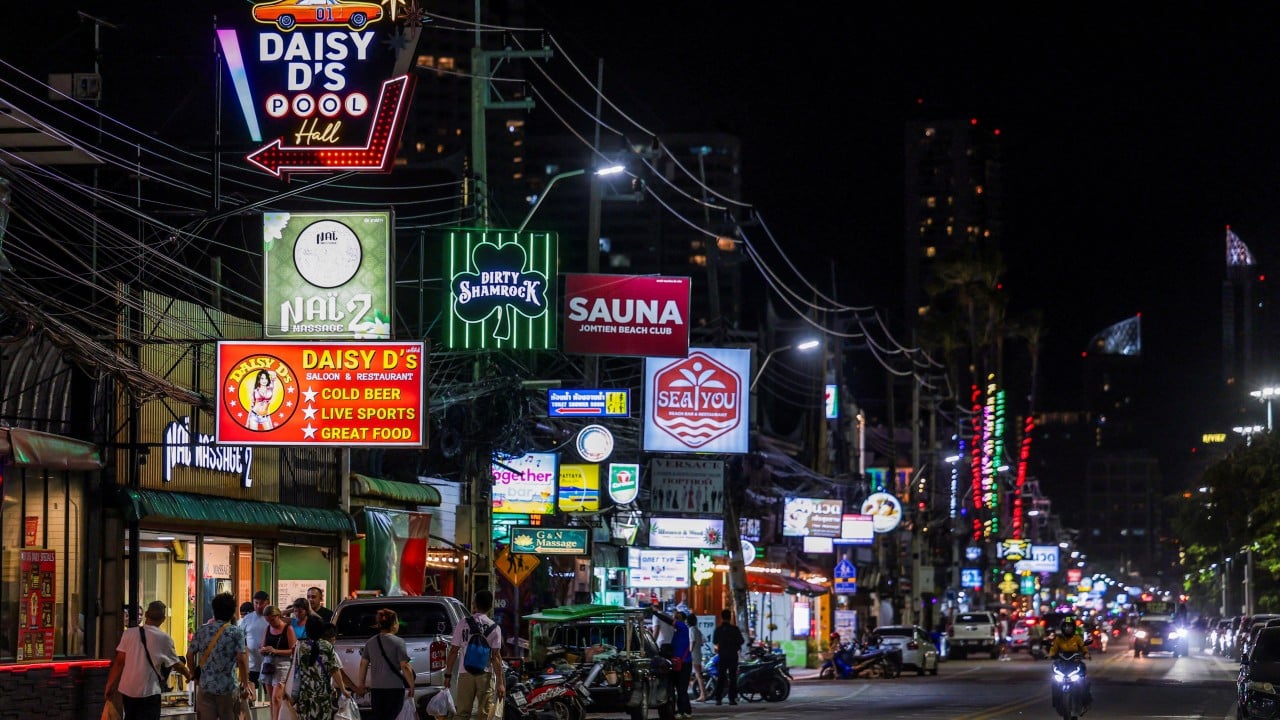
The neon of Walking Street does not sleep; it merely blinks through a haze of salt spray and diesel exhaust.
For months, the pulse had been dangerously faint. Ask any vendor holding a stack of unpaid rent receipts in Pattaya, and they will tell you about the silence. It is a heavy, suffocating quiet that settles over a tourist town when the wallets stay closed and the charter buses stop rolling. The beach chairs sit empty, folding into themselves like rows of tired ribs. The seafood grills cool down long before midnight.
Then came the rumor, spreading like wildfire across the concrete docks and open-air cafes: five thousand American sailors were coming.
Not tourists looking for a quiet week of resort yoga. Not budget backpackers counting baht. A United States Navy strike group, carrying thousands of service members with months of accumulated sea-pay burning holes in their pockets, was steering straight for the Gulf of Thailand.
To understand why this matters, you have to step away from the macroeconomic reports and stand right here, on the corner of Beach Road, where Somchai wipes down the stainless steel counter of his open-air bar for the third time in an hour. Somchai is not an economist. He does not talk about gross domestic product or foreign exchange reserves. He talks in rent due on the fifth, school fees for his daughter, and the agonizing cost of ice.
"When the grey ships anchor," Somchai says, gesturing toward the horizon where the dark water meets the smog, "the air changes. People breathe again."
That breath is economic oxygen. In the world of travel and local commerce, a port visit of this magnitude is not merely a holiday; it is an emergency transfusion. For a city that spent years picking up the broken pieces of a devastated tourism ecosystem, the arrival of these sailors represents a sudden, violent injection of liquidity into small businesses that have survived on sheer stubbornness.
Consider the sheer mechanics of a floating city making landfall.
When a carrier strike group pulls into port, it drops thousands of young, restless humans onto foreign soil after weeks of isolation on the gray open ocean. They are hungry. They are thirsty. They want suits tailored, tattoos inked, surfboards rented, and meals that do not come out of a shipboard galley.
Economists call this direct economic impact. The local merchants call it survival.
A typical sailor on shore leave will easily spend hundreds of dollars a day on local goods, entertainment, and hospitality. Multiply that by five thousand personnel, spread across a multi-day liberty call, and you are looking at a multi-million-dollar windfall concentrated in a matter of days. Taxis run triple shifts. Seafood restaurants clear their daily catch before the dinner rush even peaks. Tailors stay up through the humid night, chalking fabric and stitching bespoke linen suits that will be packed into sea bags and carried back across the Pacific.
Yet, pinning the hopes of an entire coastal destination on a single military deployment exposes a deeper, more fragile reality.
Cities built on the transient waves of global tourism live on the edge of a knife. When geopolitical winds shift, or when global health crises lock down borders, the paradise vanishes overnight. Pattaya knows this pain better than almost anywhere else. The heavy reliance on foreign arrivals has historically turned the city into a barometer for global anxiety. If the world catches a cold, Pattaya gets pneumonia.
That is why the anticipation surrounding the arrival of these five thousand sailors carries a bittersweet edge. There is immense relief, yes. But there is also the quiet, lingering question of what happens when they weigh anchor and steam back out to sea.
The neon lights will stay on, of course. The tide will continue to lap against the Pattaya shore, washing up plastic bottle caps and tangled fishing line alongside smooth white shells. The vendors will wake up the next morning, sweep up the spent bottle caps from the night before, and look out at an empty horizon.
To rely on the sea is to accept its unpredictability.
Right now, though, the harbor is filling up. The horizon is broken by the silhouette of steel giants. Down on the pier, the sound of boots hitting the wooden planks is already echoing through the humid air, loud and steady as a heartbeat.