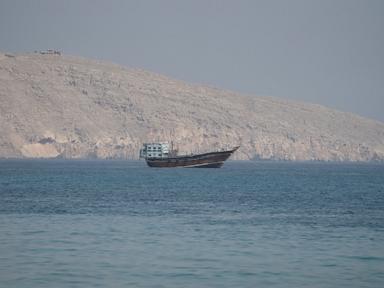
Commercial shipping lanes in the Middle East are once again burning. A commercial tanker sailing off the Red Sea coast near Yanbu, Saudi Arabia, was recently struck by an unknown projectile, sparking a deck fire and forcing international maritime agencies into crisis mode. The attack comes directly on the heels of the White House announcing what it labels the most crushing economic operation ever launched against Tehran, prompting Iranian officials to fire back with severe threats regarding global oil flows.
If you are wondering how quickly a localized political clash can transform into a global supply chain nightmare, look no further than the current chaos unfolding across the Strait of Hormuz and the Red Sea corridor.
The Escalating Economic War
Washington and Tehran are no longer just exchanging diplomatic jabs. President Donald Trump’s administration recently initiated massive economic restrictions aimed at starving Iran’s remaining revenue streams, sending the Iranian rial crashing to historic lows. Tehran’s response has been immediate and uncompromising.
Mohsen Rezaei, secretary of Iran’s Supreme National Security Council, stated publicly that Iran will block the export of a single drop of oil through the Persian Gulf if the American economic offensive continues. Even more alarming for international trade, Tehran warned that any nation supporting Washington's financial blockade will be treated as an active participant in an act of war.
These aren't empty diplomatic threats. Iran’s security apparatus is already backing legislation to impose heavy transit fees, detentions, and strict protocol requirements on vessels navigating the vital Strait of Hormuz.
Maritime Security at a Breaking Point
The physical reality on the water matches the hostility of the rhetoric. According to the United Kingdom Maritime Trade Operations (UKMTO), the recent strike on the tanker roughly 63 nautical miles west of Yanbu demonstrates that threat corridors are expanding further north into critical maritime lanes.
While maritime authorities confirmed that the crew was safely accounted for and no immediate environmental spill occurred, the psychological damage to global shipping is immense. Major marine insurance syndicates have already pulled war-risk coverages across parts of the Red Sea and the Gulf of Aden. Cargo operators are forced to make a brutal choice:
- Absorb crippling insurance surcharges that spike consumer prices globally.
- Divert vessels entirely around longer, more expensive routes.
- Risk catastrophic asset damage or crew casualties in active conflict zones.
What Happens to Energy Markets Next
Energy traders are scrambling to reprice risk as regional proxies scale up operations. Recent incidents involving infrastructure strikes and projectile hits near critical Saudi facilities show that modern energy arteries are intensely vulnerable. When shipping lines face sudden blocks or exorbitant security fees, the cost trickles down straight to fuel pumps worldwide.
Tehran maintains that its economic survival relies on pushing back against foreign pressure, while Washington shows zero appetite for softening its sanctions regime. With diplomatic channels through mediators like Oman struggling to secure a stable shipping protocol, commercial vessels remain caught in the crossfire.
Keep a close eye on marine insurance rates and certified transit data coming out of the Persian Gulf over the next week. Those numbers will tell you the real story long before any official ceasefire is ever signed.