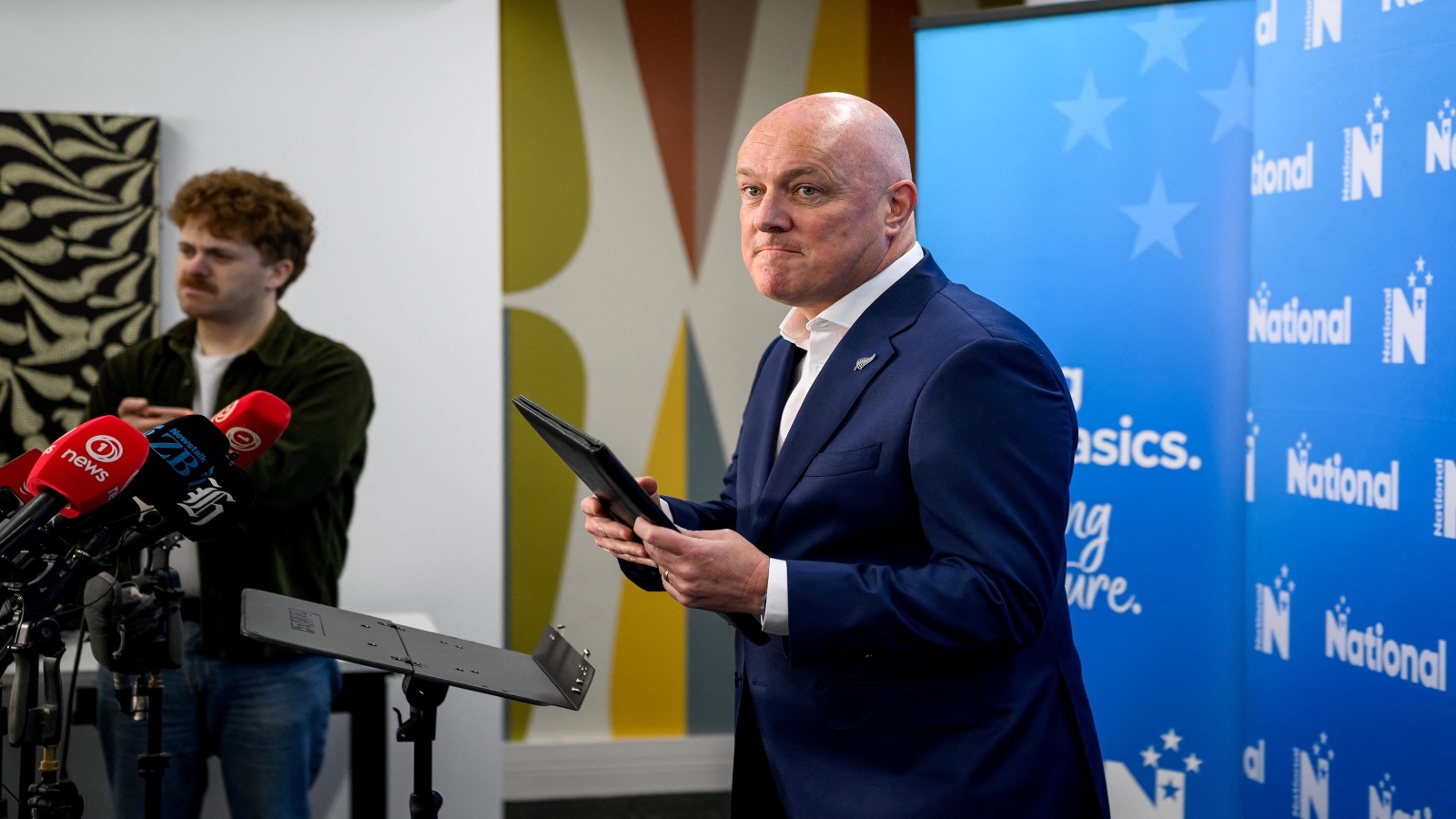
Walk into any café in Wellington or Auckland right now, and you'll hear the exact same question. Who actually runs the country?
Nobody knows. Not Prime Minister Christopher Luxon, not Labour leader Chris Hipkins, and certainly not the millions of New Zealanders who showed up to cast their ballots on November 7, 2026. While most democracies wrap up their election drama by breakfast the next morning, New Zealand has hit a three-week brick wall. Official results won't drop until November 27. Even then, coalition negotiations could drag deep into December before a functioning government takes the wheel.
It's a bizarre, nerve-wracking pause button on an entire nation. And if you're looking at the raw election night numbers from the outside, you might wonder why anyone is confused at all.
The Math Behind New Zealand's Election Deadlock
On paper, the conservative bloc looks like it scraped across the finish line. Preliminary counts from 100% of election-day voting places give the right-leaning coalition—National, ACT, and New Zealand First—67 seats in a swollen 131-seat Parliament. You need 66 seats to govern.
One single seat. That's the entire margin keeping Christopher Luxon's government alive.
Look closer at the breakdown from the Electoral Commission and the picture gets much messier. Labour actually edged out National on the overall party vote, pulling 29.4% to National's 29.2%. Yet because National swept 42 local electorates—triggering seven overhang seats—it holds a bigger slice of the House than Labour's 36 seats. Meanwhile, the left bloc (Labour, the Greens, and Te Pāti Māori) sits at 57 seats.
Standing smack in the middle of those two camps are seven unaligned seats belonging to The Opportunities Party, commonly known as TOP, led by newcomer Qiulae Wong.
You don't need a political science degree to see the problem here. A one-seat majority isn't a mandate. It's a tightrope walk in a windstorm, especially when nearly 400,000 ballots haven't even been opened yet.
Why Special Votes Always Break the Right's Heart
If you've followed New Zealand politics over the last decade, you know election night is really just halftime. The second half is decided by special votes.
What are they? Basically, any ballot cast outside a voter's home electorate. That includes Kiwis living overseas in London, Sydney, or New York, university students voting away from their hometowns, hospital patients, and people who enrolled late. For the 2026 election, the Electoral Commission confirmed roughly 399,365 special votes are waiting in the wings. That's around 14% of the total 2.83 million votes cast.
Counting them takes forever because officials have to verify every single voter's eligibility and manually match their ballot to the right electorate roll across the country. And historically, those envelopes are bad news for the National Party.
Look at the track record:
- In 2017, special votes stripped two seats away from National.
- In 2020, they took two more seats from National.
- In 2023, special votes cost National another two seats, handing them to the Greens and Te Pāti Māori.
Younger voters, urban renters, and expatriates skew heavily toward Labour and the Greens. If 2026 follows the exact same pattern—and there's zero historical reason to think it won't—National and its partners will almost certainly lose that razor-thin 67-seat cushion when the final tally drops on November 27. Drop just two seats, and the right falls to 65. Game over for an outright coalition majority.
Qiulae Wong and the Rise of the Accidental Kingmaker
Most people outside New Zealand had never heard of Qiulae Wong a year ago. Honestly, plenty of Kiwis hadn't either. The Opportunities Party had tried—and failed—three straight times to crack the 5% party vote threshold required to enter Parliament without winning an electorate seat.
Then Wong took over as leader less than twelve months before the election. She pitched TOP as a pragmatic, evidence-based centrist alternative for voters sick of tribal politics. It worked. TOP pulled 6.0% of the preliminary party vote, turning zero presence in Wellington into seven list seats overnight.
Now both major leaders have a massive headache.
Before November 7, Prime Minister Christopher Luxon repeatedly ruled out negotiating with Wong. When reporters pressed him the day after the election on whether his vanishingly slim lead had changed his tune, he dodged the question. He told New Zealanders to "calm down" and take a break from politics while the count plays out. Easy for him to say—he's the one who might have to eat his own campaign promises just to stay in the Beehive.
Chris Hipkins isn't sitting pretty either. Even if special votes boost the left bloc from 57 seats up to 59 or 60, Hipkins still can't reach 66 without TOP's seven seats. That puts Wong in the exact position Winston Peters and New Zealand First have monopolized for thirty years. She holds the keys to the government, and she knows it.
Why Overhang Seats Made Everything Worse
To understand why 66 is the magic number instead of the usual 61, you have to look at New Zealand's Mixed-Member Proportional (MMP) system. Normally, Parliament holds 120 seats. A party's share of the nationwide party vote determines its total share of seats.
Sometimes, a party wins more local electorate races than its overall party vote percentage entitles it to. Under MMP rules, the party keeps those extra seats, and Parliament temporarily expands to absorb them. In 2026, National won 42 electorates despite taking only 29.2% of the party vote, creating seven overhang seats. Te Pāti Māori won five Māori electorates on just 0.6% of the party vote, adding four more overhang seats.
Eleven overhang seats pushed the total size of Parliament to 131. More seats means a higher threshold to govern. It also means the arithmetic shifts wildly if a single close electorate flips during the special vote count.
Both Major Parties Just Took a Historic Bruising
Forget the coalition math for a second and look at the bigger picture. Voters just delivered a brutal rebuke to the two parties that have traded power in New Zealand since the 1930s.
Combined, National and Labour barely cleared 58% of the party vote. That's astonishingly low. Voters are frustrated with cost-of-living pressures, stagnant wages, and public services that feel stretched thin, and neither Christopher Luxon nor Chris Hipkins convinced the public they had real answers. Instead of picking a side, over 40% of the electorate scattered toward minor parties—ACT (10.9%), the Greens (13.3%), NZ First (9.8%), and TOP (6.0%).
For Luxon, the night was particularly rough. A former airline executive who only entered politics in 2020, Luxon spent his first term wrangling two veteran political operators in ACT's David Seymour and NZ First's Winston Peters. Critics argued his first three years exposed a steep learning curve in coalition management. Now, instead of earning a stronger mandate, he's stuck begging voters for patience while his majority hangs by a thread.
Who Runs New Zealand While Everyone Waits?
A hung election doesn't mean the lights go out in Wellington. Under New Zealand's constitutional rules, Luxon's outgoing coalition remains in office as a caretaker government.
Caretaker conventions are pretty strict, though. The government keeps the day-to-day machinery running—paying public servants, managing hospitals, and responding to emergencies—but it cannot launch major new policies, make big spending commitments, or sign controversial international agreements. Anything significant has to wait until a new government is sworn in, or receive explicit sign-off from opposition parties.
A small inner circle of senior ministers—including Luxon, David Seymour, and Winston Peters—retains "Power to Act" authority for urgent cabinet decisions. Meanwhile, backroom negotiations can't seriously lock in until the official numbers are certified on November 27. Even after the final tally arrives, wrangling a three- or four-party deal could easily stretch into mid-December.
How to Track the Final Count Without Losing Your Mind
If you're watching this unfold from New Zealand or abroad, don't bother refreshing news sites every hour until November 27. Nothing official moves before 2:00 pm NZDT on that Friday.
When the Electoral Commission drops the final numbers on vote.nz, skip the flashy headlines and check three specific numbers right away:
- The right bloc's seat total. Watch whether National, ACT, and NZ First stay at 66 or higher. If they drop to 65, Luxon loses his automatic path back to power.
- Marginal electorate flips. Check razor-thin local races where a few hundred special votes can flip a seat. Because of how MMP overhang math works, one flipped electorate can change the total size of Parliament and shift the majority line all over again.
- Qiulae Wong's first press conference. The second the final numbers go live, every microphone in Wellington will be shoved in front of TOP's leader. Watch whether she demands formal cabinet seats in a coalition or offers a looser confidence-and-supply deal from the crossbenches—because whichever way she leans will decide who governs New Zealand for the next three years.



