Greed is rarely sophisticated. It usually smells like cheap whiskey or old sweat, but in a quiet neighborhood in San Bernardino, it smelled like acrylic fur and synthetic stuffing. Most people look at a luxury car and see a status symbol. Ruben Tamayo and his associates looked at a 2010 Rolls-Royce Ghost and saw a golden ticket, provided they could find a way to wreck it without actually being the ones behind the wheel.
They needed a villain. They chose a bear.
It sounds like the setup for a punchline, a bit of regional weirdness that lives and dies on a local news ticker. But the reality of the California "Bear Suit" scam is a window into a peculiar brand of desperation. It is a story about the lengths people will go to when they believe the system is just a giant, faceless ATM waiting to be tricked.
The Grainy Geometry of a Lie
The footage was supposed to be the clincher. In the high-definition world of 2024, there is something inherently trusting about the jittery, black-and-white frame of a security camera. We expect it to capture the truth because it’s too boring to do anything else. When the defendants submitted video to their insurance company, it showed a dark shape—hulking, furry, and erratic—clambering into the backseat of a Rolls-Royce parked in a driveway at Lake Arrowhead.
In the video, the creature claws at the fine leather. it thrashes. It leaves behind the kind of jagged marks that suggest a wild animal looking for a snack or an exit. To an insurance adjuster sitting in a cubicle three hundred miles away, the claim looked like a nightmare. Who argues with a bear? California’s mountains are full of them. They are nature’s heavy machinery, capable of peeling a car door like a sardine can.
The insurance company cut the check. Then they cut another. And another. By the time the dust settled, the "bear" had caused over $141,000 in damages across multiple vehicles, including a Mercedes G63 AMG.
But investigators with the California Department of Insurance aren't paid to be fans of nature documentaries. They are paid to be professional skeptics. When they looked at the footage, the geometry felt wrong. Bears are heavy. They move with a rolling, muscular gait. This bear moved with a strange, bipedal jerkiness. It didn't lean; it shifted.
They sent the footage to a biologist from the California Department of Fish and Wildlife. The expert's report was short and devastating: The "bear" was clearly a human in a suit.
The Cost of the Costume
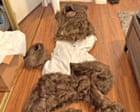
When the police finally raided the home of the suspects, they didn't find a den. They found a closet. Inside was a brown, fuzzy jumpsuit with claw-shaped hand tools designed to mimic the wreckage of a grizzly. It was a literal masquerade.
Ruben Tamayo, 34, along with his co-conspirators, wasn't just playing dress-up. They were participating in a specialized form of economic sabotage. We often treat insurance fraud as a victimless crime, a little rounding error for a multi-billion-dollar industry. We tell ourselves that the big companies can afford it.
The truth is much more mundane and much more painful. Every time a "bear" rips up a Rolls-Royce in a staged video, the premium for a single mother in Fresno goes up. The cost of the suit is distributed among the honest. We all pay for the fur.
Insurance is a social contract built on the radical idea that we can pool our risks to protect each other from catastrophe. When that contract is treated like a game to be rigged, the trust that holds the market together begins to fray. The "Bear Suit Three" weren't just stealing money; they were polluting the well of communal security.
Consider the logistical absurdity of the act. Imagine standing in a darkened driveway in the San Bernardino Mountains, pulling on a polyester headpiece, and checking your reflection in the window of a $300,000 car. There is a moment of profound choice there. You are choosing to become a caricature. You are betting your freedom on the hope that the person watching the tape is as lazy as you are.
A Sentence Without a Punchline
The laughter stopped when the handcuffs clicked. Recently, the legal hammer fell. Ruben Tamayo was sentenced to a year in county jail and ordered to pay back the stolen thousands. His partners faced similar reckonings. The state made it clear that while the crime was hilarious on paper, the theft was deadly serious in practice.
There is a specific kind of hollow feeling that comes with getting caught in a lie that everyone can see through. It’s the realization that you weren't the smartest person in the room; you were just the most desperate. The suspects likely thought they had found a loophole in the natural order. They thought the "Act of God" clause in their policies could be triggered by a trip to a costume shop.
But the world is smaller than it used to be. Every digital footprint, every frame of video, and every biologist with a keen eye for ursine anatomy stands as a guard against the easy score.
The image that stays with you isn't the Rolls-Royce or the pile of cash. It’s the suit itself. It sat in an evidence locker, a heap of cheap fabric and plastic claws, looking pathetic under the fluorescent lights. It was a costume that couldn't hide the truth.
The "bear" didn't exist. There was only a man in the dark, scratching at leather, hoping no one would notice the zipper running down his back.