Two in the morning. The blue glare of a laptop screen cuts through a quiet living room in Northern California. A mug of coffee sits cold beside a stack of printed rubrics, untouched since midnight.
On the screen, essay number forty-two glows with uncanny perfection.
The prose is smooth. The transitions glide effortlessly from one paragraph to the next. The thesis statement is sharp, balanced, and entirely devoid of the awkward phrasing that usually betrays a tired nineteen-year-old typing between shifts at a campus café.
And that is precisely the problem.
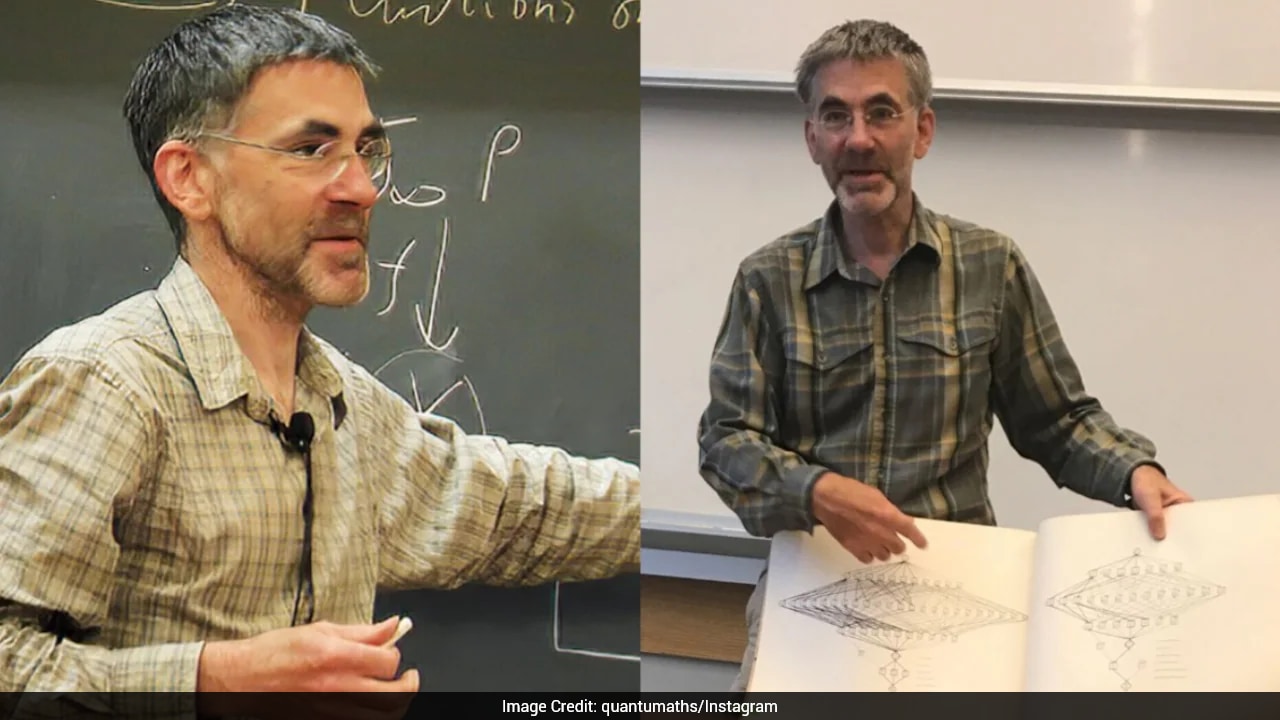
Across universities in California and far beyond, educators are sitting in that exact blue glow, confronting a silent collapse of the academic bargain. Recently, a California college professor made headlines after announcing he would no longer grade take-home assignments. His reason was blunt: he could no longer tell whether he was evaluating a human mind or a machine.
Surrender? Hardly. It was an emergency brake pulled on a train hurtling toward a cliff.
The Ghost in the Freshman Essay
To understand why a seasoned educator would abandon a grading method that has defined higher education for centuries, picture a hypothetical student we will call Maya.
Maya is a bright sophomore at a state university in California, juggling fifteen credit hours, a part-time retail job, and an anxious eye on a tightening entry-level job market. On a Tuesday evening, she stares at a blank document for an introductory sociology paper due at midnight. She knows the material, mostly. She has opinions, definitely. Yet she is exhausted, and a cursor blinking on an empty white page feels like an interrogation.
So she opens another tab. She types a prompt into a generative artificial intelligence tool.
Three seconds later, six hundred words materialize. Maya reads them, tweaks a few adjectives to sound slightly more like herself, fixes a citation, and hits submit. She feels a brief flicker of guilt, quickly smothered by relief. She gets to sleep before one in the morning.
Multiply Maya by thirty-five students in a single seminar. Multiply that seminar by four sections a semester.
Now sit in the chair of the professor reading those papers.
For decades, grading homework was a frustrating, exhausting, deeply human ritual. You waded through grammatical trainwrecks, tangled logic, and half-baked arguments—because inside that mess lived the unmistakable fingerprint of a brain trying to figure out how to think. When a student wrote a clunky sentence, you could see where their reasoning stumbled. You wrote a note in the margin. They read it, winced, and wrote a slightly clearer sentence two weeks later.
Today, that feedback loop is broken. When a California professor opens a digital submission folder and finds thirty-five essays that all share the same polite, sterile, encyclopedia-adjacent cadence, grading ceases to be teaching. It becomes theater. The student pretends to write; the professor pretends to grade; an algorithm quietly does the heavy lifting in the middle.
Worse still, the tools built to catch this ghost are failing. AI detection software routinely flags genuine human writing—especially from non-native English speakers or neurodivergent students who favor structured prose—while letting lightly edited machine text slip right through. Accusing a student of cheating based on a probabilistic percentage score is a bureaucratic nightmare that pits teachers against the very people they are trying to mentor.
So the California professor did the only honest thing left. He walked away from the charade.
Why Homework Was Never About the Paper
Here is the secret that gets lost whenever headlines scream about artificial intelligence ruining school: professors never actually cared about the five-page essay.
Not really. Nobody sits at a desk wishing they had forty more summaries of The Great Gatsby or forty more analyses of supply-chain logistics to read on a Sunday afternoon.
Think of take-home assignments the way a marathon runner thinks about lifting weights in a gym. Nobody hands out medals at the Olympics for how many squats you did in a basement on a rainy Tuesday. The weights are resistance. The resistance tears muscle fibers at a microscopic level so they can rebuild stronger.
Writing is cognitive resistance.
When you sit down to argue a point on paper, you discover very quickly that your thoughts are much fuzzier than they felt inside your head. Putting words in order forces you to confront your own contradictions. You have to decide what matters, discard what does not, and build a bridge of logic that another human being can walk across without falling through.
When students outsource that friction to a language model, they are effectively driving a forklift into the gym to hoist the barbell. The weight goes up. The box gets checked. The grade goes into the portal.
The muscle never grows.
In higher education, studies and faculty surveys conducted over the past two years paint a stark picture of how fast this shift happened. Within months of generative AI tools becoming widely accessible, majorities of college students reported using them for coursework, while professors watched submission quality flatten into a uniform, soulless sheen. The traditional take-home assignment—designed in an era when the only way to fake a paper was to pay someone else or copy from a physical book—suddenly became indefensible.
The Invisible Debt of Easy Answers
Consider what happens next, three years down the road, when Maya graduates.
She walks into a real office—or logs into a real remote workspace—with a diploma on her wall and a respectable grade point average on her transcript. Her manager hands her a messy, ambiguous problem that does not have a clean prompt. A client is angry, data is missing, and two departments disagree on the strategy.
Maya opens a blank document. And the panic returns.
Because she spent four years letting a predictive text engine smooth over every rough edge of her thinking, she never developed the stamina to sit with confusion until clarity emerges. She knows how to edit an AI draft, sure. Everybody knows how to edit an AI draft. That skill is already a commodity worth pennies. What her employer actually needs—judgment, original synthesis, the courage to take a defensible stand when the facts are incomplete—was quietly traded away for convenience back in sophomore year.
This is the invisible stake behind a single California professor refusing to grade homework. It is not a petty turf war over classroom rules. It is an alarm bell ringing for an entire generation's intellectual autonomy.
I remember the first time I used a generative AI model to draft a routine piece of writing. The speed felt intoxicating, almost magical. Within ten seconds, a task that usually cost me an hour of pacing around my desk was sitting cleanly on my screen. I felt clever. Then I read it a second time, and a cold realization settled in: I could not remember a single thought I had while producing it. My brain had been a spectator at its own desk.
If an adult with years of established habits can feel that mental atrophy after ten minutes, what does it do to a nineteen-year-old whose habits are still wet cement?
Burning the Boat to Save the Crew
History shows us that education has survived technological earthquakes before, though rarely without a painful period of denial.
When pocket calculators entered math classrooms in the 1970s, teachers warned that children would forget how to add. They were half right and half wrong. Basic mental arithmetic did decline, yet math education eventually adapted by shifting away from tedious manual calculation toward higher-level problem solving, statistics, and conceptual modeling. The calculator became a tool rather than a replacement for understanding—precisely because teachers stopped awarding points for tasks a five-dollar piece of plastic could perform in a blink.
The difference today is speed and scope. A calculator handles numbers. Generative AI mimics the very medium through which we demonstrate thought: language itself.
By stopping the grading of take-home homework, the California professor effectively burned the boats. If take-home essays can no longer verify human effort, then the classroom has to change its entire architecture.
Across California campuses and universities nationwide, a quiet counter-revolution is already taking shape in the ashes of traditional homework:
- The Return of the Blue Book: Sales of old-fashioned, stapled paper exam booklets have surged at university bookstores. Sitting in a lecture hall with a ballpoint pen and a ticking clock strips away the digital safety net. The handwriting is messy, the crossed-out lines are visible, and every single word belongs indisputably to the person holding the pen.
- Oral Defenses for Undergraduates: Borrowed from doctoral programs, professors are increasingly asking students to spend ten minutes in a chair explaining their argument out loud. You can paste an AI essay into a portal, but you cannot paste an answer when someone looks you in the eye and asks, "Why did you choose this piece of evidence over the counterargument?"
- Flipped Classrooms: Instead of lecturing in class and sending students home to write, instructors are assigning readings or recorded talks for home and turning class time into live writing workshops. If the struggle happens in the room, the professor can actually coach the struggle.
None of this is easy. Grading handwritten blue books takes longer and strains aging eyes. Conducting thirty oral exams eats up office hours that faculty barely have to spare. Redesigning a syllabus from scratch in the middle of an academic era feels like rebuilding an airplane while flying through turbulence.
Yet look at what happens in those rooms when the screens go dark.
The Human Element Returns
Return for a moment to our hypothetical student, Maya.
Imagine her walking into that redesigned classroom on a Thursday morning. There are no laptops open on the desks. Instead, there is a single prompt written on a whiteboard, two pages of primary source text, and forty-five minutes on the wall clock.
At first, the silence in the room is heavy with withdrawal. Hands twitch toward backpacks. A few students stare at the ceiling, waiting for an autocomplete suggestion that is never going to arrive.
Then, slowly, pens begin to move.
Maya writes a sentence, frowns, draws a sharp line through it, and tries again. Beside her, a classmate taps a pencil against his chin, wrestling with a contradiction in the reading. Ten minutes later, the professor asks them to turn to a neighbor and defend their opening claim out loud.
Suddenly, the room erupts into noise. Voices rise. Someone laughs at their own terrible analogy. Someone else interrupts with a sharp question that forces Maya to rethink her entire second paragraph on the spot.
Nobody in that room is producing flawless, encyclopedia-grade prose. Every paper collected at the end of the hour will have ink smudges, uneven margins, and imperfect grammar.
And every single one of them will be alive.
What We Refuse to Automate
We live in a culture obsessed with frictionless experiences. Tap a button, a car arrives. Tap a screen, dinner appears at the door. Type a sentence, an essay blooms on your monitor. Convenience has become our default definition of progress.
We forgot that some things are valuable only because they are hard.
Nobody pays to watch a self-driving car run the Boston Marathon. Nobody crowds into a concert hall to watch a speaker play a flawless digital file while a pianist sits backstage checking his phone. We show up for the human risk—the possibility that the runner will cramp at mile twenty, that the musician's fingers might slip on a difficult passage, that a young mind might reach for a big idea and barely manage to hold onto it.
When a professor in California closed his grading portal and refused to evaluate homework anymore, the headlines framed it as a story about technology winning and education retreating.
Look closer at the desk in that quiet living room at two in the morning.
The laptop is closed. The artificial prose is gone. Tomorrow morning, thirty-five students will walk into a classroom with nothing between their minds and the blank page except a cheap ballpoint pen and whatever courage they brought with them.
That is not retreat. That is where learning actually begins.