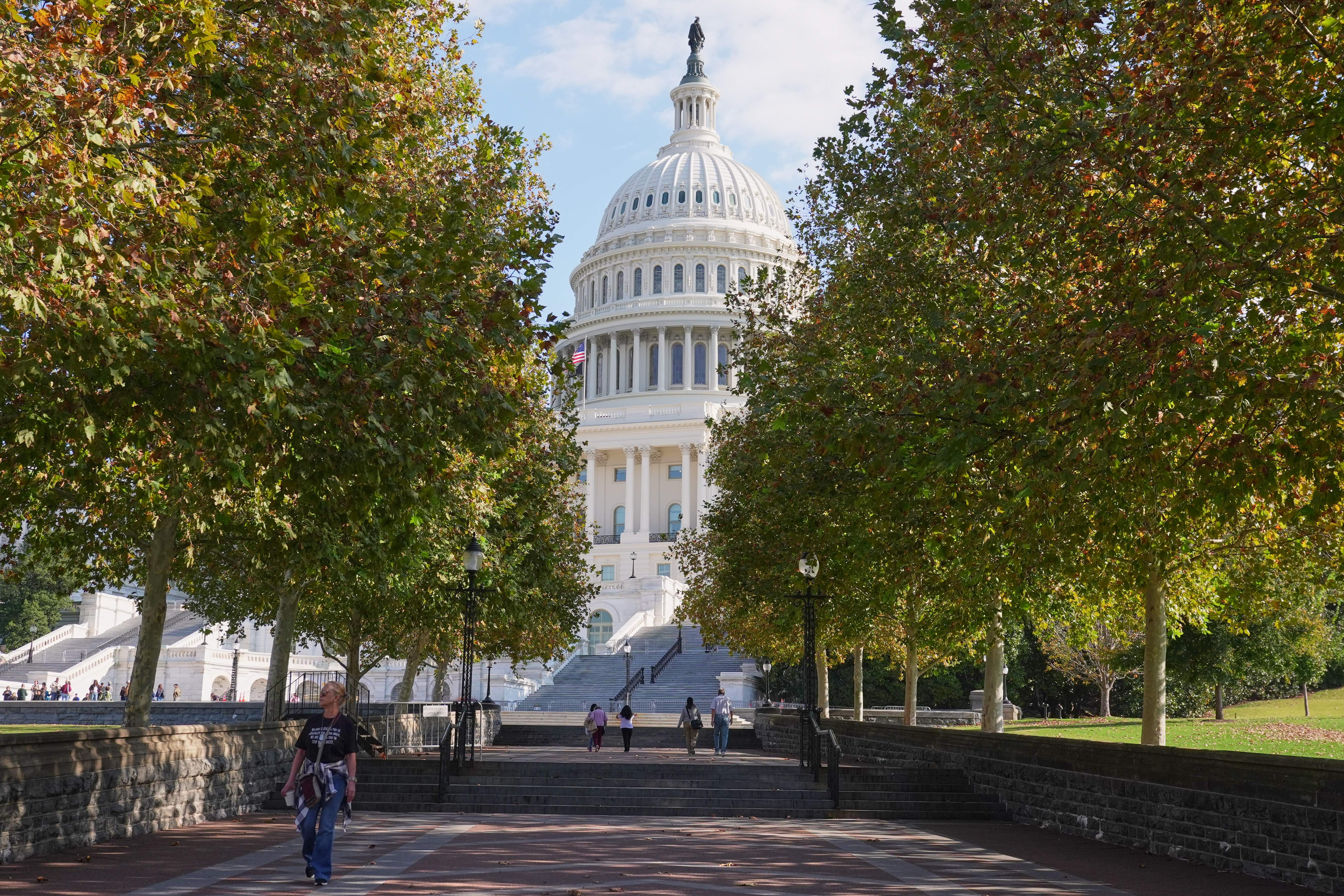
Silence.
That is the first thing you notice inside a county board of elections office at two in the morning when the fluorescent lights hum louder than the poll workers. The coffee has gone cold in Styrofoam cups, the cardboard ballot boxes are stacked like drywall against the cinderblock walls, and a single precinct tabulator in eastern North Carolina is about to decide the balance of power in the United States House of Representatives.
According to news reports detailing the final race calls of the midterm cycle, a Democratic victory in a closely contested North Carolina congressional district pushed the party to its largest House majority since 1992. On paper, that headline reads like a box score from a game played hundreds of miles away in Washington, D.C. It looks like numbers on a map, percentages in a spreadsheet, and a historical footnote about the year Bill Clinton first won the presidency.
When you have spent enough autumn nights watching provisional ballots get sorted by hand, though, you learn that a congressional majority is never just a number. It is a lever. And when that lever moves further than it has moved in more than three decades, the weight of it lands directly on ordinary households that never once watched a cable news panel.
The Architecture of a Thirty-Four-Year Swing
To understand what happened in North Carolina, consider a hypothetical voter named Elena, a high school chemistry teacher living in a suburban precinct just outside the Research Triangle. For years, Elena watched her district shift on paper every decade during redistricting, a process she viewed as an abstract legal battle fought by lawyers in distant courtrooms. She cared about the cost of her insulin copay, the deteriorating roof on her school's science wing, and whether her husband's small HVAC business would survive another summer of supply chain delays.
In standard political coverage, Elena is reduced to a demographic data point—a college-educated suburban voter whose turnout percentage ticked upward by three points. Yet her frustration is the exact fuel behind modern electoral waves. When voters feel that Washington is locked in permanent gridlock, where a razor-thin majority means three or four individual lawmakers can hold an entire legislative session hostage, they do not necessarily become ideological purists. They become impatient.
Historical election data confirms this rhythm. In 1992, Democrats secured 258 seats in the House of Representatives, giving them a commanding cushion that shaped the legislative agenda of the early 1990s. In the decades that followed, American politics entered an era of trench warfare. Majorities shrank to single digits. Speakers of the House spent more time counting defections within their own caucus than negotiating across the aisle. A stomach flu or a delayed flight from a home district could literally stall a floor vote.
The North Carolina result shattered that fragile equilibrium. By capturing the final decisive seat in a state long defined by razor-thin margins, Democrats crossed a threshold that changes the basic math of governance.
Why Margin Size Changes Everything
Imagine trying to steer a cargo ship with a rudder the size of a dinner plate. That is what governing with a five-seat majority looks like. Every minor faction demands a sharp turn to the left or right, and the captain spends all day preventing a mutiny rather than moving forward.
Now, widen that rudder.
When a party holds the largest House majority since 1992, the internal physics of Capitol Hill transform overnight. Leadership no longer has to water down every bill to satisfy the single most reluctant member from a swing district, nor does it have to cater exclusively to its loudest ideological flank. Committee chairs gain the subpoena power and the legislative runway to pursue multi-year investigations, rewrite tax provisions, and force floor votes on healthcare, infrastructure, and regulatory reform without fear that a handful of absences will sink the bill.
Political analysts and congressional historians point out that this cushion creates two immediate realities:
- Legislative velocity: Bills move out of committee and onto the House floor faster because leadership has votes to spare.
- Negotiating leverage: In conference committees with the Senate and in budget showdowns with the White House, a House Speaker backed by a wide margin speaks from a position of structural strength rather than constant vulnerability.
Yet power at that scale carries its own hidden hazards. History is unforgiving to parties that mistake a wave election for permanent permission. Just two years after that 1992 high-water mark, in 1994, Republicans swept back into power and ended forty years of Democratic control in the House, proving that American voters are quick to revoke a mandate if they feel their daily lives have not improved.
The Human Cost of the Pendulum
Back in North Carolina, the morning after the final race was called, the political operatives packed up their laptops and boarded flights back to Washington. The television trucks rolled away from the county courthouse.
Marcus, a hypothetical retired postal worker in rural eastern North Carolina who voted on the opposite side of Elena, walked out to his porch with his morning paper and felt a familiar tightness in his chest. For Marcus, the headline was not a celebration of democratic momentum; it was a warning sign. Living on a fixed pension in a county where two textile mills closed twenty years ago, Marcus worries that a large coastal and suburban-driven majority will push energy regulations and federal spending policies that raise his utility bills and drive up the cost of groceries.
His fear is real, and dismissing it is the fastest way to misunderstand American democracy. Every time the political pendulum swings hard in one direction, millions of people like Marcus feel as though the country is accelerating away from them without asking where they want to go.
At the same time, Elena looks at the same headline and feels a cautious, fragile relief. She wonders if a working majority might finally break the stalemate over federal education funding and prescription drug caps—issues that have stalled in committee for years while politicians traded soundbites on social media.
Both of them are looking at the exact same set of election returns from North Carolina. One sees a threat to his way of life; the other sees a lifeline she has been waiting years to grab.
What Happens When the Noise Stops
It is tempting to view a historic election night as an ending, a final score posted in bold type across every news site in the country. In truth, a landslide or a wave is merely the opening bell of a much harder test.
Winning a large majority requires coalition building across wildly different communities—from urban neighborhoods in the Northeast to fast-growing suburbs in the Sun Belt and agricultural counties in the Midwest. Governing with that majority requires keeping those communities together once the campaign slogans fade and the actual trade-offs of legislation begin. Every tax credit has to be paid for. Every regulatory change creates winners and losers. Every promise made at a rally in October has to survive the cold arithmetic of the Congressional Budget Office in March.
I have watched dozens of newly elected lawmakers walk onto the House floor for the first time, wide-eyed beneath the marble galleries, convinced that their victory margin means the hard part is over. Within six months, the weight of constituent phone calls, town hall anger, and compromises etched into thousand-page bills strips away that illusion.
The record books will record that North Carolina delivered the final piece of the largest Democratic House majority since 1992. Historians will analyze the turnout models, the suburban shifts, and the campaign spending that made it possible.
Down in that quiet county elections office, though, the poll workers are simply turning off the fluorescent lights, locking the deadbolt on the door, and walking out into the cool November air, leaving behind a stack of paper ballots that now belong to history—and a country waiting to see what its leaders will actually do with the power they just received.