We used to build machines to count. Now we build them to wonder.
In a nondescript server room somewhere outside Santa Clara, the air conditioner roars with the collective fury of a jet engine taking off. Rows of black metal racks blink in rhythmic unison. Green lights pulse. Fans scream. Inside those sealed chambers, microscopic rivers of electricity are carving new pathways through silicon wafers, moving faster than human comprehension can track.
This is where the future gets minted.
Look closely at the financial ledgers of Nvidia and you will see numbers that defy ordinary gravity. Revenue doubled. Profits surged. Wall Street analysts scramble for adjectives, tossing around words like tidal wave and explosion. But numbers on a spreadsheet are just ghosts of human ambition. They do not capture the sound of an engineer dropping her coffee mug at three in the morning because a model finally hallucinated something brilliant instead of broken. They do not measure the quiet panic of a hospital administrator realizing that an algorithm trained on these chips can spot a tumor six months before a radiologist blinks.
Money follows power. And power has shifted.
Imagine Elena, a computational biologist who spent fifteen grueling years of her life hunched over petri dishes, watching proteins fold with agonizing slowness. For decades, her discipline was an exercise in patience. You tried a combination. It failed. You adjusted the pipette. You tried again. It was a painstaking crawl through the dark.
Then came the hardware upgrade.
Last quarter, when Nvidia reported its staggering financial windfall, Elena was not thinking about stock prices or market capitalization. She was looking at a screen rendered smooth and vibrant by thousands of parallel processors working in concert. In a matter of hours, her cluster simulated millions of molecular interactions that would have taken her entire graduate cohort a lifetime to map by hand.
When revenue doubles at this scale, it is not merely a corporate victory. It is the raw capital of a new industrial revolution being shoveled directly into the furnaces of acceleration. Companies are not buying chips because they are trendy. They are buying them because standing still means extinction. Every major enterprise on the planet has looked into the mirror over the past twenty-four months and realized they are either building the intelligence or being outpaced by it.
Demand does not remain steady when a tool changes everything. It compounds.
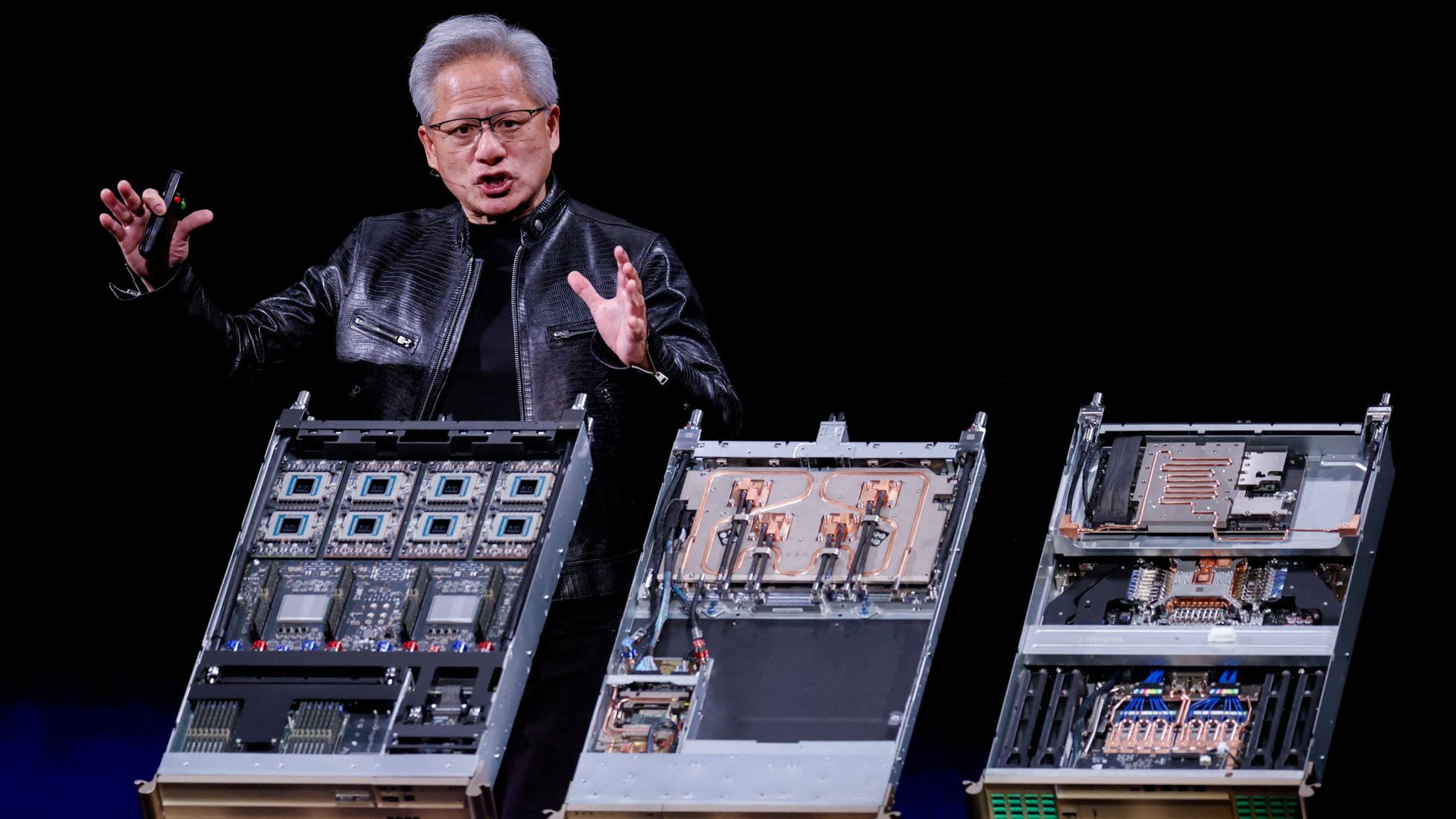
Consider what happens next: every data center on Earth must be gutted and rebuilt. The old infrastructure, designed for simple web traffic and basic database queries, is choking on the sheer weight of generative models. Power grids strain. Engineers invent liquid cooling loops that look like intricate plumbing from a science fiction cruiser. Copper gives way to fiber optics. The physical world is bending backward to accommodate the digital mind.
It is easy to look at the massive profit margins and feel a knot of unease. We have all read the dystopian screenplays. We have all wondered if we are manufacturing our own obsolescence. There is a vertigo that comes with watching technology accelerate past the speed of human governance.
Yet, standing in that server room, listening to the deafening roar of calculation, a different truth emerges. The silicon does not want anything. It does not hate. It does not plan. It is simply a very large, very intricate mirror reflecting the collective curiosity, ambition, and impatience of millions of minds.
We are pouring our wealth into these chips because we are desperate to solve problems too big for our biology alone. Climate models, pharmaceutical breakthroughs, energy grids that do not fail—these are the real commodities being bought and sold in the quiet corners of the global market.
The double digits on the earnings report are just the scorecard. The real game is happening in the dark, humming spaces where the future is being compiled line by line, chip by chip, waiting for the rest of us to catch up.