The coffee in the departure lounge is always too hot, and the air conditioning is always set to a sub-zero chill that defies the desert outside. For Tariq, who has spent twelve years managing logistics at King Khalid International Airport, that cold was the familiar hum of a massive, breathing machine. It was a rhythm of rolling suitcases, the low murmur of boarding announcements in three languages, and the steady, reassuring pulse of a global crossroads.
Then came the third time.
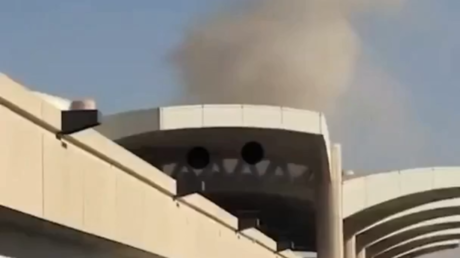
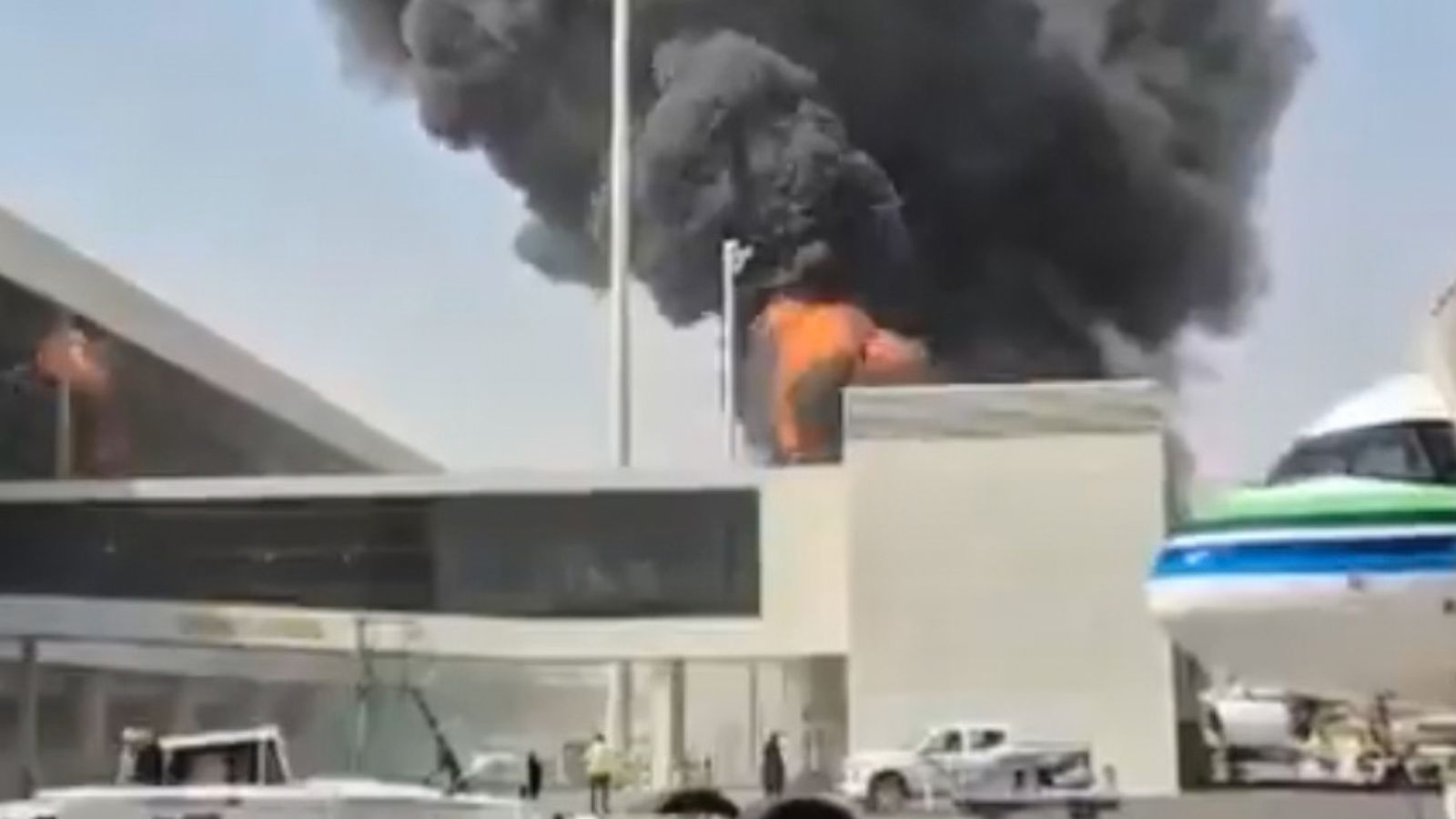
Not a sound of thunder. Not the ordinary roar of a Boeing 777 lifting its nose toward Frankfurt or London. Just a sudden, sharp fracture in the night, followed by the heavy, suffocating silence that settles when an entire city holds its breath.
When a major international aviation hub goes dark, the immediate casualty is metal and glass. Flights are diverted. Schedules shatter. Millions of dollars evaporate in the span of a single unannounced interruption. But the real weight of such an event does not rest on balance sheets or stock tickers. It settles onto the shoulders of the people caught in the transition between where they were and where they hoped to be.
Consider the mechanics of modern distance. We live in an era that treats the globe like a neighborhood. We board a tube of aluminum in the evening and wake up across an ocean for breakfast, confident in an invisible architecture of safety, schedules, and sovereignty. We forget how fragile that architecture truly is. When the third attack in a sequence hits an airport of the scale and strategic weight of Riyadh's main aviation artery, the fracture is not merely physical. It strikes at the psychological contract of modern travel: the belief that movement is safe, continuous, and guaranteed.
Tariq remembers the chaotic scramble of the first incident months prior—the confusion, the frantic coordination, the sheer disbelief that a civilian corridor could become a focal point of geopolitical friction. By the second occurrence, protocols had tightened. Guards moved faster. Screens flickered with red cancellation notices with practiced efficiency. But by the third? The fatigue was palpable.
Fear has a half-life. The first time, it is terror. The second time, it is anger. By the third time, it becomes a heavy, grinding exhaustion.
Across the tarmac, rows of wide-body aircraft sat motionless under the glare of floodlights, their engines cold. Inside the terminals, thousands of passengers found themselves stranded in a liminal space. Families with sleeping toddlers sprawled across gate seats. Business travelers stared blankly at dead phone screens, doing the mental math of missed meetings, rescheduled contracts, and delayed homecomings.
This is what cold news reports miss when they tally up flight cancellations and airspace restrictions. They report that Riyadh airport is out of action. They mention the interception statistics, the security reviews, the economic ripple effects on regional tourism and trade. They do not talk about the young doctor missing her board examinations in Cairo because her connection out of Saudi Arabia vanished into thin air. They do not mention the elderly couple traveling to see a newborn grandchild, forced to sleep on a plastic floor while diplomatic channels grind through emergency assessments.
The geopolitical chessboard is vast and abstract. Missiles, drones, defense batteries, and intercepted projectiles are discussed by analysts in Washington, Riyadh, and beyond with cool detachment. They speak of trajectories, deterrence zones, and supply chain resilience. But every single variable in those grand equations translates down to a human being staring up at a departure board that has turned completely blank.
What happens when the arteries of the modern Middle East begin to clot?
Saudi Arabia is in the midst of a historic transformation. Through massive investments in tourism, infrastructure, and diversification, the Kingdom has spent years opening its doors to the world, inviting travelers, innovators, and dreamers to witness a changing society. Airports like Riyadh are the literal gateways of that ambition. They are designed to project openness, connectivity, and unstoppable momentum.
An attack on an airport is, therefore, uniquely symbolic. It targets the very mechanism of connection. It attempts to isolate a nation that has staked its future on being part of the global grid.
Yet, resilience is not just a government policy or a military capability. It is a human habit.
By morning, after the smoke had cleared and security teams had completed their exhaustive sweeps of the perimeter and runways, the atmosphere in the terminal began to shift again. It did not go back to normal immediately. Normal was gone for the day. But the paralysis broke.
Tariq walked the length of Concourse D, watching the ground crews inspect the lighting systems. He saw a station manager handing out bottles of water to a group of distressed tourists with a weary, reassuring smile. He watched a maintenance engineer wipe soot from a sign near a hangar, his movements steady and deliberate.
The planes would fly again. The airspace would reopen. The complex machinery of international aviation would slowly synchronize its clocks, reset its queues, and thrust thousands of tons of metal back into the stratosphere.
The world is not fragile because it can be broken. It is resilient because, no matter how many times the sky goes silent, people like Tariq keep showing up to help turn the lights back on.