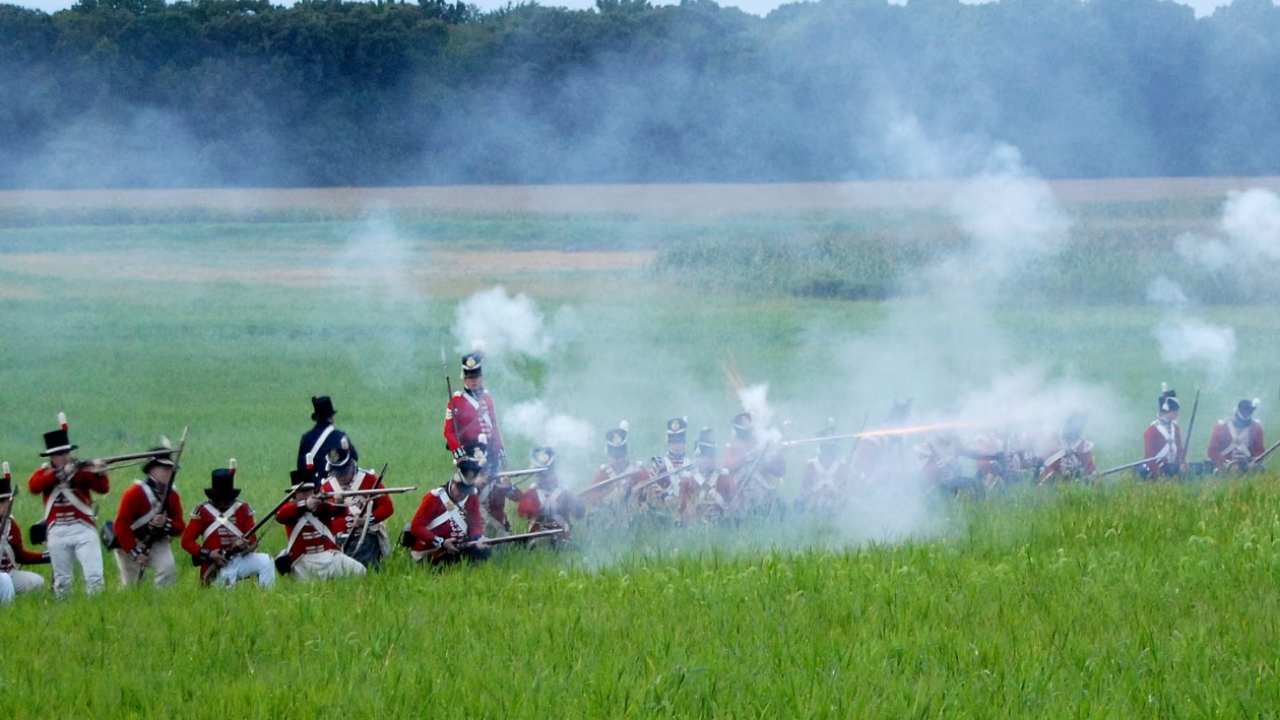
Every September, local reenactors dust off their wool wool coats, march through Baltimore County, and pretend they are reliving the glorious defense of North Point during the War of 1812. Tour guides point to the old acreages, spinning yarns about patriotic farmers, valiant militia lines, and the heroic sacrifice that saved Baltimore from British torching. It is neat. It is tidy. And it is fundamentally dishonest about what actually happened on that peninsula.
We have sanitized an administrative disaster and a brutal, chaotic rout into a Sunday school pageant.
The lazy consensus says that a sprawling 1,050-acre Maryland estate stood as the proud bulwark of American resolve on September 12, 1814. The narrative frames the engagement as a disciplined delaying action where outnumbered citizen-soldiers bloodied the British advance under General Robert Ross before executing a textbook tactical withdrawal.
The reality is far messier, far more embarrassing, and infinitely more instructive about how history gets written by the survivors who managed to run away fast enough.
Let us dismantle the romanticism right now.
The Myth of the Disciplined Militia
Walk the modern perimeter of these historic grounds and you will hear about the strategic brilliance of General John Stricker. You will hear how his Third Brigade formed a stout defensive line across the neck of the Patapsco Neck, expertly funneling the Redcoats into a fatal killing zone.
I have spent years digging through primary muster rolls, court-martial records, and quartermaster logs from the Maryland militia. What emerges is not a portrait of disciplined tactical mastery. It is a portrait of mass panic.
The American force at North Point was largely composed of green recruits who had never smelled gunpowder. When the British advance guard pushed forward, the left flank of the American line dissolved. Men did not execute a strategic fallback; they threw down their muskets, trampled each other in the brush, and ran straight back toward Baltimore without stopping.
The famous death of British General Robert Ross by American sharpshooters? That part is true, but we treat it as the premeditated design of a brilliant general rather than what it actually was: a lucky shot fired by teenage privates—Daniel Wells and Henry McComas—who were firing blindly into a tree line out of sheer terror.
When you build an entire heritage tourism industry around a lucky accident, you miss the actual mechanics of why Baltimore survived 1814. It had nothing to do with the tactical genius displayed on those farm fields and everything to do with fortifications built miles away at Hampstead Hill.
The Economics of Preserving the Wrong Story
Why do we cling so tightly to the heroic farm narrative? Because it is profitable, palatable, and easy to package for school groups.
Historic preservation in Maryland has a dangerous habit of prioritizing romantic aesthetics over brutal facts. We obsess over the architectural provenance of 18th-century stone foundations and the romantic isolation of old rural tracts while completely ignoring the logistical and economic failures that nearly cost America the war.
Think about the land use. That 1,050-acre footprint was not just a scenic backdrop for a skirmish; it was a functioning plantation economy dependent on enslaved labor, operating within a fragile Chesapeake supply chain. When historians gloss over the socioeconomic reality of who actually worked those fields in 1743 and 1814 in favor of focusing exclusively on white officers exchanging musket fire, they erase the foundational labor that built the very landscape they claim to preserve.
We romanticize the battlefield because looking at a pristine pasture is comforting. Looking at the systemic incompetence of mid-Atlantic military logistics is not.
If you want to understand why the defense of Baltimore worked, stop looking at the guys who broke and ran at North Point. Look instead at the brutal, unglamorous engineering corps that dug trenches, felled timber, and threw up earthworks at Rodger's Bastion. General Samuel Smith understood something Stricker did not: militia infantry in an open field are a liability. Improvised fortifications manned by stubborn artillerists are an asset.
What Real Historical Stewardship Looks Like
If we are going to maintain these historic properties, we need to stop treating them like open-air museums dedicated to local myth-making.
Real historical stewardship requires tearing down the comforting falsehoods we tell ourselves about our ancestors' military prowess. It means confronting the reality that the defense of Baltimore was a near-run thing saved by stubborn mud-slinging engineers and a British naval commander who lost his nerve at Fort McHenry, not by sharp-shooting farmers standing firm on a picturesque Maryland estate.
Stop funding pageants that celebrate the rout. Start funding archaeological digs that unearth the actual encampments, the discarded rations, the camp follower economies, and the brutal physical toll extracted from the enslaved populations who maintained these estates while the owners played soldier.
The next time you hear someone wax poetic about the glorious stand at the old North Point acreage, ask them how many yards the militia retreated before their officers could corral them. Watch how quickly the romanticism fades.
History is not a bedtime story designed to make us feel good about where we live. It is a diagnostic tool. When we blunt its edges to make better postcards, we render it useless.
Tear down the plaques that praise phantom heroism. Put up the ones that explain how close we came to total disaster through sheer, unadulterated chaos. Only then will we start honoring the past instead of hiding behind it.