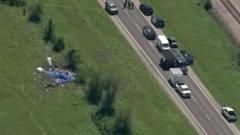
A twin-engine plane carrying skydiving enthusiasts lifts off into a clear sky and plunges into the ground moments later. No survivors. Eleven skydivers and pilot killed in US plane crash. It sounds like a horrific, freak anomaly. But if you look closely at the history of commercial skydiving operations, a completely different story emerges.
The 2019 crash of the Beechcraft King Air Clearview Orbital parachute plane at Dillingham Airfield in Oahu, Hawaii, remains one of the deadliest civilian aviation disasters in recent US history. It shocked the public. Yet to seasoned crash investigators and safety advocates, it felt tragically predictable.
We need to talk honestly about what went wrong. The National Transportation Safety Board (NTSB) investigation exposed deep structural flaws in how these operations are monitored. It is time to look past the shocking headlines and understand the actual mechanics of why this tragedy happened, what it reveals about aviation oversight, and how to protect yourself if you ever decide to jump.
Why the Oahu Skydiving Crash Was Preventable
The aircraft involved was a twin-engine Beechcraft 65-A90 King Air. It took off from Dillingham Airfield on June 21, 2019, with twelve people on board. Seconds after takeoff, the plane rotated aggressively, rolled inverted, and slammed into the ground near the airfield fence line. Post-impact fire consumed the wreckage.
Initial news reports focused on the weather or potential sudden engine failure. The real story was much worse. The NTSB ultimate accident report revealed a chain of organizational failures and a previous spin incident that should have grounded the aircraft permanently.
In 2016, this exact plane suffered substantial structural damage during a skydiving flight in California. The pilot lost control during a jump run, causing a terrifying tail-down spin. The plane sustained severe twisting twisting forces on the fuselage and tail section.
Instead of undergoing a rigorous, factory-certified repair process, the plane received substandard fixes. Investigators later discovered that the aerodynamic properties of the aircraft were likely compromised long before it ever arrived in Hawaii. The plane was a ticking time bomb.
The Lethal Mix of Weight Balance and Pilot Experience
Parachute operations are uniquely brutal on airplanes. You have a massive amount of weight shifting rapidly inside a cabin that has been stripped of its traditional seating.
On that fateful June evening, the King Air carried 11 skydivers and one pilot. The NTSB calculated that the plane was operating near its maximum allowable takeoff weight. More importantly, the weight distribution was incredibly tight.
When a skydiving plane takes off, the divers sit on the floor. If they bunch up toward the back of the cabin, the center of gravity shifts rearward. Combine a tail-heavy airplane with a pilot who had minimal experience in twin-engine turboprops, and you have a recipe for an unrecoverable aerodynamic stall.
The pilot held a commercial pilot certificate but had logged only a limited number of hours in the complex King Air airframe. When the plane encountered an aerodynamic stall immediately after liftoff, there was no room for error. The altitude was too low. The pilot lacked the muscle memory to counter the sudden roll. The plane flipped and crashed.
The Massive Regulatory Gap in Skydiving Flights
How does a previously damaged plane with documented structural issues keep flying commercial passengers? The answer lies in a glaring regulatory loophole that the Federal Aviation Administration (FAA) has ignored for decades.
Skydiving operators typically run under Federal Aviation Regulations Part 91. These are general operating and flight rules. They are far less stringent than Part 135, which governs commercial charter flights, or Part 121, which rules major airlines.
Under Part 91, skydiving companies do not face the same aggressive federal oversight, mandatory safety management systems, or strict pilot training requirements. The FAA essentially views skydivers not as commercial passengers, but as participants in a sport who accept inherent risks.
The NTSB has repeatedly begged the FAA to tighten up regulations on parachute jump operations. They have pushed for stricter maintenance schedules and better pilot training programs. The FAA has consistently pushed back, citing the burden on small businesses. This bureaucratic inertia costs lives.
How to Evaluate a Skydiving School Safety Record Before You Jump
If you want to jump out of a perfectly good airplane, you should. It is an incredible rush. But you cannot blindly trust that every operator follows best practices. You have to do your own homework.
First, look at the aircraft. Many drop zones rely on old, single-engine planes like the Cessna 182 or larger turboprops like the Caravan or King Air. Ask the operator about their fleet maintenance. A reputable company will happily tell you about their maintenance schedule and their mechanics. If they get defensive, walk away.
Second, check for United States Parachute Association (USPA) affiliation. The USPA sets safety standards for instructors and gear. While they do not regulate the airplanes themselves, a USPA Group Member drop zone pledges to follow basic safety requirements that non-affiliated operations routinely ignore.
Third, look at the pilot requirements. Ask if the pilots undergo annual emergency simulator training. Flying a jump plane is not like flying a straight-and-level charter. It requires specialized skill to handle rapid weight shifts and steep descents. Demand to know if the person flying your plane is a seasoned pro or just a rookie trying to build cheap flight hours.
Take control of your own safety. Check online aviation databases for any history of incidents or enforcement actions against the company. Never trade a cheap ticket price for an unmaintained airframe. Your life depends entirely on the quality of that machine and the competence of the person sitting in the cockpit.