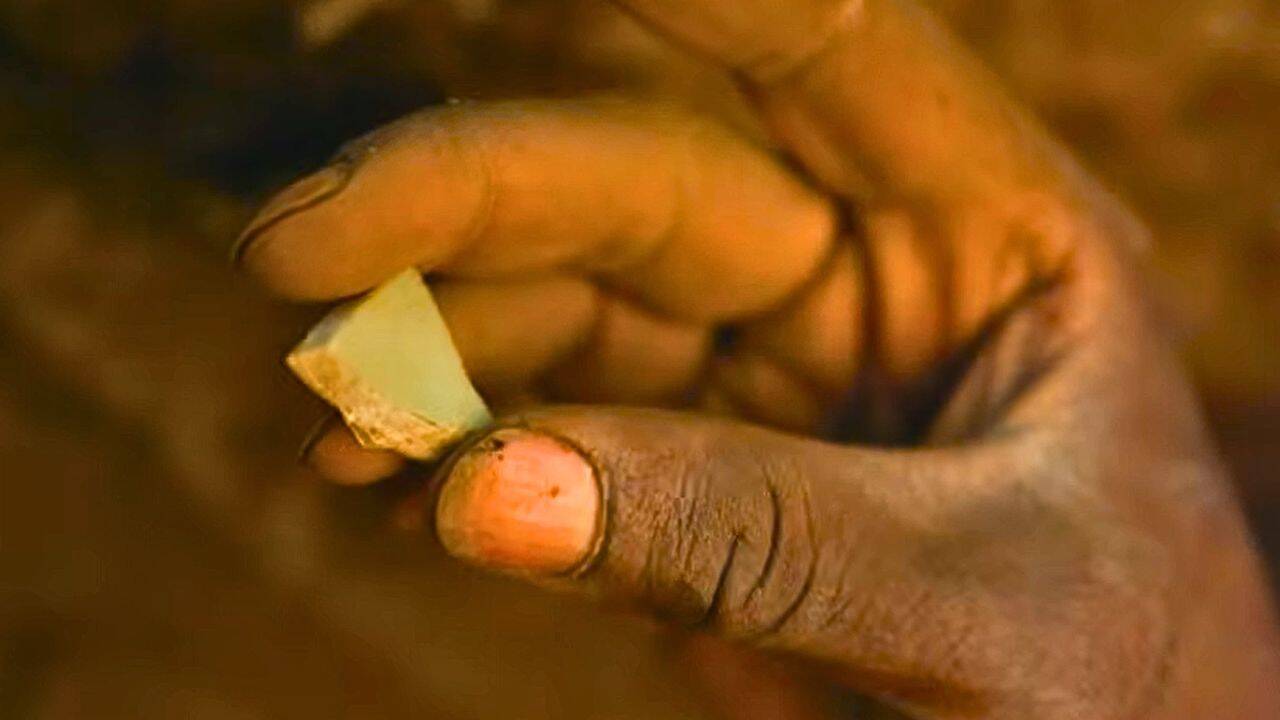
A tiny piece of glazed stoneware shows up in southern Africa. Headlines scream about ancient contact with China. Glass beads turn up in stone enclosures. Writers rush to sketch grand transcontinental trade maps.
Stop. Look closer.
That reaction is lazy. It mistakes an exotic curio for the core economic engine. Worse, it treats Great Zimbabwe like a passive mailbox waiting for distant ships to drop off shiny imports.
I have spent years reviewing archaeological reports, provenance debates, and museum narratives around Indian Ocean exchange. Too often, public stories flatten complex supply chains into romantic shortcuts. One shard of Chinese celadon or stoneware gets elevated into a headline while the real machinery of wealth, relay trade, and local production sits in the shadows.
The core argument in that familiar style of coverage is straightforward: rare Chinese ceramics and imported glass beads prove that Great Zimbabwe was plugged into long-distance global trade. On the surface, that sounds harmless enough. In practice, it distorts how medieval southern African wealth actually worked.
The Lazy Consensus About Shards and Beads
Here is the trap. People see an imported object and assume a direct line.
They picture a merchant vessel leaving a Chinese kiln port, sailing past Southeast Asia, crossing the Indian Ocean, docking on the East African coast, and handing a bowl straight to a ruler on the Zimbabwe plateau. That mental movie makes great clickbait. It is terrible economic history.
Most foreign trade goods reaching Great Zimbabwe moved through layered coastal and regional networks rather than direct ship-to-capital voyages. Swahili coastal hubs—places like Sofala, Kilwa, and later surrounding trading nodes—acted as clearinghouses and brokers. Goods changed hands multiple times. Values shifted at every stop.
When writers lean too hard on a single pottery shard, they commit two errors at once:
- They overread rarity as routine. A handful of imported ceramic fragments does not mean daily household life revolved around East Asian tableware. Local earthenware remained the workhorse of daily cooking, storage, and ritual.
- They treat prestige trinkets as the whole economy. Glass beads and glazed ceramics were visible markers of status and exchange, yet cattle herding, mixed agriculture, gold extraction, and ivory procurement anchored the regional economy long before a single foreign bead crossed the plateau.
Let us define the terms cleanly so we stop talking past one another. In trade studies, exotica or prestige imports are high-value or visually distinct items—such as imported glass beads or glazed stoneware—that carry social signaling weight out of proportion to their caloric or utilitarian value. Bulk or staple wealth is what feeds armies, sustains towns, and underwrites political power over generations—cattle herds, grain surpluses, labor organization, and raw commodities like gold and ivory.
Confusing those two categories is how commentators turn a side indicator into the main story.
What Glass Beads Actually Reveal (And What They Hide)
Glass beads are seductive to storytellers because they are small, colorful, durable, and easy to count. Archaeologists studying southern and eastern Africa have long used compositional analysis—often called chemical fingerprinting—to trace bead series back toward manufacturing regions in South Asia, the Middle East, or elsewhere across the Indian Ocean world.
Work by researchers such as Marilee Wood, Peter Garlake, Innocent Pikirayi, and Shadreck Chirikure has done heavy lifting to clarify how material culture, stone architecture, and regional trade networks operated across southern Africa. Their scholarship reminds us that African polities were active organizers of wealth and territorial authority, not accidental footnotes on someone else's trade route.
Still, counting beads without asking who controlled their distribution misses half the picture.
Imagine a scenario where a royal court receives ten thousand glass beads over a decade. If you only track the beads, you might conclude that glassmakers abroad were the decisive force shaping that society. If you track the exchange ratio instead—how much gold dust, ivory, or local labor was required to pull those beads inland from the coast, and how elites redistributed them to bind subordinates—you see the real leverage.
Beads functioned like social currency and status markers inside patronage networks. A ruler who controlled access to coastal goods could reward loyalists, cement alliances, and project prestige. Yet that leverage depended on local production capacity first. Without cattle, crops, miners, and builders on the ground, there would have been nothing to trade for beads in the first place.
There is another twist worth noting. Sometimes a tiny ceramic shard or bead cluster gets treated as proof of "globalization" before the word existed. Calling every long-distance link "globalization" stretches the term until it loses precision. Pre-modern Indian Ocean exchange was deeply interconnected across regional hubs, monsoonal rhythms, and overlapping commercial zones, but it operated on seasonal winds, relay middlemen, and localized demand—not modern frictionless supply chains.
Why People Ask the Wrong Questions About Great Zimbabwe
Search feeds and curiosity lists around this topic usually circle the same questions: Did ancient China trade directly with Great Zimbabwe? What do glass beads tell us about trade routes? How rich was Great Zimbabwe because of foreign trade?
Each of those questions has a flaw baked into its premise.
1. "Did China trade directly with Great Zimbabwe?"
This asks for a binary yes or no that flattens how long-distance trade worked. Chinese ceramics entered Indian Ocean commerce over centuries, reaching East African ports and moving inland through intermediary networks. Framing the story as a direct bilateral handshake between a Chinese kiln and a Zimbabwean hilltop overstates direct contact while understating the African and Indian Ocean intermediaries who made inland movement possible.
2. "How did glass beads and pottery make Great Zimbabwe powerful?"
Foreign imports reinforced elite status and connected local rulers to wider commercial circuits. They did not create the stone dry-stone masonry tradition, the agricultural base, or the political institutions from scratch. External trade amplifies existing power; it rarely manufactures state-level organization out of thin air.
3. "Which artifact proves the biggest trade connection?"
Artifact-hunting treats history like a trivia contest. A single sherd is a clue, not a thesis. Real economic insight comes from comparing import patterns against local production, regional geography, and shifting coastal power centers over time.
A Thought Experiment on Misplaced Focus
Imagine a scenario where a modern logistics analyst audits a booming regional hub by looking only at imported luxury watches found in executive drawers. The analyst sees Swiss movements and Japanese quartz, draws a line straight from Geneva and Tokyo to the boardroom, and declares that watchmakers built the company.
Meanwhile, the analyst ignores the iron ore, timber, farming output, freight corridors, and local management that actually kept thousands of workers fed and paid.
That is what happens when popular articles treat a tiny Chinese pottery shard as the headline star of Great Zimbabwe's economic story. The shard is real. The glass beads are real. The Indian Ocean links are real. The proportion in the popular narrative is backwards.
Downsides of Going Contrarian (And Where I Could Be Wrong)
Going hard against a neat headline carries risks of its own. Let us be honest about the trade-offs of flipping the script.
First, overcorrecting can swing too far toward isolationism. Great Zimbabwe was not sealed off in a vacuum. Imported beads and ceramics did travel inland, and coastal connections mattered—especially as gold and ivory drew coastal merchants deeper into regional exchange systems. Pretending foreign goods were irrelevant would be just as distorted as claiming they drove everything.
Second, archaeology deals in incomplete preservation. Organic goods—cloth, food, hides, wood, basketry—decay far faster than fired clay, stone, or glass. Sometimes a durable shard or bead survives precisely because softer trade goods vanished, which can make inorganic imports look more prominent in the surviving record than they were in daily life.
Third, chronological precision matters. A single stray fragment found in disturbed soil or surface layers does not automatically lock in a neat date or prove sustained volume on its own. Careful stratigraphy and context always beat dramatic storytelling.
Actionable Ways to Read Trade Stories Without Getting Played
If you read history features, museum labels, or viral science posts about ancient trade links, use these four rules to cut through hype:
- Follow the middlemen, not just the endpoints. Whenever an article links Region A to Region C using an item made in Region A, ask who carried it through Region B and what changed hands along the way.
- Separate prestige goods from survival wealth. Always ask what fed the population, built the walls, and paid the retinue before celebrating an imported luxury item.
- Check sample size against narrative weight. One shard or a small bead assemblage tells a different story than broad, consistent distribution across layers and sites.
- Reward local agency. Look for how local producers, miners, herders, and rulers shaped demand and controlled terms, rather than treating distant exporters as the sole active players.
Shiny imports make tidy headlines. Dirty work, local production, and layered trade networks tell the truth.


