Everyone is looking at the guest list. They shouldn't be.
The mainstream press loves a castle scandal. Give them a Scottish estate, a disgraced royal, and two of the most notorious names in modern criminal history—Jeffrey Epstein and Ghislaine Maxwell—and the headlines write themselves. Journalists treat every police inquiry into Balmoral stays like a ticking time bomb that will finally blow the doors off royal immunity.
That is lazy consensus. It misunderstands how British policing works, how jurisdictional limits operate, and what actually constitutes criminal liability in the United Kingdom.
If you are waiting for Scottish police logs from a 1999 hunting weekend to produce handcuffs, you are watching the wrong magic trick. The real story isn't about who slept in which wing of a Highland castle. It is about the massive, structural gap between public outrage and prosecutable criminal law.
The Jurisdiction Trap Nobody Explains
Let’s look at the actual mechanics of UK law enforcement. People talk about "British police" as if Scotland Yard can simply kick down any door from Land's End to John o' Groats. They cannot.
Scotland operates under a completely separate legal system—Scots law—enforced by Police Scotland and prosecuted by the Crown Office and Procurator Fiscal Service (COPFS). England and Wales operate under English common law, enforced by forces like the Metropolitan Police and prosecuted by the Crown Prosecution Service (CPS).
When headlines scream that police are "investigating" historical stays at Balmoral, the public assumes a massive, coordinated manhunt is underway. In reality, "assessing information" or "reviewing material" is standard bureaucratic triage. When a third party—often an anti-monarchy campaign group or a civil litigant's legal team—hands a dossier to a police force, that force is legally obligated to log it and assess whether a crime occurred within their specific geographic jurisdiction.
Here is the threshold most commentators ignore:
- Territoriality: For Police Scotland to launch a full criminal investigation, there must be credible, specific evidence that a criminal offense occurred on Scottish soil. Being photographed at a shooting party in Aberdeenshire is not a crime. Hosting terrible people is not a crime.
- Corroboration: Under Scots law, the doctrine of corroboration historically requires evidence from two independent sources to prove the essential facts of a crime. Even with modern statutory reforms regarding sexual offenses (such as the Moorov doctrine, which allows similar fact evidence across separate incidents to corroborate one another), the evidentiary bar in Scotland is notoriously high.
- Statute of Limitations vs. Evidentiary Decay: While the UK has no statute of limitations on serious indictable offenses, prosecuting allegations from over two decades ago without contemporaneous physical evidence, intact digital records, or corroborating witnesses is a prosecutor's nightmare.
I have spent years watching high-profile legal battles collapse because journalists confused an assessment with an indictment. When the Metropolitan Police repeatedly reviewed allegations linked to Virginia Giuffre's civil claims against Prince Andrew, they dropped the matter multiple times—not because of a shadowy palace cover-up, but because the alleged acts fell outside UK jurisdiction or lacked the evidentiary threshold required by the CPS to secure a realistic prospect of conviction.
The Lazy Consensus of the "Smoking Gun" Photo
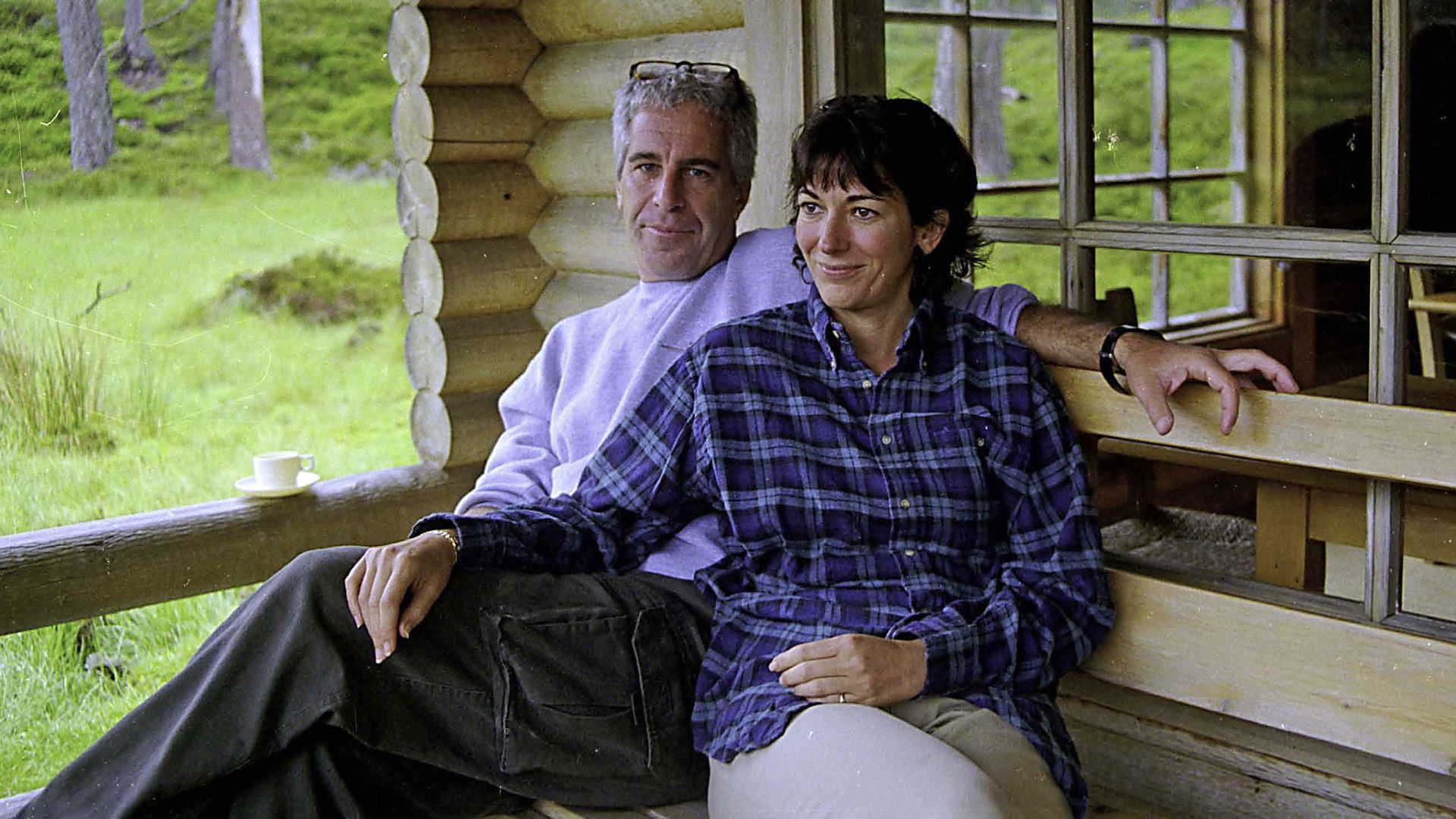
Remember the infamous 1999 photograph of Jeffrey Epstein and Ghislaine Maxwell relaxing at Balmoral Castle? It surfaced during Maxwell's federal trial in New York. The media treated it like the Zapruder film.
Look closer at what that photo actually proves in a courtroom.
It proves proximity. It proves social access. It proves appalling judgment by whoever extended the invitation.
What does it fail to prove? Intent, knowledge of ongoing criminal conspiracies, or the commission of an offense at that specific location.
In criminal defense, proximity is the easiest thing in the world to neutralize. Wealthy, powerful networks operate on reciprocal hospitality. Epstein was a master at inserting himself into elite circles—from Harvard faculty lounges to Silicon Valley dinners to royal estates—precisely so he could use those photographs as social currency to lure his next targets. Maxwell, educated at Oxford and connected to the British establishment through her father, Robert Maxwell, was the key that unlocked those doors.
When reporters treat a guest book entry or a snapshot on a heather-covered hill as proof of criminal complicity, they are doing the defense attorneys' job for them. They set the public expectation at "guilty of treason," so when prosecutors inevitably announce "no further action," the public assumes corruption rather than basic legal reality.
What People Actually Ask (And Why the Questions Are Flawed)
When this topic trends, the same questions flood search engines. Almost all of them are built on false premises.
"Can Prince Andrew be extradited to the US?"
No. Not under the current factual record.
Extradition between the US and the UK is governed by the 2003 Extradition Act. For the US Department of Justice to request extradition, they must first secure a federal criminal indictment against him. Despite years of Southern District of New York (SDNY) prosecutors stating they wanted to speak with Andrew as a witness—and publicly complaining about his lack of cooperation—he has never been criminally charged in the United States. You cannot extradite someone simply to sit for a voluntary interview. Furthermore, even if charges were filed, the offense would have to satisfy "dual criminality"—meaning the conduct must be a crime in both jurisdictions at the time it was committed.
"Does Royal Immunity protect him at Balmoral?"
This is pure fiction.
Sovereign immunity in the United Kingdom applies strictly to the reigning monarch—currently King Charles III—in their personal capacity. It does not extend to siblings, children, or extended members of the royal family. Anne, Princess Royal, was convicted under the Dangerous Dogs Act in 2002. Prince Andrew has zero legal immunity from criminal prosecution or civil lawsuits, which is precisely why he had to settle Virginia Giuffre’s civil suit in New York in 2022 for an undisclosed sum. If Police Scotland had actionable evidence of a crime committed at Balmoral, no royal charter could stop them from arresting him.
"Why didn't royal protection officers report what they saw?"
This is the most misunderstood operational detail of the entire saga.
Royalty and Specialist Protection (RaSP) officers are armed Met Police officers assigned to keep principals alive, not to act as moral auditors or investigative detectives. Their operational mandate is physical security. Unless an officer directly witnesses a clear, unambiguous crime taking place in front of them, their job is to stand outside the door, secure the perimeter, and maintain strict discretion. Expecting a bodyguard from 1999 to have proactively dismantled an international trafficking ring based on who walked into a drawing room is a retrospective fantasy.
The Real Threat Isn't Criminal—It's Civil and Reputational
If the police angle is largely a dead end, why does this matter? Because the real battleground has shifted entirely from criminal courts to civil discovery, financial survival, and institutional self-preservation.
Look at how modern accountability actually functions when elite institutions are involved:
- Civil Discovery Over Criminal Subpoenas: In a criminal probe, the target has the right to silence, and police keep their files sealed until trial. In civil litigation—like the lawsuits filed against JPMorgan Chase and Deutsche Bank by Epstein survivors—discovery is brutal. Emails, flight logs, calendar entries, and financial transfers get dumped into the public record through court filings. That is where the real damage happens.
- The Financial Chokehold: Without official royal duties, Prince Andrew has no access to the Sovereign Grant. His survival depends entirely on private family wealth controlled by King Charles III. Every time a new headline links Balmoral—the royal family's private, deeply personal sanctuary—to Epstein and Maxwell, it increases the pressure on Buckingham Palace to cut financial ties completely to protect the Crown's brand.
- The Unsealing of Third-Party Records: Judge Loretta Preska’s orders in New York unsealing hundreds of documents from the Giuffre v. Maxwell defamation case proved that the biggest revelations don't come from police raids. They come from mundane civil depositions finally losing their protective seals years later.
The Downside of Being a Legal Realist
Admitting that police inquiries into Balmoral are unlikely to yield criminal charges feels deeply unsatisfying. That is the flaw in a strictly legalistic perspective.
When you strip away the sensationalism and look only at prosecutorial thresholds, you risk sounding indifferent to the victims. The reality is that the justice system is a blunt, slow, hyper-technical instrument designed to protect the innocent from state overreach—which means wealthy, insulated figures routinely slip through its fingers when decades pass between the offense and the investigation.
Critics of my view will argue that intense media scrutiny and public pressure are the only forces capable of compelling police forces to look twice at powerful people. They have a point. Without relentless investigative journalism—most notably the work of Julie K. Brown at the Miami Herald—Epstein’s 2008 sweetheart plea deal in Florida would never have been exposed, and Maxwell would likely still be attending society galas. Public noise forces institutional action.
How to Read the Next Headline
Stop treating every police "review" as a precursor to a perp walk.
The next time a news outlet runs an urgent alert about detectives examining historical royal guest lists, flight manifests, or estate logs, run it through three filters before buying the hype:
- Check the verb: Are police investigating a specific suspect for a named offense, or are they assessing newly submitted information? Those two words represent galaxies of difference in British policing.
- Check the geography: Did the alleged unlawful act happen inside the exact jurisdiction of the police force making the statement? If the answer is no, the inquiry is administrative theater.
- Follow the civil dockets, not the police blotter: Real leverage against untouchable figures lives in unsealed civil depositions, banking compliance records, and estate trust documents—never in twenty-five-year-old hunting lodge guest books.
The castles aren't hiding the smoking gun. The paper trail was already built in Manhattan, Palm Beach, and the US Virgin Islands—and no Scottish police report is going to rewrite it.