Everyone in defense media is hyperventilating over whether satellite restrictions will freeze Kyiv’s battlefield communications this winter. They are staring at the wrong wire.
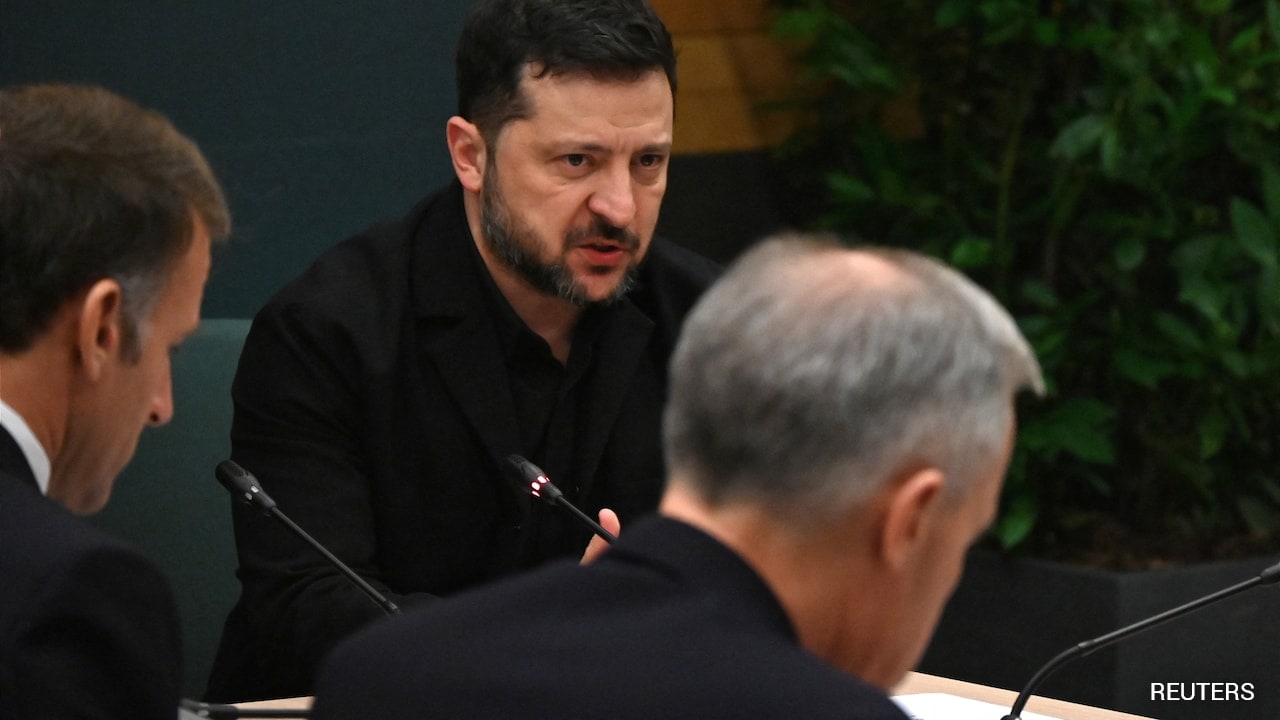
The standard narrative goes like this: SpaceX and Pentagon limits on Starshield—the hardened, military-grade sibling of commercial Starlink—will blind Ukrainian drone operators, sever artillery coordination, and hand Russia an insurmountable seasonal advantage. Ukrainian President Volodymyr Zelensky has voiced understandable concern over external dependencies and operational constraints. Commentators immediately turned that friction into a binary doomsday prophecy.
That analysis is lazy. It treats a single commercial-military constellation as a magic wand and ignores the brutal, unglamorous realities of winter warfare, spectrum physics, and defense procurement. Satellite bandwidth is not the bottleneck that decides whether an army holds a trench line in January. Power generation, thermal signatures, localized electronic warfare, and sovereign mesh redundancy are.
The Myth of the Indispensable Constellation
When defense analysts talk about Starshield, they frequently conflate three distinct architectures: commercial Starlink terminals bought off the shelf, Pentagon-contracted Starlink terminals operating under DoD oversight, and Starshield itself—a dedicated government-only satellite bus and payload program built for the U.S. Space Force and intelligence community.
I have watched procurement teams burn through tens of millions of dollars chasing single-vendor satellite miracles while neglecting basic tactical radios and fiber-optic spools. When a military becomes culturally addicted to high-throughput satellite links at the platoon level, every tactical problem starts looking like a bandwidth problem. It isn't.
Starshield offers superior encryption, anti-jamming resilience, and hosted government payloads compared to consumer dish terminals. Yet no orbital system overrides basic physics or institutional sovereignty. According to U.S. Department of Defense space policy statements and SpaceX’s own public terms of service, commercial and dual-use orbital infrastructure operates under strict export controls, geofencing rules, and national security directives set in Washington, not Kyiv. Expecting a private American aerospace contractor or the Pentagon to hand over unrestricted, unmonitored control of strategic orbital assets in active escalation zones was never realistic.
Blaming Starshield curbs for potential winter setbacks lets military planners off the hook for a far deeper structural failure: over-reliance on centralized, externally controlled sky-nodes instead of hardened, unjammable terrestrial networks.
What Actually Breaks First When Temperatures Drop
Winter in Eastern Europe does not care about orbital inclination. Cold weather attacks the physical layer of warfare long before software geofences do.
- Lithium-Ion Collapse: Sub-zero temperatures slash battery capacity by 30 to 50 percent. A reconnaissance quadcopter or a portable satellite terminal is useless if its power cells die twenty minutes into a mission.
- Thermal Beacons: Every active satellite dish generates heat. Against a frozen snowpack, an unshielded terminal glowing at 40 degrees Celsius under an infrared drone camera is an engraved invitation for a glide bomb or an artillery strike.
- Mud, Ice, and Logistics: Freezing rain coats parabolic and phased-array surfaces, degrading signal-to-noise ratios precisely when cloud cover already attenuates Ka-band and Ku-band frequencies.
- Grid Attrition: Russian missile and drone strikes target electrical substations and combined heat-and-power plants every autumn for a reason. Without baseline grid electricity, every forward operating base relies on diesel generators—which require fuel convoys moving over frozen, drone-monitored roads.
If you fixate on satellite policy memos from Washington while ignoring diesel supply chains and battery chemistry, you are diagnosing a broken leg by examining the patient’s wristwatch.
The Fiber-Optic Counter-Revolution Nobody Wants to Admit
The sharpest tactical adaptation on the Ukrainian front over the past year had nothing to do with low-Earth orbit. It involved spooled glass.
Both Russian and Ukrainian forces have deployed first-person-view (FPV) drones tethered to ultra-thin fiber-optic cables stretching ten to twenty kilometers. Why? Because electronic warfare jamming across the front lines has become so dense that radio-frequency links—and even GPS/GNSS-dependent guidance systems—frequently drop out within kilometers of the zero line.
A fiber-optic tether cannot be jammed by radio-frequency noise. It emits zero electromagnetic signature for enemy direction-finding sensors to triangulate. It does not require authorization from a satellite constellation operator thousands of miles away.
The same logic applies to ground communications. Buried fiber-optic lines, directional microwave relays, and decentralized local mesh networks using frequency-hopping tactical radios survive electronic warfare environments where unprotected satellite dishes become liabilities. Satellite links excel at strategic backhaul—connecting command headquarters to rear logistics and long-range intelligence feeds. Pushing them down to every forward dugout creates a single point of failure that an adversary—or a cautious supplier—can switch off.
Answering the Wrong Questions About Satellite Warfare
Defense forums are flooded with the same repetitive questions every time satellite restrictions hit the headlines. Most of them rest on broken premises.
Can Ukraine Replace Starshield Before Winter Hits?
No—and trying to build a sovereign equivalent to a multi-thousand-satellite low-Earth orbit constellation in three months is pure fantasy. Europe’s IRIS² constellation is years away from full operational capability. OneWeb lacks the terminal density, low-latency tactical agility, and anti-jamming hardening required at the brigade level. The goal is not replacing Starshield in orbit; the goal is reducing how many tactical tasks require an orbital link in the first place.
Does Restricting Starshield Hand Russia Air and Artillery Superiority?
Only if Ukrainian units fail to decouple target acquisition from real-time video streaming back to rear headquarters. Modern distributed mission command—a core NATO doctrine emphasized by military theorists from the U.S. Army War College to the Royal United Services Institute—trains junior officers to execute intent locally without waiting for a general watching a live drone feed fifty miles away. When communications degrade, centralized armies freeze; decentralized armies keep moving.
Are Private Aerospace Companies Unreliable Defense Partners?
They are doing exactly what rational, regulated defense contractors do. SpaceX, Northrop Grumman, and L3Harris operate under International Traffic in Arms Regulations (ITAR) and strict Pentagon contracts. Treating a defense contractor as a philanthropic utility rather than a regulated instrument of U.S. statecraft is a failure of political realism, not corporate betrayal.
The Uncomfortable Trade-Offs of Sovereign Redundancy
Moving away from heavy satellite dependence is not painless, and pretending otherwise would be dishonest. Decentralized, ground-based, and multi-constellation communications come with brutal costs:
- Bandwidth Starvation: Tactical VHF/UHF mesh radios and troposcatter links carry kilobits or low megabits per second, not high-definition multi-stream drone video. Commanders accustomed to watching real-time war movies from bunker screens hate giving up that visibility.
- Manpower and Maintenance: Laying and repairing physical field wire or operating directional relay masts exposes signal troops to artillery and drone fire in freezing conditions.
- Fragmented Integration: Stitching together European commercial satellites, hardened tactical radios, cellular fallback networks, and tethered drones creates massive cryptographic and interoperability headaches.
Yet those trade-offs are the price of actual military autonomy. Every capability leased from a foreign commercial or government network carries an invisible leash.
What Kyiv and Its Allies Must Actually Do Before January
Stop treating satellite bandwidth as an unlimited entitlement and start engineering for a degraded electromagnetic environment.
- Decouple Tactical Fire Control from Orbital Links: Push edge-computing and automated target recognition directly onto drones and local fire-direction tablets so artillery batteries can calculate firing solutions offline without streaming gigabytes to the cloud.
- Harden the Power Layer: Prioritize cold-weather solid-state and heated lithium-iron-phosphate battery packs, micro-grids, and low-signature fuel cells over buying another batch of unshielded consumer dishes.
- Reserve Satellite Bandwidth for Strategic Backhaul: Enforce strict spectrum discipline. Keep Starshield and contracted military terminals at battalion level and above, using terrestrial mesh, optical comms, and buried fiber for the last five kilometers to the trench.
- Codify Multi-Vendor Orbital Contracts: Instead of relying on ad-hoc diplomatic lobbying, structure formal government-to-government Foreign Military Sales agreements that lock in clear rules of engagement, geofencing boundaries, and surge capacity before crisis points hit.
Wars in winter are won by the side whose logistics, power grids, and command structures function when the sky goes dark and the mercury drops below zero. If Ukraine’s survival this season hinges on a single software toggle in California or Washington, the real strategic failure happened long before the first snowfall.