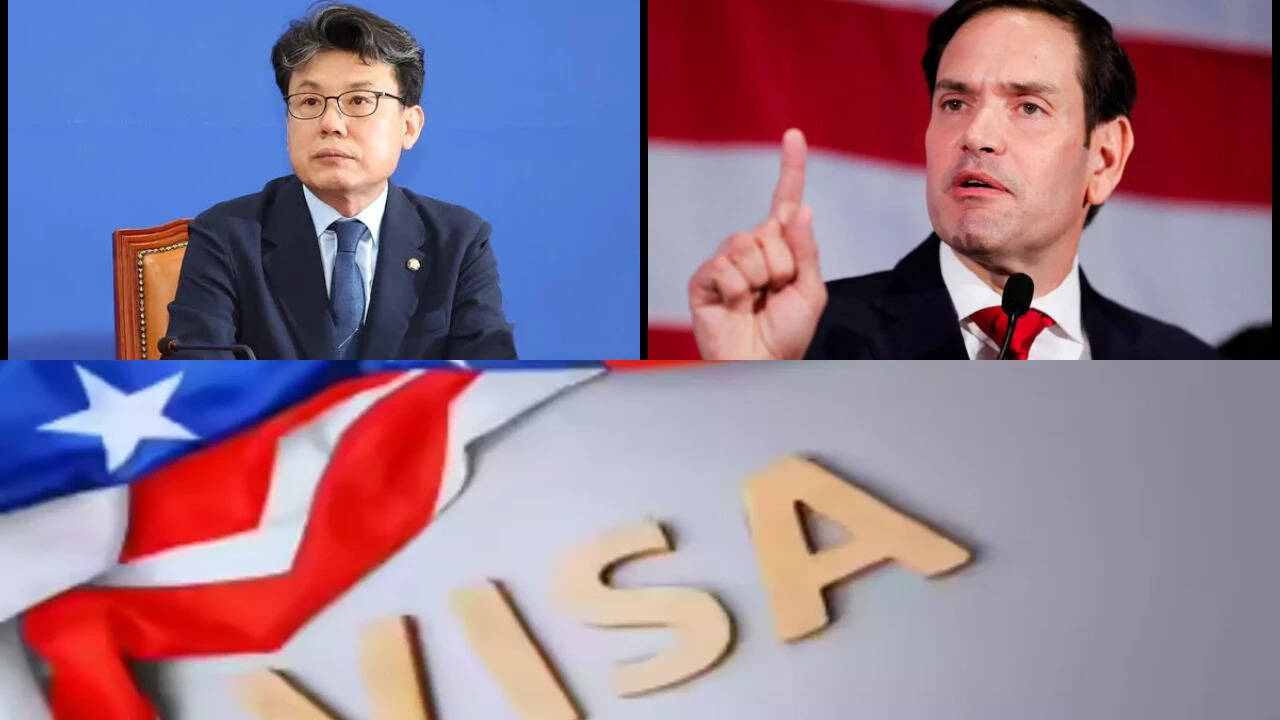
A 1991 criminal conviction in South Korea collided with U.S. consular screening in late October 2026, producing a three-day visa reversal for National Assembly Defense Committee Chairman Jin Sung-joon right before a delegation visit to U.S. Indo-Pacific Command in Hawaii.
A superficial news report treats this sequence as a simple timeline: a lawmaker is denied an A-2 official visa, political pushback follows, and U.S. Secretary of State Marco Rubio intervenes to clear the travel in time for a November 1–5 trip. That framing misses the real friction point. Official travelers on government business do not enter on the Visa Waiver Program's Electronic System for Travel Authorization, even when their country participates in the waiver program. Every government-business trip routed through an A-2 visa forces a consular adjudication where statutory inadmissibility rules, administrative processing statuses, and bilateral alliance signaling collide.
Deconstructing the Competitor's Narrative
Standard wire-style coverage of the episode relies on a thin cause-and-effect chain:
- The Initial Refusal: Rep. Jin Sung-joon of South Korea's ruling Democratic Party reported that his U.S. visa application was refused ahead of a security delegation trip to meet U.S. military leaders, including Indo-Pacific Command leadership in Hawaii.
- The Historical Trigger: Observers and subsequent reporting pointed to Jin's 1991 conviction—which carried a three-year prison sentence and a three-year suspension of qualifications—linked to South Korea's National Security Act.
- The Rapid Reversal: Within three days, ahead of the planned departure at the end of October 2026, the U.S. Embassy in Seoul issued the A-2 visa after Rubio stated that the issue involved an individual matter tied to decades-old conduct and would be resolved through bilateral channels.
That summary leaves three analytical gaps untouched. First, it treats a consular "Refused" status as an indisputable, permanent legal judgment rather than a procedural state that can reflect administrative hold or review. Second, it treats a 1991 conviction as self-explanatory without examining how decades-old political or security convictions interact with U.S. statutory bars and official diplomatic categories. Third, it treats the reversal as a purely personal favor rather than a calculated stabilization of bilateral defense diplomacy involving an active parliamentary committee chair.
Known Facts Versus Analytical Hypotheses
Separating confirmed public facts from analytical inference keeps the assessment grounded:
- Confirmed Facts: Jin Sung-joon chairs South Korea's National Assembly Defense Committee and belongs to the ruling Democratic Party. He had a 1991 conviction resulting in a three-year prison term and a three-year suspension of qualifications. A visa refusal appeared prior to a scheduled November 1–5, 2026 delegation visit to U.S. Indo-Pacific Command in Hawaii. After public reaction in Seoul and remarks by Rubio on October 31 linking the issue to an individual case involving decades-old conduct and bilateral resolution, the A-2 visa was issued so Jin could travel on schedule. Separate visa delay friction had also affected Democratic Party lawmaker Jung Chung-rae prior to a U.S. audit trip.
- Educated Hypotheses: Automated or manual background checks triggered by the 1991 record likely flagged a legacy derogatory hit that required higher-level review before an A-2 issuance could clear. Escalating the matter to bilateral diplomatic channels probably compressed standard vetting timelines once the strategic cost of barring a sitting defense committee chair became visible.
The Three Pillars of Consular Friction in Official Travel
When a sitting legislator from a treaty ally hits a visa wall days before a military exchange, three structural mechanisms are at work simultaneously.
1. Statutory Narrowing Versus Database Screening
Under U.S. immigration architecture, A-2 visas cover foreign government officials traveling on official business. Unlike routine tourist or business entrants, official travelers face a narrower set of applicable visa bars—primarily centered on security rather than ordinary criminal grounds—yet consular officers still must screen records and resolve hits rather than wave them through blindly. A three-decade-old conviction under a National Security Act creates a classic screening ambiguity: the underlying conduct is decades old, yet any label touching national security statutes can trigger caution in automated watchlists or interagency checks.
2. Procedural Status Labels and Timing Asymmetry
Consular tracking systems display "Refused" for outcomes that range from outright statutory denial to temporary refusals pending additional review or administrative action. When a trip is days away, timing asymmetry turns a multi-day review into a diplomatic crisis. Even if an official ultimately qualifies for issuance, a refusal posted late in the pre-departure window creates immediate headlines, forces public statements from lawmakers and foreign ministry officials, and risks leaving a key committee chair behind while peers fly.
3. Alliance Signaling and Institutional Role Weight
A private citizen with a 1991 conviction has no institutional leverage over a foreign consular post. The chairman of the National Assembly Defense Committee traveling to meet senior U.S. military leadership—including the Indo-Pacific Command commander—carries institutional weight tied directly to alliance coordination. Letting a refusal stand against a defense committee chair on the eve of a bilateral security engagement converts a screening record into a visible friction point between Washington and Seoul.
Why Past Vetting Doesn't Guarantee Future Friction-Free Travel
A recurring question in episodes like this is why a lawmaker with a decades-old record can travel in some instances and hit a refusal or delay in others. Three operational variables explain that inconsistency without inventing hidden motives:
- Visa Category Shifts: Traveling on a different visa class, under different trip documentation, or on a different administrative cycle can route a file through distinct review steps than an A-2 delegation packet.
- Record Refresh and Flagging Rules: Legacy criminal records do not always produce identical alerts on every check; updates to screening databases, name/transliteration matching, or secondary review queues can surface an old file unexpectedly.
- Lead-Time Compression: A two-week review window looks like routine processing; the exact same review compressed into seventy-two hours before a delegation flight looks like a high-stakes reversal.
The Cost Function of Last-Minute Diplomatic Reversals
Every rapid visa reversal carries a hidden cost function for both capitals. For the United States, reversing a refusal in three days protects immediate defense diplomacy, but it also invites scrutiny over whether consular screening is inconsistent or overly reactive to old records. For South Korea, securing the visa preserves parliamentary participation in security talks, yet publicizing a refusal on social media before resolution raises domestic political heat and turns routine embassy vetting into a public test of alliance ties.
There are clear limits to relying on high-level diplomatic intervention as a recurring fix. Cabinet-level officials cannot personally rescue every delayed delegation member without eroding standard vetting discipline or creating expectations of special treatment. Nor does a single issued A-2 visa permanently erase an underlying historical record from future screening systems.
Tactical Playbook for Official Delegations
Parliamentary offices and foreign ministries managing official U.S. travel can reduce last-minute refusals and public embarrassment by executing five operational steps well ahead of departure:
- Audit Historical Records Before Filing: Review every delegating member's prior legal, security, and travel history—including decades-old convictions or amnesties—at least six to eight weeks before travel, rather than waiting for consular questions.
- Submit A-2 Packets Early with Full Official Context: File A-2 applications early enough to absorb routine consular or administrative processing without threatening flight dates, pairing the application with clear official mission documentation.
- Prepare Explanatory Dossiers for Legacy Flags: Where a historical record exists, attach concise, verifiable context on the date, legal resolution, and current official standing so adjudicators do not have to guess from a bare database hit.
- Separate Routine Hold Inquiries from Public Escalation: Use embassy and foreign ministry channels first to clarify whether a "Refused" status reflects a curable administrative hold, reserving public political escalation for genuine impasses.
- Build Delegation Contingencies Without Assuming Reversals: Plan committee agendas and travel rosters realistically in case an individual clearance lags, recognizing that diplomatic intervention is a high-friction backstop rather than a guaranteed schedule saver.
Strategic Action for Alliance Travel Governance
Treat the Jin Sung-joon reversal not as a one-off anomaly, but as a prompt for South Korea's National Assembly and Ministry of Foreign Affairs to establish a standardized pre-clearance screening protocol for official U.S. delegations—starting immediately with a confidential historical record check for all committee members slated for sensitive security or oversight trips in 2027.