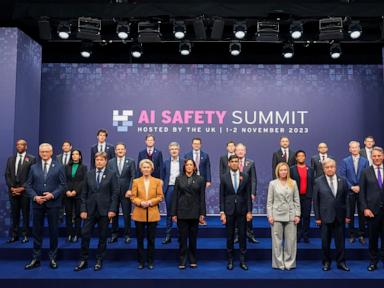
Every major tech trade rag spent last week swooning over Tom Rubin’s keynote at the Paris AI Forum. They wrote about policy, international cooperation, cultural preservation, and how OpenAI is gracefully navigating the thorny weeds of European regulation. They swallowed the standard PR narrative whole: that a Silicon Valley lab is flying halfway across the world simply to hold hands with European bureaucrats and talk about responsible innovation.
It is a masterclass in misdirection.
While the press corps obsesses over diplomatic handshakes in France, the actual architecture of global power is hardening into an oligopoly. OpenAI does not care about your local cultural nuances or European compliance committees the way you think they do. They care about distribution dominance. Every keynote about safety, ethics, and partnership is a smoke screen designed to bog down open-source competitors in red tape while the giants quietly lock up compute, data pipelines, and enterprise lock-in.
I have watched enterprise buyers blow eight figures on custom compliance frameworks for models that were obsolete before the ink dried on the procurement contract. They buy the feeling of safety sold on stages like the one in Paris, mistaking regulatory compliance for strategic advantage.
Here is the brutal truth nobody in the mainstream tech press has the stomach to print: regulation is the moat of the incumbent.
The Compliance Trap
When a tech executive stands up at an international forum and calls for clear guardrails, your first instinct shouldn't be applause. It should be suspicion.
Compliance costs scale sub-linearly. A multi-billion-dollar lab can absorb the overhead of an army of legal and safety engineers without blinking. A bootstrap startup in Berlin or a mid-sized software shop in Austin cannot. Every time an industry leader champions heavy oversight under the banner of public interest, they are erecting a tollbooth on innovation. They are pulling up the ladder and handing the building inspector a clipboard.
The Paris AI Forum was treated as a milestone for cooperative governance. In reality, it was a lobbying triumph. By participating in high-level dialogues about high-stakes AI, companies like OpenAI help write the exact rulebooks that future competitors will fail to clear.
Stop treating policy keynotes as philanthropy. They are defensive corporate strategy wrapped in diplomatic velvet.
The Open-Source Mirage
The counter-argument is always the same: open-source models will save us. If OpenAI locks down their proprietary endpoints, we will just spin up Llama or Mistral variants on our own hardware and tell the Silicon Valley monopolists to keep their walled gardens.
This is a comforting fairy tale told by people who have never had to manage a distributed inference cluster under enterprise latency constraints.
Open weights are not the same thing as open infrastructure. You can download the weights of a frontier-class model all day long, but if you lack the localized data pipelines, specialized orchestration layers, and the immense capital required to fine-tune and run inference at scale, you own a Ferrari with no engine.
Furthermore, the gap between closed frontier models and open alternatives is not static. The compute advantage held by the dominant players compounds daily. When a company controls the primary revenue streams of the entire ecosystem, they can afford to subsidize losses on inference while independent developers go bankrupt trying to match performance on local GPUs.
Pretending that open-source weights are an automatic equalizer is intellectually lazy. It ignores the capital expenditure reality of modern computing.
What You Should Be Doing Instead
If your technical strategy relies on hoping that regulatory bodies will level the playing field or that open-source models will magically match proprietary performance for free, you are building your house on quicksand.
First, stop building wrapper logic around someone else's API and calling it a moat. If your entire business model depends on a single endpoint remaining cheap and accessible, you do not own a company; you are renting a storefront inside someone else's mall.
Second, shift your focus from model scale to proprietary workflow integration. The value is no longer in the raw intelligence of the base model. The value is in the friction-free integration of that intelligence into messy, domain-specific enterprise data workflows that standard models cannot parse without deep context.
Third, evaluate every piece of regulatory advice not by its ethical sheen, but by its economic impact on your competitors. If a proposed law hurts small players more than it hurts the giants, oppose it, regardless of how virtuous the marketing sounds.
The keynote in Paris is over. The applause has faded. The transcripts are sitting in digital archives gathering dust. Meanwhile, the actual infrastructure of the next economic era is being poured in concrete and signed away in exclusive contracts.
Stop watching the stage. Look at the ledger.