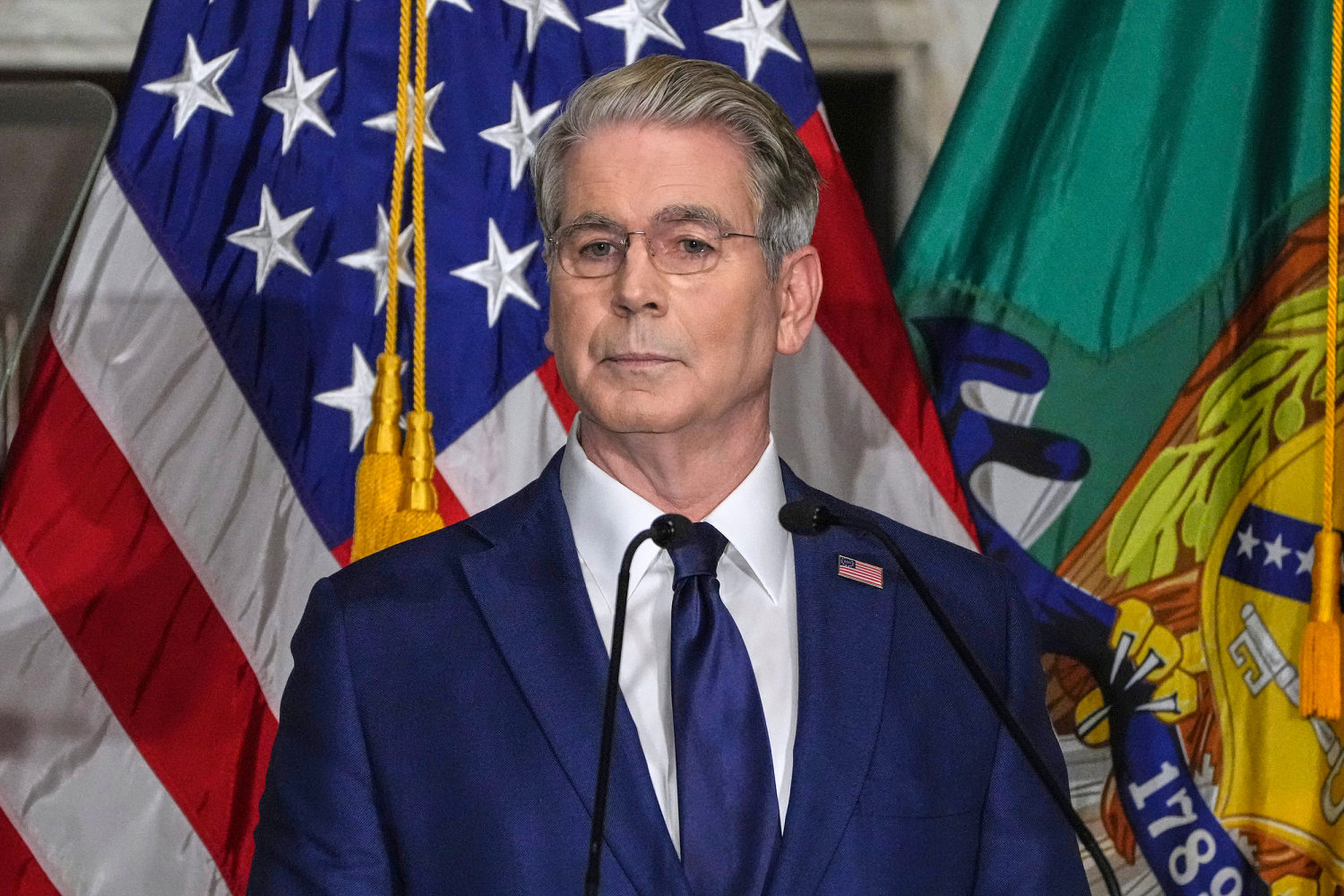
Treasury Secretary Scott Bessent has officially launched Operation Economic Outcast, an aggressive financial campaign designed to force Iran's remaining trading partners into compliance through the threat of crippling secondary sanctions. As the direct military confrontation between Washington and Tehran approaches its sixth grueling month, the White House is pivoting decisively from kinetic strikes to total financial isolation. President Donald Trump is personally calling world leaders to demand immediate cessations of trade with the Iranian regime, warning that any foreign entity or financial institution caught throwing a lifeline to Tehran faces immediate expulsion from the United States dollar system.
Yet beneath the aggressive rhetoric of an "economic D-Day," veteran analysts and sanctions experts recognize a stark underlying truth. Washington is attempting to use financial warfare to achieve a decisive outcome in a conflict that has devolved into a costly strategic stalemate. Expanding on this topic, you can also read: The Structural Mechanics of Attrition Ukraine Independence Day Under Fire.
Anatomy of an Economic Onslaught
The structural mechanics of Operation Economic Outcast target five distinct sectors of the Iranian economy: digital assets, technology, gold, aviation, and shipping. Treasury officials have spent months mapping out Iran's labyrinthine oil-smuggling and shadow-fleet networks, which have long relied on friendly or opportunistic intermediaries in jurisdictions like China, the United Arab Emirates, Turkey, and Iraq.
By threatening third-party entities with secondary sanctions, Washington is forcing foreign corporations to choose between accessing the American financial architecture or maintaining commercial ties with a collapsing Iranian state. Treasury has signaled that enforcement will roll out in waves. Certain entities face immediate blacklisting, while other foreign governments are being given a defined timeline to purge Iranian trade from their domestic ledgers. Experts at BBC News have provided expertise on this situation.
This strategy rests on the unmatched gravitational pull of the U.S. dollar. When Washington cuts an institution off from clearing transactions in dollars, that entity effectively becomes a commercial ghost overnight.
The Limits of Financial Coercion
History offers sobering lessons regarding the limits of maximum pressure campaigns. Decades of cumulative Western restrictions have already reduced the Iranian rial to historic lows and supercharged domestic inflation, yet the regime in Tehran has consistently demonstrated a grim resilience.
Secondary sanctions are notoriously difficult to police on a global scale. As soon as one front company, exchange house, or shadow-fleet tanker is designated by the Office of Foreign Assets Control, new corporate shells emerge to take their place. Furthermore, major powers like Beijing view American secondary sanctions as an overreach of extraterritorial sovereignty. Compelling compliance from sovereign nations that view Iranian energy imports as critical to their national security requires far more than diplomatic phone calls.
If target nations decide to absorb the penalties or construct parallel financial clearing mechanisms outside the reach of Western jurisdiction, the bite of Operation Economic Outcast will be significantly blunted.
Geopolitical Fallout and the Energy Corridor
The timing of this financial offensive coincides with profound vulnerabilities in global energy markets. The war has kept the Strait of Hormuz effectively constrained, sending shockwaves through international shipping and driving up energy costs.
Iranian leadership has vowed a seismic retaliation against any regional neighbor or global actor that bends to American economic pressure. For Gulf states like the United Arab Emirates, walking a tightrope between Washington's security demands and immediate neighborhood stability has become an increasingly perilous exercise. While some regional partners have moved to suspend commercial exchanges, others remain deeply anxious about inviting direct sabotage or kinetic retaliation from the Islamic Revolutionary Guard Corps.
The White House insists that patience is finite and that results must materialize immediately. Yet if the latest wave of financial coercion fails to force Tehran to capitulate or return to the negotiating table, the administration risks exhausting its primary non-military instrument of statecraft without achieving the strategic breakthrough it promised.


