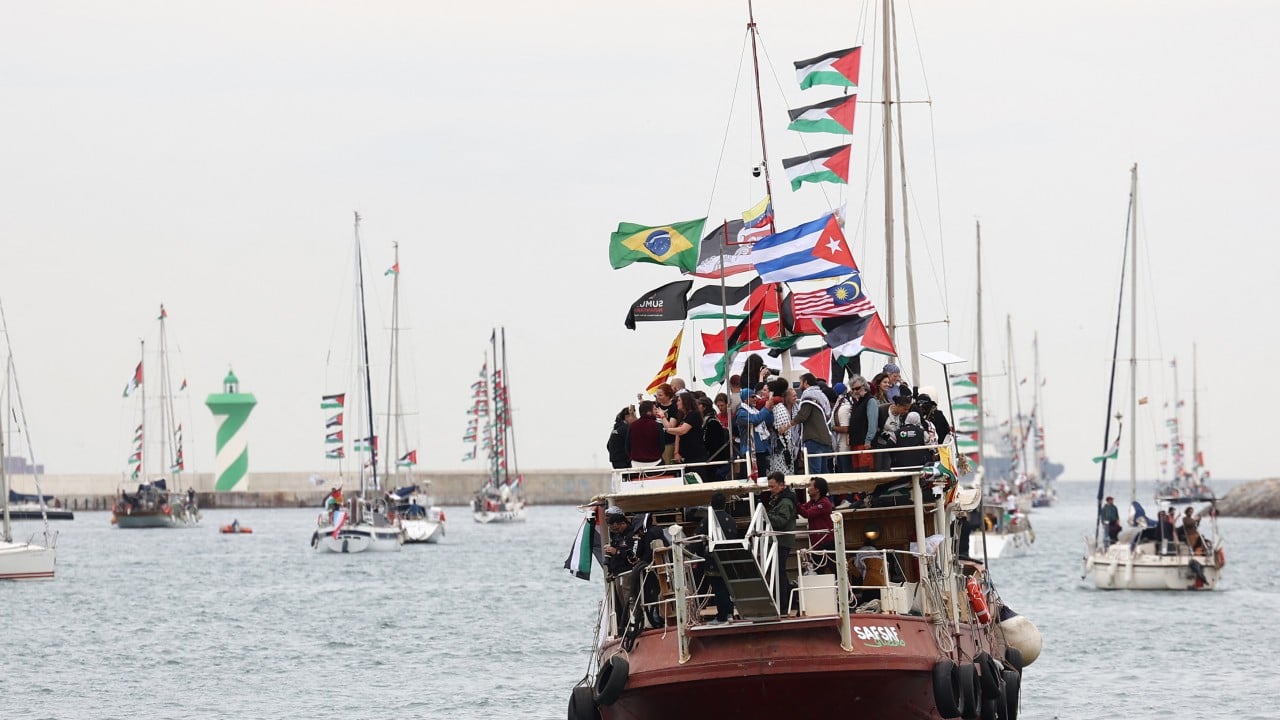
The intersection of maritime sovereignty and organized civilian activism creates a high-friction environment where tactical execution frequently overrides strategic intent. When a state enforces a naval blockade against non-state actors—such as the interception of flotilla participants—the resulting friction is not a series of isolated incidents of "brutality" but a predictable outcome of specific operational doctrines clashing with asymmetrical resistance. Analyzing the detention and treatment of activists requires moving past emotive terminology and focusing on the three structural pillars that govern these encounters: the legal framework of the San Remo Manual, the physiological reality of Close Quarters Battle (CQB) in maritime environments, and the systemic breakdown of custodial protocols during mass-processing events.
The Jurisdictional Architecture of Maritime Interception
The legality of intercepting civilian vessels in international waters rests on the establishment of a formal naval blockade under international law. While critics often focus on the point of impact, the strategic failure or success of these missions begins with the definitions of "military objective" and "contraband." Under the San Remo Manual on International Law Applicable to Armed Conflicts at Sea, a merchant vessel may be intercepted if there are reasonable grounds for suspecting it is carrying goods intended for the enemy or is in breach of a blockade. Meanwhile, you can read similar events here: The Tactical Mirage Why Precision Strikes are Strategic Failures.
The core friction point exists in Paragraph 67, which allows for the attack of merchant vessels if they "refuse an order to stop or actively resist visit, search and seizure." In the context of Gaza-bound flotillas, activists often interpret "passive resistance" as a moral right, while enforcing naval units interpret any deviation from command as "active resistance." This definitional gap triggers an immediate escalation in the Rules of Engagement (ROE). Once a vessel is deemed non-compliant, the operation shifts from a law enforcement paradigm to a military seizure. This transition dictates the level of force used; it is not a measured police response but a rapid-dominance tactical maneuver designed to neutralize the bridge and engine room with maximum speed to prevent scuttling or catastrophic collision.
The Biomechanics of Non-Compliant Extraction
Claims of "extreme brutality" during boarding operations usually correlate with the physical constraints of maritime CQB. Naval boarding teams (VBSS - Vessel Boarding Search and Seizure) operate in environments characterized by: To see the complete picture, check out the excellent article by Associated Press.
- Verticality and Instability: Boarding via fast-rope or scaling ladders from RHIBs (Rigid-Hulled Inflatable Boats) puts the boarding party in a position of extreme vulnerability.
- Confined Space Constraints: Ship corridors are narrow, steel-walled, and offer zero maneuverability.
- The OODA Loop Compression: In the Observe-Orient-Decide-Act cycle, a boarding officer has milliseconds to determine if a raised hand holds a camera or a weapon.
When activists use "passive" measures—such as linking arms or creating human chains—boarding teams utilize "pain compliance" techniques. These are not malfunctions of the system but calibrated tools of the trade. Pressure point manipulation, joint locks, and the use of kinetic impact munitions (rubber bullets) or electronic control devices (Tasers) are standard for clearing a deck quickly. The perceived "brutality" is often the result of applying these high-intensity compliance measures in a space where there is no room for retreat. The physics of a crowded deck means that any resistance, even non-violent, necessitates a disproportionate application of force to ensure the safety of the boarding team, who are trained to prioritize vessel control over individual detainee comfort.
Custodial Infrastructure and the Mass Processing Bottleneck
The secondary phase of these operations involves the transfer and detention of large numbers of foreign nationals. The logistical burden of processing hundreds of detainees simultaneously creates a systemic "stress test" for military and border police infrastructure. Reports of maltreatment—such as prolonged handcuffing, sleep deprivation, or restricted access to facilities—are frequently the byproduct of a breakdown in custodial capacity rather than a top-down directive for abuse.
The Security-Clearance Lag
Every detainee must be screened for immediate threats, identified, and categorized. When activists refuse to provide identification or cooperate with biometric scanning, the process stalls. This creates a backlog where detainees remain in "temporary" holding positions—often on the deck of a ship or in outdoor transit zones—for durations that exceed standard human rights protocols. The military priority remains the security of the perimeter, meaning that until the "Last In, First Out" (LIFO) processing model is cleared, individual welfare becomes a secondary operational concern.
Psychological Asymmetry in Interrogation
There is a fundamental disconnect between the interrogator's objective and the activist’s expectation. Security services utilize "shock of capture" to break down resistance and extract information regarding the funding and organization of the flotilla. Techniques include:
- Sensory Overload: Continuous bright lights or loud noise in holding cells.
- Isolation: Preventing communication between group leaders to stop the formation of a unified narrative.
- Positional Stress: Requiring detainees to remain in specific postures to prevent physical mobilization.
To an activist, these are human rights violations. To a counter-intelligence officer, these are necessary protocols to prevent coordinated internal disruption within the detention facility. The "brutality" reported is the friction generated when a civilian population is subjected to a military-grade security sieve.
The Strategic Failure of Asymmetric Optics
The flotilla's primary weapon is not the cargo it carries, but the imagery of the encounter. This is "Lawfare"—the use of legal and humanitarian narratives to achieve military or political objectives. The activists succeed when they provoke a high-intensity response, as the resulting footage of "extreme brutality" serves to delegitimize the blockade in the court of international public opinion.
Conversely, the state’s failure lies in its inability to adapt its ROE for a civilian-saturated environment. By utilizing elite commando units for what is essentially a high-stakes riot control task, the state ensures an escalation of force. A commando is trained for lethality and speed; when they encounter a resisting civilian, their default response is physical dominance. This creates a "Tactical Win, Strategic Loss" scenario. The vessel is seized, but the state's international standing is eroded by the predictable and captured violence of the seizure.
Operational Redesign and the Cost of Enforcement
The current model of flotilla interception is unsustainable for both parties. For the enforcing state, the "cost function" of these operations includes:
- Diplomatic Friction: Straining relations with the home countries of the activists.
- Legal Liability: Defending against international court actions that challenge the legality of the blockade.
- Resource Drain: The massive allocation of naval and intelligence assets to counter a non-military threat.
A more sophisticated approach would involve "remote neutralization"—the use of non-kinetic electronic warfare to disable a vessel's propulsion or navigation systems before it reaches the interception zone. By stopping the ship without a physical boarding, the state removes the opportunity for the "brutality" narrative to take root. However, this requires a level of technological investment and legal maneuvering that many states have yet to authorize.
The reality of the Gaza flotilla encounters is that "brutality" is a feature, not a bug, of the current engagement model. As long as states use high-tier military assets to enforce maritime blockades against civilian-manned vessels, the physical reality of CQB and mass detention will continue to produce outcomes that are interpreted as human rights crises. The transition from physical boarding to technical exclusion is the only path that mitigates the tactical violence inherent in these maritime standoffs.
Strategic planners must recognize that the deck of a ship is a localized theater of war where the rules of the street do not apply. Future engagements will likely see an increase in autonomous maritime systems (USVs) used for intercepting these vessels, further removing the human element—and the human error—from the enforcement of the blockade. Until that shift occurs, the friction between maritime sovereignty and civilian activism will continue to be measured in bruises, broken bones, and a deepening of the geopolitical divide.