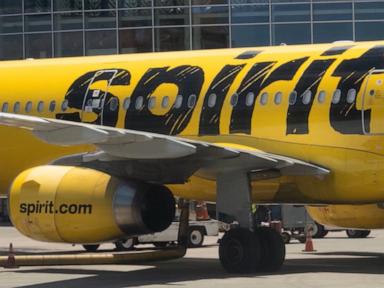
The sudden cessation of operations at an airport terminal—frequently described in populist media as a scramble or chaos—is actually a predictable outcome of the high-utilization, low-margin economic model governing Ultra-Low-Cost Carriers (ULCCs). When Spirit Airlines or a similar entity "shutters" a gate, cancels a block of flights, or experiences a systemic technological outage, the resulting passenger distress is the visible manifestation of a collapsed logistical buffer. In the ULCC framework, profitability depends on the continuous movement of assets; any friction in the system triggers a non-linear escalation of operational debt that the carrier cannot easily repay.
The Triad of ULCC Vulnerability
To understand why a localized shutdown creates a disproportionate impact on travelers, one must examine the three structural pillars that support the ULCC business model. These pillars are designed for efficiency during steady-state operations but act as points of catastrophic failure during a disruption. Learn more on a related topic: this related article.
1. Asset Utilization Maximization
Traditional legacy carriers maintain "spare" capacity—extra aircraft or stand-by crews—to absorb minor delays. ULCCs operate with near-zero slack. By keeping aircraft in the air for up to 12 or 14 hours a day, the carrier spreads fixed costs across the maximum number of seats. The trade-off is a lack of recovery capacity. If a morning flight is grounded due to a mechanical failure or a localized shuttering of services, every subsequent flight assigned to that tail number is compromised. There is no "rescue" aircraft waiting in the hangar.
2. Point-to-Point Network Architecture
Unlike "Hub and Spoke" models where passengers can be rerouted through a central node (like Atlanta for Delta or Dallas for American), Spirit and its peers primarily utilize point-to-point routing. While this reduces costs by avoiding expensive hub operations, it eliminates the possibility of "re-protecting" passengers on alternative internal routes. If a passenger is stranded in a secondary market after a gate closure, the carrier likely has no other way to get them to their destination until the next scheduled flight on that specific direct route, which may be days away. Further analysis by National Geographic Travel explores comparable views on the subject.
3. The Minimum Labor Threshold
The economic viability of a $50 ticket relies on lean staffing. Check-in counters, gate agents, and customer service desks are staffed to meet the requirements of a functional schedule, not a crisis. When a terminal "shutters" or a flight block is canceled, the ratio of distressed passengers to available staff shifts from 150:1 to perhaps 1,000:1. This creates a physical and psychological bottleneck, as the communication bandwidth of the airline cannot scale to meet the sudden demand for information.
The Cost Function of Passenger Displacement
The "scramble" observed during an airline shutdown is a rational response to a market failure. Passengers are forced to solve a complex optimization problem in real-time: do they wait for the carrier to fulfill its Contract of Carriage, or do they "eat" the sunk cost and purchase a last-minute fare from a competitor?
The financial impact on the traveler follows a specific decay curve:
- T+0 to T+4 Hours: Low-impact. The cost is primarily time and minor caloric expenditure (airport food).
- T+4 to T+12 Hours: Moderate impact. The cost shifts to missed connections, lost wages, and the necessity of finding alternative transport.
- T+12 Hours+: High-impact. The cost now includes overnight lodging and "Rescue Fares."
A "Rescue Fare" is the premium price a passenger pays to a rival airline to escape a stranded situation. Because legacy carriers use dynamic pricing, a seat that cost $200 three weeks ago might cost $900 when purchased at the gate during a competitor's meltdown. This transfer of wealth from the passenger to the rival carrier is the ultimate penalty of ULCC fragility.
Mechanism of a Systemic Shutdown
When reports surface of passengers "scrambling" after Spirit or another carrier halts operations, the root cause usually falls into one of three buckets: crew timing, technological desynchronization, or financial insolvency.
The Crew Timing Trap
Federal Aviation Administration (FAA) regulations strictly mandate "Time on Duty" limits for pilots and flight attendants. In a high-utilization environment, a two-hour weather delay can push a crew into "timing out." Once a crew is illegal to fly, the aircraft is effectively a multi-million dollar paperweight. Because ULCCs do not station reserve crews at every outstation, the shutdown becomes a localized "dark zone" where no flights can depart until a fresh crew is flown in—often on a competitor’s plane.
Information Asymmetry and the Mobile App Bottleneck
Modern airline disruptions are exacerbated by a reliance on digital self-service. When a system shutters, the mobile app often fails to update at the same rate as the operational reality. This creates "Information Asymmetry," where the gate agent knows the flight is canceled, but the passenger’s phone says "On Time." The scramble is the physical manifestation of hundreds of people moving toward a single point of truth—the gate agent—to resolve this data conflict.
Quantitative Risks of the Low-Cost Model
Data suggests that while ULCCs offer the lowest "Base Fare," the "Total Cost of Risk" is significantly higher than with legacy carriers. This is rarely accounted for in consumer behavior.
- Completion Factor: Legacy carriers often maintain a completion factor (the percentage of scheduled flights that actually fly) above 98.5%. During periods of operational stress, a ULCC's completion factor can drop below 90%, meaning one in ten passengers will face a significant disruption.
- Re-accommodation Window: On a legacy carrier, the mean time to re-accommodation is typically 6 to 12 hours. For a point-to-point ULCC, this window can extend to 48 or 72 hours, depending on the frequency of the specific route.
Tactical Navigation of a Terminal Shutdown
For the traveler caught in a shuttering event, the objective is to minimize the "Total Cost of Risk" by bypassing the primary bottleneck: the airport terminal line.
- The Digital Double-Down: Do not stand in line. Use the mobile app and the carrier’s website simultaneously on different devices. Call the international support line (e.g., the Canadian or Mexican branch of the airline) rather than the domestic US line, as wait times are often shorter.
- The "Flat Tire" Rule: While not an official policy, most airlines have internal guidelines allowing agents to rebook passengers on a standby basis if they arrive late or if a flight is canceled, provided they are physically at the airport. However, in a systemic shutdown, standby is a mathematical impossibility due to the lack of empty seats.
- Credit Card Protections: High-tier travel credit cards offer trip interruption insurance. In a Spirit-style shutdown, the airline's liability is often limited to a refund of the original ticket price. The credit card issuer, however, may cover up to $500 for a hotel and meals, effectively subsidizing the failure of the carrier’s low-cost model.
The Operational End-State
The volatility seen in Spirit Airlines' operations—ranging from mass cancellations to rumors of restructuring—indicates a broader tension in the aviation market. The ULCC model is optimized for a world where fuel is cheap, labor is plentiful, and weather is predictable. As labor costs rise and air traffic control constraints increase, the "slack" in the system disappears entirely.
The strategic play for the passenger is to treat a ULCC ticket not as a guaranteed service, but as a high-delta financial option. If the system holds, the passenger wins via a low fare. If the system breaks, the passenger must be prepared to execute a pre-planned exit strategy that does not involve waiting for the carrier to provide a solution. The era of "cheap" travel is increasingly being subsidized by the passenger’s own risk tolerance. If you are not prepared to buy a last-minute ticket on a competitor, you have no business flying a carrier with zero operational redundancy.