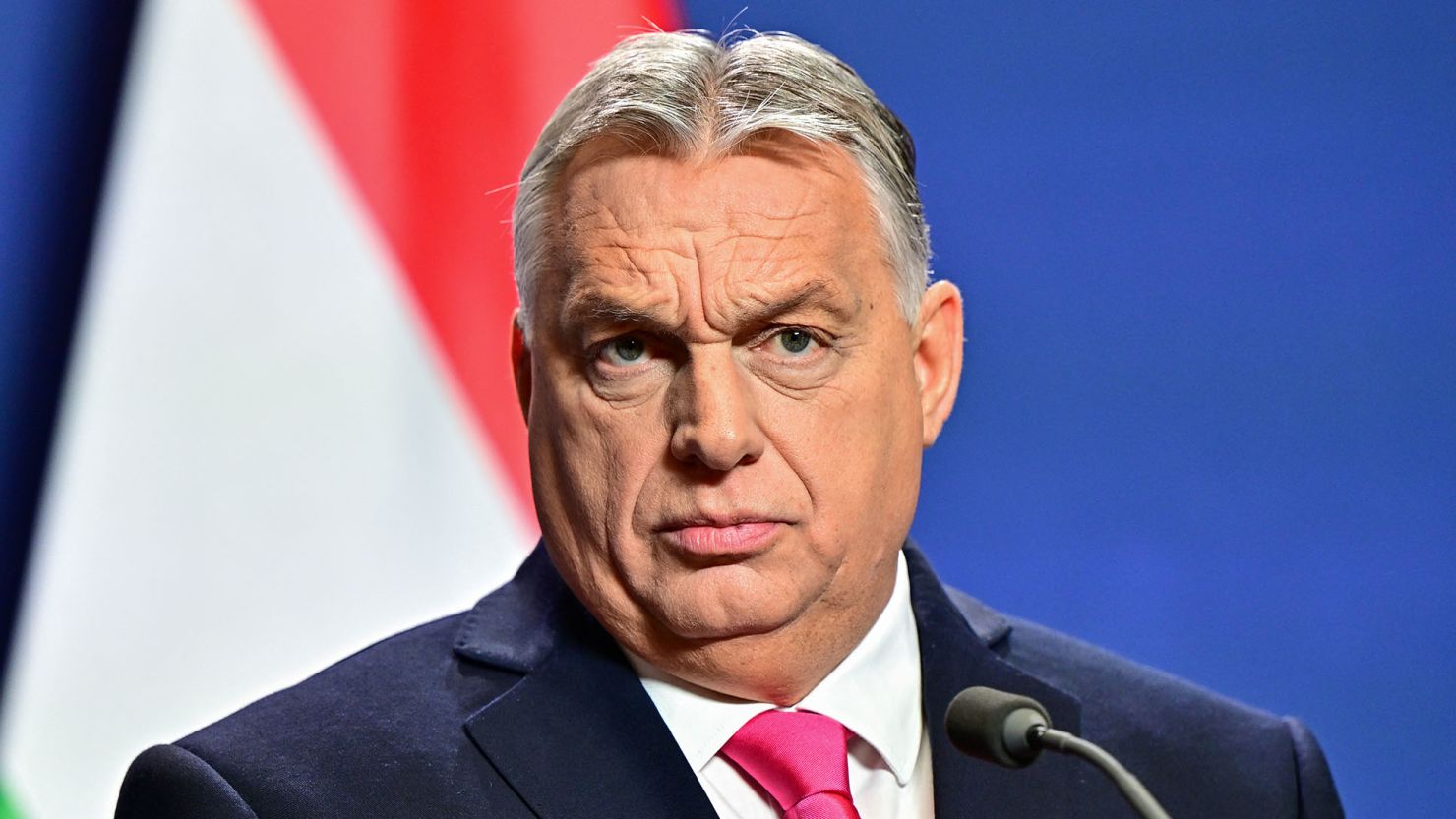
The headlines are screaming about a "democratic rebirth" in Budapest. They are wrong. They are lazy. Most of all, they are dangerous.
The international press has spent a decade painting Viktor Orbán as a singular cartoon villain, a glitch in the European matrix that could be patched with a single election. Now that he has been ousted, the narrative has shifted to a predictable, sugary triumph of "liberal values." This isn't just a misreading of Hungarian optics; it’s a fundamental misunderstanding of how power actually functions in the 21st century.
Orbán didn't lose because the "spirit of democracy" suddenly woke up. He lost because his specific brand of national-populism reached its point of diminishing returns within a globalized financial system. If you think his exit solves the "Hungarian Problem," you’ve been watching the wrong movie.
The Myth of the Great Liberator
The mainstream media loves a hero. They’ve found one in the coalition that unseated Fidesz. But look at the math. This wasn't a philosophical alignment; it was a desperate, ideologically incoherent marriage of convenience. When you cram far-left greens, centrist liberals, and former right-wing radicals into one room, you don't get a "mandate for change." You get a circular firing squad.
Stability is the currency of governance. Orbán, for all his tectonic shifts toward illiberalism, provided a predictable—if grim—framework for the Hungarian economy. The incoming coalition is a fragile mosaic. The moment they have to make a hard choice on energy prices or the war in Ukraine, the cracks will turn into chasms.
I’ve seen this play out in corporate restructuring. A board fires a "toxic" CEO without a coherent succession plan, only to realize the CEO’s toxicity was the only thing holding the supply chain together. Hungary hasn't "returned to the fold." It has entered a period of profound systemic volatility.
Institutional Capture is Permanent
The "lazy consensus" suggests that once the strongman is gone, the institutions magically revert to their neutral state. This is a fantasy.
Over fourteen years, Orbán didn't just win elections; he rewired the hard drive of the Hungarian state. He practiced what I call Deep State Darwinism. Every judge, every university rector, every media mogul, and every local procurement officer was selected for their loyalty to the system, not just the man.
You cannot "depoliticize" an economy where the largest players are tied to the previous regime by blood and balance sheets. If the new government tries to purge these figures, they are accused of the same authoritarian overreach they campaigned against. If they leave them in place, they are governed by a shadow cabinet they cannot control.
- The Judiciary: Hundreds of appointments made under the Fundamental Law cannot be undone without a two-thirds majority—which the new government lacks.
- The Media: Most local outlets are owned by the Central European Press and Media Foundation (KESMA). Taking them back isn't a "return to free press"; it’s a legal nightmare involving private property rights.
- The Money: EU funds were the carrot and the stick. Now that the "stick" (Orbán) is gone, the "carrot" is expected to flow. But Brussels has realized that Hungarian corruption wasn't an Orbán bug—it’s a feature of the regional business model.
The Brussels Trap
The West thinks Hungary is now "fixed." This is the most arrogant assumption of all.
Brussels expects the new leadership to immediately fall in line with every Euro-federalist directive. But the Hungarian electorate remains deeply conservative, skeptical of migration, and wary of being a pawn in the clash between the EU and Russia.
If the new government pivots too hard toward Brussels, they hand the 2028 election back to a reorganized Fidesz on a silver platter. They are caught in a pincer movement. To stay in power, they must act like Orbán-lite. To please their international donors, they must act like a suburb of Brussels. They cannot do both.
The "People Also Ask" crowd wants to know: "Is Hungary safe for democracy now?"
The honest, brutal answer: No. It’s actually more precarious. A strongman provides a single point of failure. A fragmented, weak democracy in a polarized society provides a thousand points of failure.
The Economic Hangover
Everyone is ignoring the books. Orbán’s final years were defined by massive pre-election handouts and price caps that distorted the market beyond recognition. He left the lights on, but he blew the fuse box.
The new administration is walking into a room with zero liquidity and a massive inflation bill. When they are forced to cut subsidies and raise taxes—which they will be—the "liberated" public will quickly develop a selective memory. They will forget the corruption and remember the cheap gas.
This isn't a theory. We saw it in Poland. We saw it in the Czech Republic. The "liberal" honeymoon lasts exactly as long as the first winter heating bill.
Stop Fixing the Wrong Thing
The obsession with Orbán’s personality was a distraction. The real issue is the structural failure of the EU to integrate Eastern European economies without creating a class of "vassal states" that eventually rebel.
Orbán was a symptom of a localized rejection of globalist homogenization. Removing the symptom doesn't cure the disease. If the new government doesn't address the underlying anxiety about national identity and economic sovereignty, they are merely a placeholder for the next populist. Only the next one will be younger, tech-savvy, and much more bitter.
The celebration is premature. The "victory" is a facade.
Don't buy the narrative that the "good guys" won. In power politics, there are no good guys—there are only those who hold the lever and those who are crushed by it. Hungary hasn't escaped the cycle; it just changed the person holding the handle.
Get ready for the backlash. It’s already in the mail.