Cold. That is the first thing you notice when a dish refuses to lock onto a satellite in November. Your fingers stiffen against aluminum. Your breath plumes in front of your face while a tiny status icon spins on a cracked screen, refusing to turn green.
Signals. We talk about them as if they were weather—something that drifts through the atmosphere, free and indifferent to borders. Yet when a diplomat stands before cameras and says that keeping satellite internet running in a war zone is a call for a private billionaire rather than the White House, the weather suddenly has an owner.
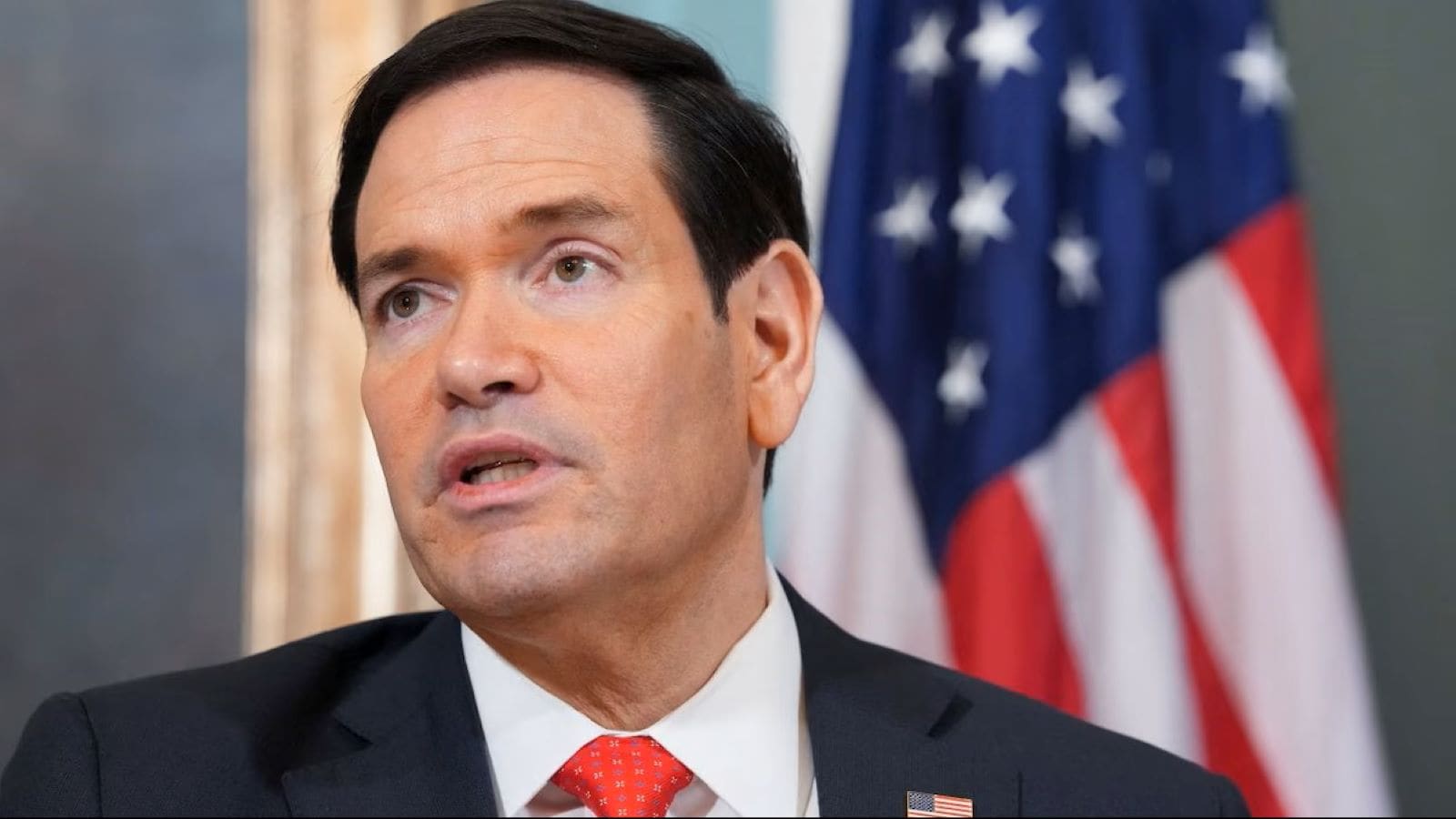
Marco Rubio's remarks cut straight through a comforting illusion many of us have carried since the dawn of the smartphone era. We assume that when crisis strikes, governments pull the levers. We imagine a president picking up a red phone, a general issuing an order, a treaty or a defense contract settling who gets connectivity and who goes dark. When Rubio states plainly that Starlink access in Ukraine is a decision for Elon Musk rather than the White House, he is describing a friction point between sovereign statecraft and private corporate authority.
Wait. Let us slow down and look closely at what that means—and what it does not mean.
Even when a senior U.S. official points to Musk's decision-making authority over the network itself, commercial satellite systems operating in an active conflict do not exist in a vacuum. Washington still shapes the environment through defense contracts, export rules, diplomatic pressure, and strategic alignment. Saying it is a decision for Musk does not mean the White House has zero leverage or zero interest. It means the operational switch sits behind a corporate boardroom and engineering chain of command, not directly on a government desk.
That distinction feels dizzying. Honestly, it unsettles me every time I sit with it. I have spent years watching how fragile communications become when power grids fail and cell towers are reduced to twisted rebar. A single lost packet can mean a delayed ambulance, an uncoordinated evacuation, or a family left wondering if their loved ones survived a barrage. When your safety depends on light bouncing between low-Earth-orbit satellites and a terminal the size of a pizza box, you want to know whose finger is near the dimmer switch.
The Hypothetical Dish on a Muddy Roof
To feel why this question keeps policy analysts and frontline workers awake at night, let us step into a hypothetical scenario—clearly labeled as fiction, built from real-world mechanics we have seen repeated across modern conflicts.
Picture a hypothetical field medic named Oksana near the eastern front. It is 4:15 a.m. Rain has turned the dirt track outside a reinforced basement into soup. Inside, two wounded soldiers lie on cots while a generator coughs in the corner, smelling of diesel and wet wool. Oksana needs coordinates for a stabilized pickup point and clear telemetry to transmit vitals to a surgical team thirty miles back. The local fiber line was severed two days ago. Cellular service vanished last spring.
On the roof above her sits a phased-array dish, tilted toward a sky crowded with thousands of fast-moving satellites.
Now imagine—again, purely as a hypothetical thought experiment—that an abrupt dispute erupts over coverage boundaries, billing terms, or escalation risks. Suddenly the cursor stops moving. The map freezes mid-tile. The message does not send.
No missile hit the dish. No cyberattack melted the router. Instead, a commercial operator's policy, risk calculation, or contractual standoff altered what flowed through the sky.
For Oksana in that basement, the geopolitical debate over "non-state actors in space" dissolves into something stark and immediate. She is not debating corporate governance. She is watching a progress bar stall while someone bleeds.
Metaphorically, we can think of low-Earth-orbit constellations as a new kind of high-altitude bridge. For centuries, bridges were built of stone and steel over rivers, guarded by soldiers and taxed by kings. A bridge across a river is visible. You can see who holds the tollbooth. A satellite beam is invisible. You cannot point at a photon and ask which flag it salutes. Yet someone wrote the routing software, someone launched the spacecraft, and someone decides where the beam points next.
Why Governments Built the Sky and Companies Bought the Ticket
History has a wry habit of repeating this exact tension under new names.
In the nineteenth century, undersea telegraph cables stitched continents together. They were laid by private companies—often British or American—yet empires watched every mile of cable with hawk eyes because information moved at the speed of electricity while ships still moved at the speed of wind. Later came radio, then commercial airlines, then telecommunications giants that grew so large governments had to regulate them like public utilities.
Satellites sped up the timeline. For decades, space was dominated by superpowers and state-backed agencies spending billions on a handful of massive spacecraft in high orbit. Those systems were slow, expensive, and tightly tethered to national defense programs.
Then came reusability and mass production. Launching thousands of smaller satellites into low Earth orbit changed the economics overnight. Instead of waiting ten years for one exquisite craft, a private company could launch batches regularly, update software over the air, and scale broadband directly to terminals on the ground.
Suddenly, a private enterprise possessed capabilities that once looked exclusively like national infrastructure.
Consider what happens next: a conflict breaks out, traditional networks buckle, and a commercial constellation becomes indispensable almost overnight. Troops use it for tactical coordination. Local authorities use it to keep municipal services breathing. Civilians use it to call relatives abroad or find shelter information. Once a tool becomes woven into daily survival and military operations alike, turning it off—or restricting it—stops looking like a routine business choice. It starts looking like a strategic act.
Yet legally and structurally, the company is still a business. It has shareholders, engineers, liabilities, and leaders with their own convictions and anxieties. When Rubio frames Starlink access in Ukraine as a decision for Musk rather than the White House, he is acknowledging that reality rather than pretending Washington can simply commandeer every private asset at will.
Still, let us be candid about the gray zone here. Power in modern geopolitics rarely belongs to just one actor. Even when the formal decision rests with Musk and SpaceX, U.S. policymakers shape the chessboard around them—through procurement, diplomatic signaling, sanctions frameworks, and broader security guarantees. A private leader may hold the controls, but the room is full of officials watching every move.
The Invisible Stakes Behind Every Beam
When people argue about this topic online, they usually pick a side in seconds. One camp says a private company should never wield de facto veto power over wartime communications; national security cannot be outsourced to personal whim. Another camp counters that taxpayers and governments did not build the system, that private innovation saved the day when legacy telecoms failed, and that forcing a company into endless, uncompensated risk sets a dangerous precedent.
Both arguments carry weight. Pretending either side is simple is dishonest.
Let us look at what is actually at stake beneath the headlines:
- Sovereignty and accountability. Voters can hold elected leaders accountable at the ballot box—imperfectly, slowly, sometimes painfully, yet still accountable. A private executive answers to corporate governance and market forces, not to foreign citizens living under sirens.
- Speed and adaptability. Bureaucracies move carefully. Commercial tech teams can push firmware updates, reroute traffic, and adapt hardware faster than traditional procurement cycles allow. In fast-moving crises, that agility has real value.
- Escalation and entanglement. When a private network supports operations in a major conflict, adversaries may view the infrastructure—or its operator—differently. Where does commercial neutrality end and strategic entanglement begin?
- Precedent for the next crisis. Whatever norms emerge around satellite internet in Ukraine will echo in future disasters, blackouts, and conflicts around the globe.
I remember sitting in a room after a regional blackout years ago, listening to people describe the eerie quiet when phones went dead. Without connectivity, rumors raced faster than facts. Fear filled every silence. Multiply that quiet by artillery fire and winter darkness, and you begin to grasp why access to a reliable link is not a luxury perk. It is oxygen for coordination.
Navigating Uncertainty Without Losing the Plot
If you feel a little whiplash trying to pin down who is really in charge, you are not alone. Modern warfare and modern technology have collided faster than international law or public habits can catch up.
When a public figure like Rubio states that Starlink access in Ukraine is a decision for Musk rather than the White House, the smartest response is neither blind outrage nor blind trust. It is clear-eyed scrutiny. Ask practical questions: What contracts exist? What guardrails govern usage? Where do commercial incentives align with public safety, and where might they diverge?
Because the truth is rarely a single lever. It is a web of contracts, orbits, diplomacy, and human judgment.
Out on that rainy ridge in our hypothetical story, morning eventually breaks gray and thin. If the dish holds its lock, packets cross the atmosphere in milliseconds—light traveling through vacuum, bending through clouds, carrying words that keep people alive.
Look up at a clear night sky sometime and trace the faint moving points of light drifting across the stars. Most of us will never know which ones carry a vacationer's video call and which ones carry a lifeline out of danger. Yet every single one is a reminder that the future of power does not always wear a uniform. Sometimes it wears a hoodie, writes code, and decides where the signal goes.