Dust.
That is what lingers first in the memory of anyone who has ever stood inside a dying theater. Not the smell of popcorn or the sweet, sticky floorboards of a Saturday matinee, but the quiet, relentless accumulation of time settling over red velvet.
Imagine walking into a room where the air feels heavy with history, where the plaster overhead has begun to crumble like dry autumn leaves. You look up, and the stars painted across the ceiling are obscured by decades of neglect. For a long time, that was the impending fate whispered about in the dim corners of downtown Tampa. Buildings like this do not usually win their battles against the wrecking ball. They are inconvenient. They take up prime real estate. They are expensive to keep warm in the summer and dry in the winter.
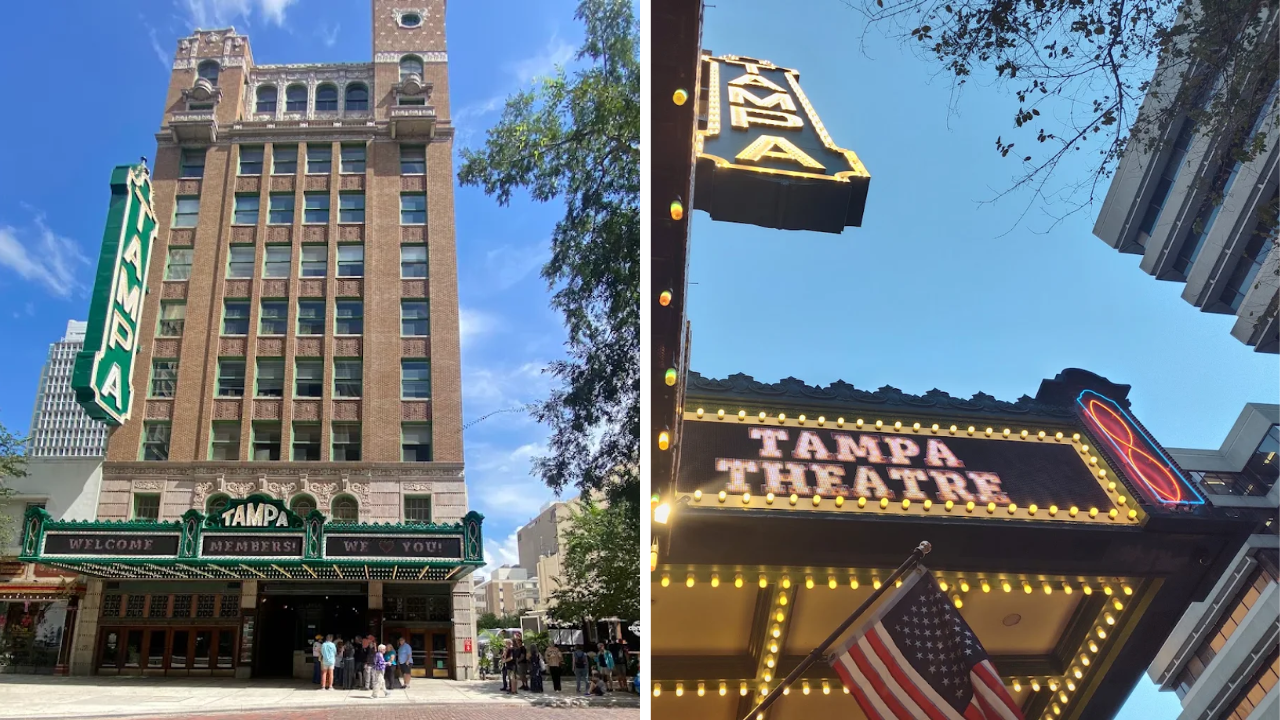
Yet, on a humid night in Florida, the Tampa Theatre flickered back to life.
One hundred years. Let that number settle in the mind. A century of whispered secrets in the dark, of first dates fumbled over shared boxes of Milk Duds, of damp raincoats piled on empty seats while a thunderstorm raged outside over Franklin Street. When the doors finally swung open again after a staggering twenty-four-and-a-half-million-dollar restoration, it was not merely a building reopening its box office. It was a resurrection.
To understand why this matters, you have to step back into the year 1926.
John Eberson was an architect possessed by a strange, magnificent madness. He invented the "atmospheric" theater, a concept so audacious it sounds like a fever dream. Why build a grand European opera house with a flat, formal ceiling when you could trick the human eye into believing it was sitting beneath the open Mediterranean sky? Eberson wanted moviegoers to forget they were in a bustling industrial city. He wanted them in a Spanish courtyard under the stars.
So, he built a sanctuary.
When you walk into the historic Tampa Theatre today, the ceiling is not plaster and paint; it is an indigo twilight sky dotted with tiny, twinkling electric stars. Clouds drift across the curved expanse, projected by ancient machines that have watched generations pass by. Gargoyles peer down from faux-stone balconies. Mediterranean masonry frames the screen, making you feel as though you are trespassing in some ancient European villa after hours.
For decades, this illusion held. But illusions require immense effort to maintain.
By the early twenty-first century, the cracks were no longer metaphorical. Water damage had begun to eat away at the delicate plasterwork. The antique projection equipment wheezed. The wiring, installed when Calvin Coolidge was in the White House, groaned under the demands of modern electrical code. The theater was dying a slow, quiet death of a thousand cuts.
Enter the restorers. These were not mere construction workers with hard hats and blueprints. They were detectives, surgeons, and historians combined.
Consider what happens next: a team of artisans spending months on scaffolding, flat brushes in hand, mixing custom pigments to match colors applied ninety-nine years prior. They did not want to modernize the theater in a way that stripped away its soul. Every flake of original paint was analyzed. Every broken tile was cast anew using identical clay composition. They spent millions of dollars not to make it look new, but to make it look old again—accurately, breathtakingly old.
Why go to such absurd lengths in an era where everyone carries a high-definition movie theater in their pocket? Why spend twenty-four and a half million dollars on a room meant for projecting moving pictures when you can stream anything on a handheld screen while lying in bed?
Because digital streams do not have ghosts.
There is a distinct, irreplaceable magic that happens when strangers sit shoulder-to-shoulder in the dark. In our current age of atomized isolation, where we curate our lives behind glowing rectangles and speak to each other through fiber-optic cables, the movie palace is an act of radical community. In the dark, we are all the same age. We laugh at the same jokes, gasp at the same plot twists, and weep at the same tragedies. We share oxygen with people we would otherwise cross the street to avoid.
The restored Tampa Theatre stands as a defiant monument against the disposable nature of modern life. Everything around us is designed to be upgraded, thrown away, and replaced within thirty-six months. Phones, cars, furniture, friendships—all fluid, all temporary.
This theater refuses to move on.
As the house lights dim and the iconic Mighty Wurlitzer organ rises slowly from the floor, sending a warm, shuddering vibration through the floorboards and up into your chest, the cynicism melts away. The music swells, rich and brassy, filling the massive auditorium with a sound that cannot be replicated by tinny Bluetooth speakers.
The stars overhead begin to drift. A tiny cloud creeps lazily across the painted night.
The film begins. And for a few hours, the rushing world outside, with all its noise and frantic urgency, ceases to exist. The past and the present sit together in the dark, watching the light dance across the screen.