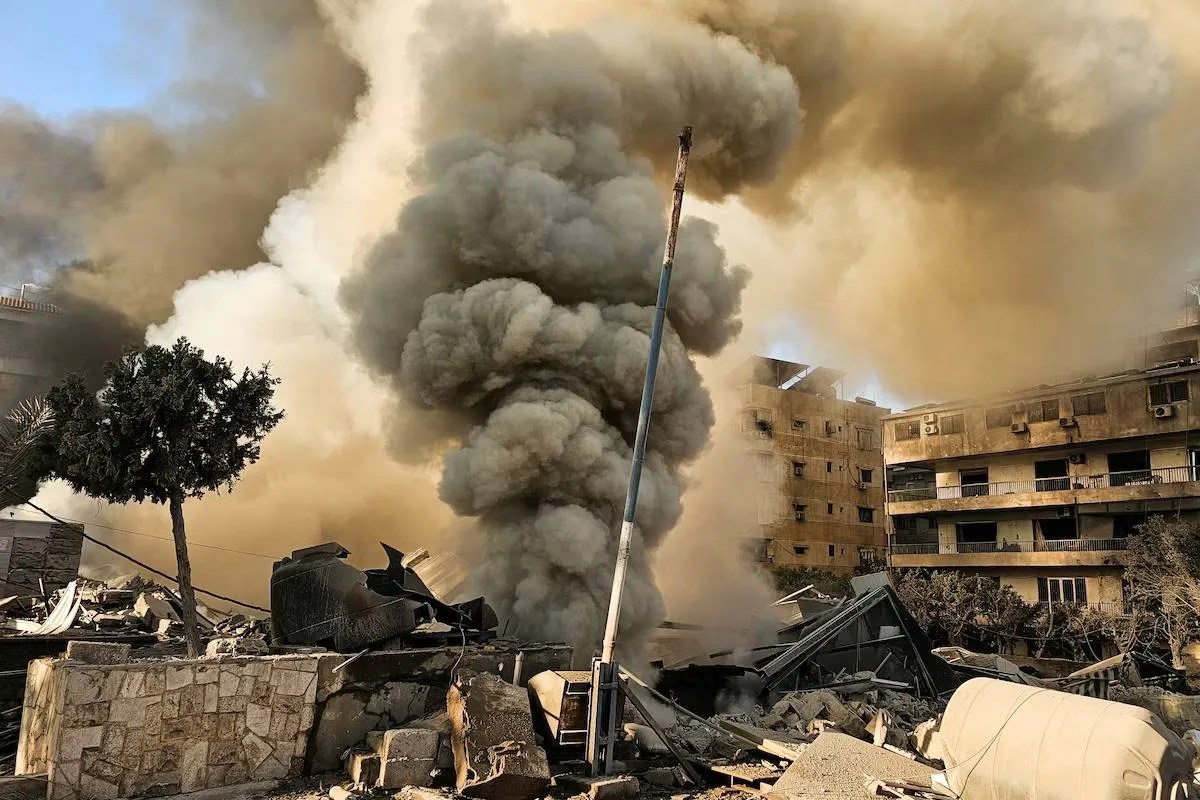
Fear sells better than foresight. When the Indian Embassy in Tehran issues an emergency advisory telling citizens to "stay where they are," the headlines scream collapse. They paint a picture of an immediate descent into chaos. But those who have navigated the geopolitical corridors of the Middle East for decades know that these advisories are often less about imminent physical danger and more about bureaucratic shielding.
The media treats these alerts as a siren for the end of days. They are wrong.
In reality, an advisory to "stay put" is often the safest, most conservative legal play for a government that doesn't want the liability of its citizens moving through checkpoints during a period of high friction. If you’re an Indian professional or trader in Iran, the real risk isn't the sky falling; it’s the economic paralysis caused by overreacting to a PDF published by a consulate.
The Myth of the "Emergency" Advisory
Let’s dismantle the "emergency" tag. In the world of diplomacy, "Emergency" is a standard classification used to trigger internal protocols. It does not always mean "war starts at midnight."
India and Iran share a deep-rooted strategic partnership, particularly surrounding the Chabahar Port and the International North-South Transport Corridor (INSTC). I’ve seen bureaucrats issue these warnings simply because a specific flight path was diverted or because local communication lines experienced a 12-hour hiccup. The lazy consensus is that an advisory equals an evacuation. It doesn't.
An evacuation is a failure of diplomacy. An advisory is a management of expectations.
If you are on the ground, the "stay where you are" instruction is actually a testament to the stability of the local infrastructure. It implies that your current location is secure. The danger usually arises when people try to rush toward borders or airports, creating bottlenecks that local security forces aren't prepared to handle. The panic is the hazard, not the geopolitics.
The Cost of False Urgency
The mainstream news loves the optics of a crisis. It drives clicks. But for the thousands of Indians integrated into Iran’s energy and engineering sectors, these headlines are destructive.
I’ve watched companies pull critical staff based on a single tweet from a news agency, only to spend millions six months later trying to regain the trust of their local partners. When you cut and run because of a standard safety notice, you signal that you are a fair-weather partner. In a region where "bazaar diplomacy" and long-term relationships are the only currency that matters, that reputation hit is permanent.
The Nuance of "Staying Put"
Why does the embassy tell you to stay where you are?
- Resource Allocation: If 10,000 people move at once, the embassy cannot track them.
- Information Control: It’s easier to push updates to known residential clusters than to people on a bus to the Turkish border.
- De-escalation: Moving large groups of foreign nationals can be misinterpreted by local militias or military units as a sign of impending strikes, potentially triggering the very conflict everyone wants to avoid.
The contrarian move here isn't to ignore the embassy—that would be stupid. The move is to recognize the advisory for what it is: a pause button, not an eject button.
The Geopolitical Reality Check
If there were a genuine, high-probability threat of total regional war involving Indian interests, you wouldn't be reading a public advisory. You would be seeing the quiet, systematic withdrawal of high-level diplomatic staff and the shuttering of the State Bank of India’s operations in the region.
Is that happening? No.
What we are seeing is a tactical tension between regional powers. India’s position is unique. Unlike Western nations, India maintains a functional, if complicated, relationship with Tehran. This "strategic autonomy" means Indian citizens are often the last to be targeted and the first to be protected by local authorities who value the New Delhi connection.
The "People Also Ask" crowd wants to know: "Is it safe to travel to Iran?"
The honest, brutal answer: It’s as safe as your ability to read between the lines. If you rely on sensationalist Indian news scrolls, you’ll be terrified. If you look at the shipping manifests at Chabahar, you’ll see business as usual.
How to Actually Navigate the Alert
Stop checking the news every five minutes. The news cycle operates on a 24-hour dopamine hit. Geopolitics operates on a 24-month cycle.
If you are an Indian national in Tehran, Isfahan, or Mashhad, your priority isn't finding the nearest exit. It’s securing your local network. Your local Iranian neighbors and business partners will know more about the street-level reality than a desk officer in Delhi.
A Thought Experiment in Risk
Imagine a scenario where a small-scale skirmish occurs on a border far from the capital. The media reports "War in Iran." The embassy, obligated by protocol, issues a "Stay Put" notice.
- The Amateur: Sells their assets at a loss, pays $5,000 for a black-market flight to Dubai, and loses their job.
- The Insider: Stocks up on two weeks of supplies, maintains their local contacts, and waits for the 48-hour tension spike to clear.
Who wins? The one who understood that "emergency" is a bureaucratic term of art, not a prophecy.
The Economic Irony
The irony of these alerts is that they often create the very instability they warn against. When Indian traders stop processing payments because of a "scare," they weaken the local economy, which in turn creates the civil unrest that makes the streets actually dangerous.
We need to stop treating embassy advisories like they are written in stone by an oracle. They are written by risk-averse civil servants whose primary goal is to ensure that if something goes wrong, they can say, "We told them to stay home."
Stop Asking the Wrong Questions
People ask: "When will the Indian government bring us back?"
Wrong question.
Ask instead: "What specific conditions would make my current location untenable?"
Unless there is a total collapse of the local police force or a systematic targeting of foreign nationals—neither of which is on the horizon—the safest place for an Indian in Iran is exactly where they are.
The Indian diaspora is the most resilient on the planet. We have survived the Gulf War, the Libyan crisis, and the various iterations of the "Arab Spring." We didn't survive by running every time a headline turned red. We survived by staying calm when the rest of the world lost its mind.
The embassy told you to stay put. So, stay put. Not because the world is ending, but because moving in a panic is the only way to ensure you actually get hurt.
The headlines are designed to make you feel. The facts are designed to make you act. Choose the latter.
Maintain your position. Ignore the noise. Business continues.



