Every single pundit in the security apparatus loses their collective mind the moment a drone hits tarmac.
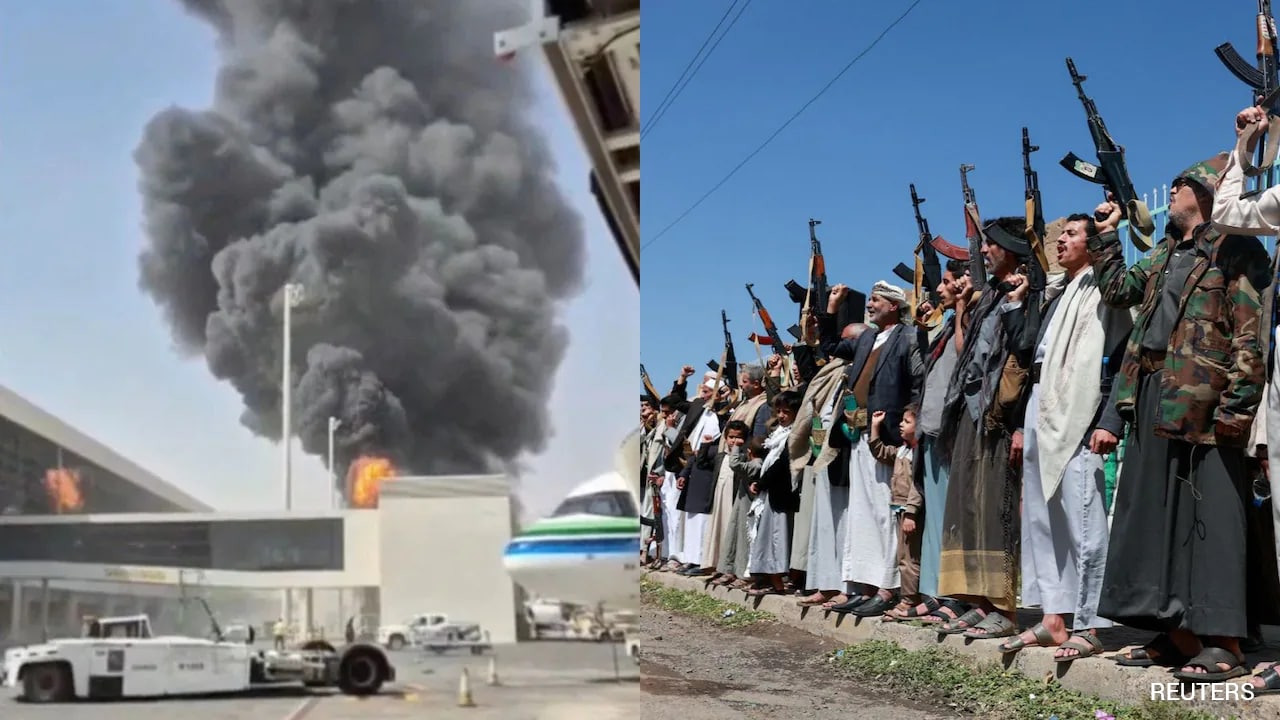
Twelve people dead at a regional hub in Saudi Arabia triggers the exact same predictable cycle of hysteria. Headlines scream about escalation. Analysts dust off maps from 2018. Washington issues grave statements about regional stability. Everyone treats a localized kinetic strike like a rupture in the fabric of global trade.
It is absolute theater.
If you look past the charred fuselage and the cable news chyrons, the strategic reality is completely inverted. The standard narrative claims these high-profile runway incidents represent a rising tide of unstoppable asymmetric chaos that threatens international logistics. That claim is lazy, mathematically illiterate, and fundamentally detached from how modern state and non-state coercion actually operates.
Let us dismantle the consensus.
The Geography of Missed Targets
The fundamental flaw in modern threat analysis is confusing tactical noise with strategic leverage.
When a low-cost loitering munition flies hundreds of miles across the Arabian Peninsula to strike a provincial airport, conventional military commentators call it a demonstration of technological democratization. They argue that cheap hardware has neutralized expensive air defense.
That interpretation ignores economic gravity.
I have spent decades watching risk models fail because analysts measure the cost of the weapon instead of the utility of the target. Striking a regional civilian airfield does not disrupt global commerce. It barely registers on the balance sheets of maritime insurance conglomerates.
Saudi Arabia handles tens of millions of passengers and millions of tons of cargo through primary megahubs and massive industrial export terminals. A localized strike on a secondary airstrip is a tactical middle finger, not a blockade. Treating it like an existential threat to trade lanes is precisely what the perpetrators want. You are paying a high-interest intellectual tax on cheap propaganda.
Consider the actual math of deterrence.
[Tactical Noise]  --> Cheap drone, high visibility, zero economic damage
[Strategic Reality] --> Uninterrupted crude flows, resilient shipping lanes, absorbed friction
When commentators hyperventilate about airport security vulnerabilities, they assume every square mile of infrastructure carries equal weight. It does not. Modern supply chains are ruthlessly resilient precisely because they are engineered to bypass localized violence. If a secondary node goes dark, traffic reroutes within hours.
The Myth of Total Security
The second major delusion driving the panic is the belief that perimeter defense can ever achieve absolute immunity.
Security contractors love this myth because it prints money. Every time a drone slips through an interception ring, manufacturers pitch a more expensive, multi-layered counter-UAS architecture. They promise a dome of steel over every runway in the region.
It is a mathematical impossibility.
Defense economics dictate that the defender always bankrupts themselves first trying to achieve 100 percent coverage against asymmetric saturation. Firing a three-million-dollar interceptor missile at a ten-thousand-dollar delta-wing drone is a financial slow-bleed disguised as protection.
The real vulnerability is not the lack of radar coverage or the gap in interceptor batteries. The vulnerability is the psychological fragility of the civilian market. Airports are designed for fluid movement and public access. Trying to turn a regional transport node into a hardened forward operating base destroys the very economic utility the airport exists to provide.
When you lock down a facility indefinitely in response to a single successful strike, you hand the attacker a victory they could never achieve with explosives alone. You achieve their strategic objectives for them through preemptive paralysis.
The Counter-Intuitive Playbook
If standard defense posture is a trap, what is the rational response?
First, stop reacting at the strategic level to tactical annoyances. When an incident occurs, treat it with the bureaucratic boredom of a municipal traffic accident rather than the opening salvo of Armageddon. Starve the event of oxygen. Media amplification is the primary fuel source for asymmetric actors; denying them headlines neutralizes their return on investment.
Second, decouple infrastructure protection from political posturing. Regional operators must accept a baseline coefficient of friction. Drones will occasionally leak through. Sabotage will happen. The measure of an advanced logistics network is not whether it prevents every strike, but how fast it absorbs the shrapnel and clears the runway.
Resilience beats resistance every single time.
Build redundancy into flight paths. Stockpile modular runway repair kits. Decentralize baggage and fueling logistics so that a hit on one terminal does not paralyze the entire province. When attackers realize their best efforts result in a two-hour delay and a minor patch job, they stop wasting ordinance.
The next time an airfield makes international news for all the wrong reasons, ignore the panic merchants. Look at the balance sheet. Look at the routing tables. The system is working precisely because it is built to absorb blows that lesser minds mistake for fatal strikes.
Stop funding the theater. Fix the plumbing. Keep the planes moving.