The morning mist over the Taiwan Strait doesn’t care about geopolitics. It settles over the black-tiled roofs of Tainan and the neon-soaked alleys of Taipei with the same indifference it shows the grey hulls of destroyers patrolling the median line. For the twenty-four million people living on this sweet-potato-shaped island, the air smells of humidity, fried leeks, and the quiet, persistent hum of the world’s most advanced machinery. They live in a paradox. They inhabit a vibrant democracy that, according to the map-makers in Beijing, does not officially exist.
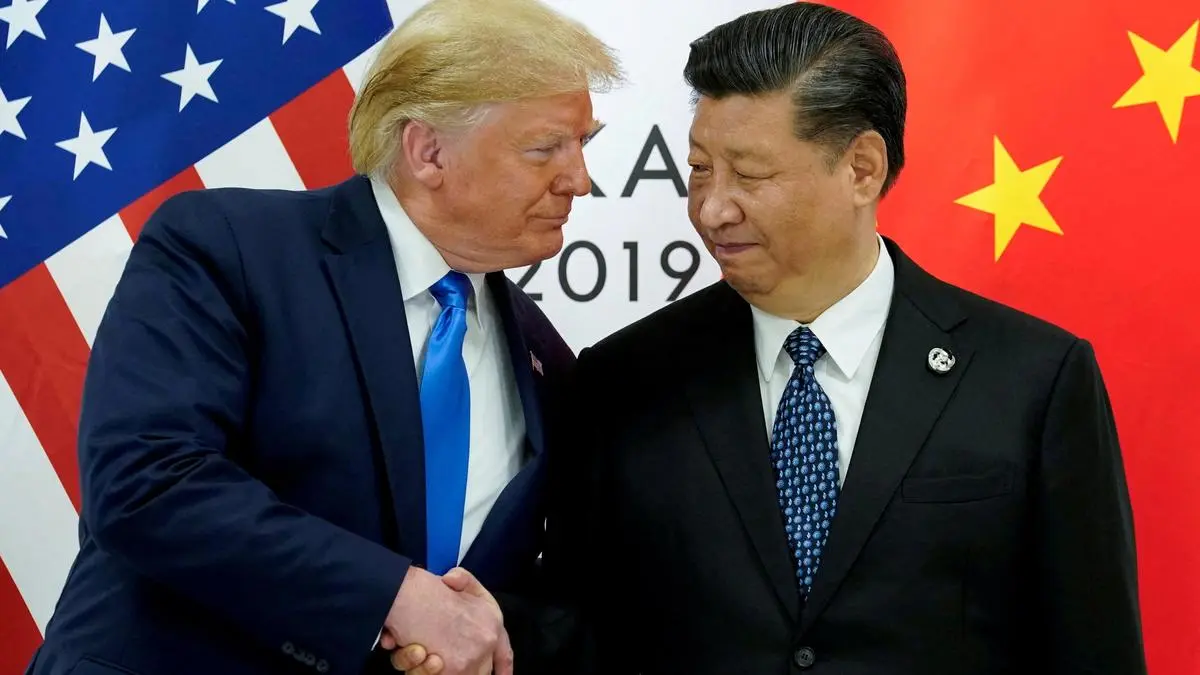
When Donald Trump and Xi Jinping sit across a table, the air in the room thickens. They aren't just discussing trade deficits or fentanyl precursors. They are playing a high-stakes game of Go with a piece of land that serves as the beating heart of the modern world. Taiwan is more than a "claim" or a "renegade province." It is the precarious fulcrum upon which the entire global economy tilts. If it slips, the lights don't just go out in Taipei; they dim in New York, London, and Tokyo.
The Silicon Shield and the Fragile Gift
Consider a hypothetical engineer named Chen. Chen works for TSMC in Hsinchu. Every morning, he undergoes a ritual of decontamination, stepping into a clean room that is thousands of times more sterile than a hospital operating theater. He spends his day coaxing light to etch patterns onto silicon wafers at a scale so small it defies human intuition. We are talking about five nanometers. To put that in perspective, a single human hair is roughly 80,000 to 100,000 nanometers wide.
Chen’s work is the reason your smartphone can process billions of operations a second. It is the reason the car in your driveway can park itself and the reason the artificial intelligence currently reshaping our labor market exists at all. Taiwan produces over 60 percent of the world’s semiconductors and an astonishing 90 percent of the most advanced ones. This is the "Silicon Shield." The theory is simple: Taiwan is too important to be destroyed. If the factories stop, the world stops.
But shields can be heavy. For Chen, the geopolitical tension isn't a headline; it’s the background radiation of his life. He knows that his island is the ultimate prize. To Beijing, Taiwan is the final piece of a historical puzzle, the "sacred territory" that must be "reunified" to heal the wounds of a century of humiliation. To Washington, Taiwan is a critical link in the "First Island Chain," a democratic lighthouse that prevents the Pacific from becoming a private lake for a rival superpower.
Two Men and a Great Wall of Rhetoric
Donald Trump views the world through the lens of the deal. He has famously questioned the cost of defending an island thousands of miles away, suggesting that Taiwan should pay for its own protection like a premium insurance policy. To him, Taiwan is a leverage point. It’s a chip—pun intended—to be traded for better trade terms or a manufacturing boom in the American Midwest. This transactional approach sends tremors through the streets of Taipei. If the protector sees the relationship as a line item on a balance sheet, what happens when the cost of the "insurance" becomes too high?
On the other side of the table sits Xi Jinping. For Xi, Taiwan is not a transaction. It is destiny. It is the core of the "Great Rejuvenation of the Chinese Nation." He has stated repeatedly that the issue cannot be passed down from generation to generation. While Trump talks about tariffs and "America First," Xi talks about history and "One China."
These are two incompatible languages. One is the language of the boardroom; the other is the language of the monument. When they collide, the people of Taiwan are the ones left measuring the distance between rhetoric and reality.
The Invisible Stakes of a Cold Peace
The danger isn't always a sudden invasion. It is the "Grey Zone." Imagine a slow-motion tightening of a noose. It’s the constant incursions of fighter jets that force Taiwanese pilots into a state of permanent exhaustion. It’s the cyberattacks that blink out power grids for a few seconds just to prove they can. It’s the psychological warfare that whispers to the youth of Taipei: Your allies are far away. We are right here. Resistance is expensive. Surrender is profitable.
This is where the human element is most exposed. The Taiwanese people have built a society that is, in many ways, the envy of the world. They have universal healthcare, a thriving queer culture, and a press that doesn't pull punches. They have achieved the "Chinese Dream" without the authoritarian nightmare. Yet, they live with the knowledge that their entire way of life is a provocation to a neighbor with a million-man army.
The tension is a tax on the soul. It shows up in the birth rates, which are among the lowest in the world. It shows up in the way young people talk about the future—not as a vast open space, but as a narrow corridor they are trying to sprint through before the doors slam shut.
Beyond the Chipmaking Giant
We often make the mistake of reducing Taiwan to a giant factory. We talk about it as if it were a motherboard with a flag. But if you walk through the night markets of Kaohsiung, you don't see semiconductors. You see grandmothers arguing over the price of dragon fruit. You see students studying for exams under the hum of an air conditioner. You see a culture that is uniquely, stubbornly its own.
The tragedy of the Trump-Xi talks is that the voices of these twenty-four million people are often the quietest in the room. They are talked about, but rarely talked to. Their fate is debated in the gilded halls of Mar-a-Lago or the Great Hall of the People, while they simply try to live.
The logic of the Cold War suggested that borders were fixed by iron curtains. Today, the borders are held together by supply chains and the "One China" policy—a masterpiece of diplomatic ambiguity that allows everyone to pretend they agree while knowing they don't. This "Strategic Ambiguity" has kept the peace for decades. It is a fragile bridge built out of carefully chosen words.
Trump’s bluntness threatens to kick out the pillars of that bridge. By suggesting he might abandon Taiwan or, conversely, by recognizing it more formally than any president since 1979, he moves the needle into the red. Xi’s increasing impatience does the same. When the two most powerful men on Earth stop using the language of ambiguity, they are forced into the language of action. And action in the Taiwan Strait is a terrifying prospect.
The Price of a Broken Link
What happens if the bridge collapses? Economists have tried to model it. They use words like "catastrophic" and "unprecedented." Bloomberg Economics estimated that a conflict over Taiwan would cost the global economy $10 trillion. That is roughly 10 percent of global GDP. To put that in human terms: it is a global Great Depression. It is the end of the internet as we know it. It is the collapse of the medical supply chains that keep your local pharmacy stocked.
But the economic cost is a distraction from the moral one. To allow a thriving democracy to be extinguished because the "deal" wasn't good enough or because "historical destiny" demanded it would be a confession of global bankruptcy. It would signal the end of an era where values mattered more than raw power.
The Quiet Strength of the Status Quo
There is a specific kind of bravery in the "Status Quo." It isn't the flashy bravery of the soldier, but the quiet, grinding bravery of the citizen. The people of Taiwan continue to invest, to create, and to dream, knowing full well that they are living on the side of a volcano. They don't want a revolution. They don't want a war. They want the right to continue being exactly who they have become: a people who belong to themselves.
As Trump and Xi continue their dance of dominance, they would do well to remember the engineer Chen in Hsinchu. He isn't a pawn on a Go board. He isn't a line item. He is a man who wants to go to work, come home to his family, and live in a world where the morning mist over the Strait remains just that—mist, and not the smoke of a burning world.
The real story of Taiwan isn't found in the transcripts of presidential summits. It is found in the silence between the threats. It is found in the way a whole nation holds its breath, waiting to see if the two giants will finally realize that some things are too precious to be used as leverage.
The lights are still on in Taipei. For now.