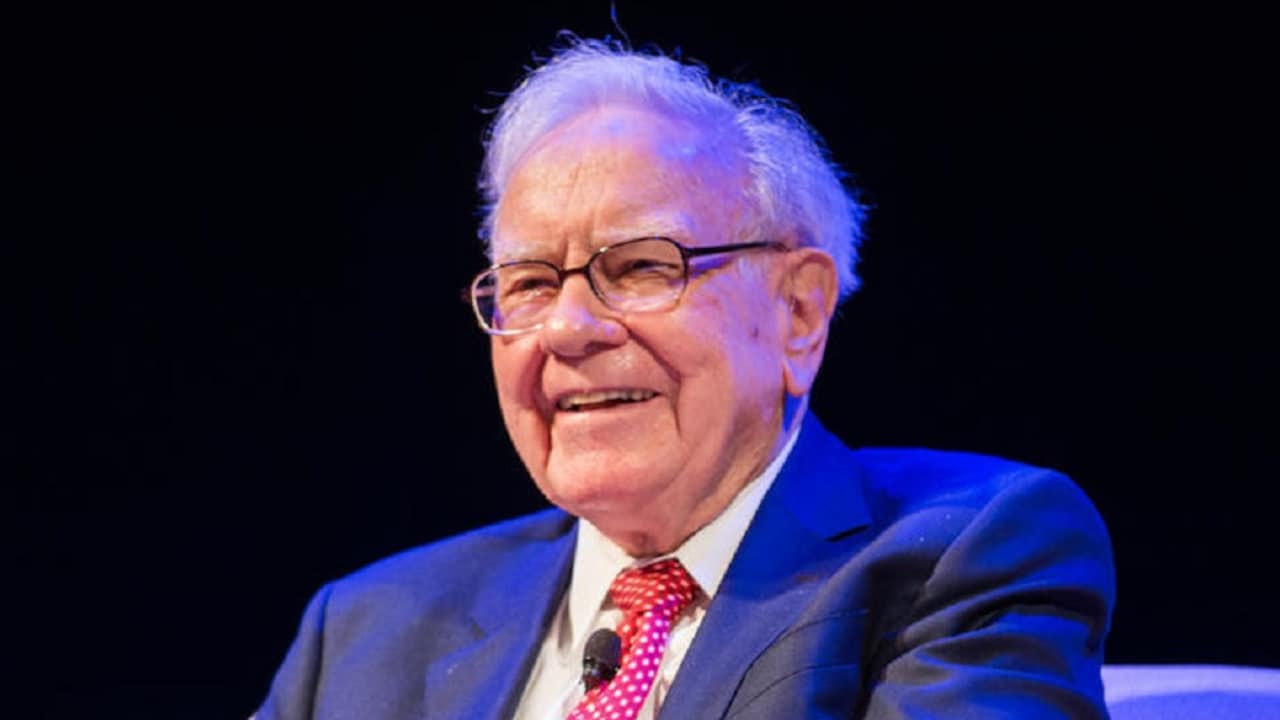
The desk at Kiewit Plaza in Omaha does not look like the command center of a financial empire. It is cluttered with old annual reports, unopened mail, and the quiet detritus of a mind that has spent nearly a century looking at the world through the lens of long-term value. For generations, the man behind that desk was an anchor in a churning sea. When markets panicked, when dot-com bubbles burst or mortgage markets collapsed, the world turned its collective gaze toward Nebraska to see if Warren Buffett was smiling or shaking his head.
Now, the chair is shifting. Learn more on a similar topic: this related article.
The announcement that Warren Buffett is stepping down as the Chairman of Berkshire Hathaway, with his son Howard taking the reins, marks more than a routine executive succession. It is the closing chapter of an American epoch. It is the moment an institution built on folksy wisdom, cherry phosphates, and uncompromising integrity must prove whether its soul can survive the departure of its creator.
The Architecture of Patience
To understand the magnitude of this transition, one must look backward to a time when Wall Street looked very different. When Buffett took control of a failing New England textile manufacturer in 1965, modern high-frequency trading did not exist. Information moved at the speed of print and telephone calls. Fortunes were made not by milliseconds, but by months of deep, solitary reading—leafing through balance sheets like a detective searching for clues in an old archive. More reporting by The Motley Fool delves into related perspectives on the subject.
Buffett taught a restless world how to wait.
He treated stocks not as flashing green and red tickers on a screen, but as living, breathing businesses. If you owned a piece of a bakery, you did not sell your share because it rained on Tuesday. You cared whether people loved the bread. That philosophy turned a struggling textile mill into a sprawling conglomerate spanning insurance, railroads, energy, and retail. It minted multi-millionaires out of ordinary schoolteachers and factory workers in towns like Omaha who simply bought shares and refused to sell them through decades of market storms.
Yet, immortality is not for sale. Even the most legendary minds must eventually yield to time. The question that has haunted Berkshire shareholders for years was never whether Buffett would leave, but how the organism he built would react when he finally let go.
Enter the Farmer and the Conservationist
People expected a Wall Street titan to inherit the crown. They whispered about brilliant portfolio managers, aggressive dealmakers, and corporate strategists who could squeeze every ounce of efficiency from the sprawling empire.
Instead, the board turned to Howard Buffett.
Howard is not a traditional corporate executive. He is a farmer, a conservationist, and a photographer. For years, his primary public identity has been rooted in the soil—studying agricultural practices, fighting global hunger, and driving tractors across hundreds of acres of land. To the casual observer, putting a farmer at the head of one of the world's largest holding companies might seem eccentric, if not reckless.
But this misunderstands the very essence of what Berkshire Hathaway has always been.
Howard Buffett’s role is not to pick stocks or out-trade Wall Street algorithms. That heavy lifting has already been safely delegated to investment managers like Todd Combs and Ted Weschler, while operational oversight of non-insurance businesses rests firmly with Greg Abel, a master allocator and operational genius. Howard’s true mandate is something far more fragile and far more important: guarding the culture.
He is the keeper of the flame.
In private conversations, Warren Buffett has often emphasized that Berkshire’s greatest asset is not its cash pile, its railroad tracks, or its insurance floats. It is its reputation. Trust takes a lifetime to build and an afternoon to lose. By placing his son in the Chairman’s seat, the Buffett family is signaling that Berkshire Hathaway will remain a fortress of decentralized trust, a place where subsidiary CEOs run their companies with autonomy because they know the culture demands integrity above all else.
The Invisible Stakes
Look closely at the mechanics of this transition, and you will see a masterclass in generational planning. Most dynastic corporations collapse under the weight of ego, infighting, or short-term greed. Founders stay too long, clinging to power until a succession crisis tears the enterprise apart.
Buffett did the opposite. He engineered a quiet, deliberate handoff.
The invisible stakes here go far beyond stock prices or quarterly earnings reports. They touch upon a deeper cultural anxiety: can an institution born of an analog era survive in a digital world dominated by algorithms, social media hype, and instant gratification?
When a company becomes too big, it usually loses its soul. Bureaucracy creeps in. Committees form. Risk aversion replaces common sense. Buffett spent decades insulating Berkshire from those corporate diseases. He kept the corporate headquarters astonishingly lean—fewer than thirty people working in a modest office building in Nebraska, completely removed from the frantic noise of Manhattan.
Howard inherits that pristine ecosystem. But he also inherits the pressure to maintain it when the market expects quarterly miracles. Every acquisition will be scrutinized. Every decision will be measured against the impossible shadow of his father.
The Quiet Room
Imagine walking into that office on Kiewit Plaza after the transition is complete. The books are still lined up along the shelves. The portrait of Buffett's father, Howard Buffett Sr., still watches from the wall. The bridge games online might be a little quieter, and the cherry coke might sit on the desk just a fraction longer without being refilled by the man who made it famous.
Markets will fluctuate. Headlines will shriek about the end of an era. Analysts will dissect every decimal point in the next regulatory filing.
But down in Nebraska, the fundamental rhythm of business will likely continue unchanged. A train will rumble across the tracks of BNSF. An insurance agent in Geico will process a claim. A dairy queen will scoop ice cream.
Warren Buffett proved that capitalism does not have to be ruthless to be effective. He proved that patience, honesty, and a long-term view can build a mountain out of pebbles.
As the sun sets over the flat plains of the Midwest, casting long shadows across the quiet streets of Omaha, an old era draws to a close. The Oracle steps back. The chair is filled anew. And the great experiment in patient, principled ownership continues into the unknown, bound not by a ticker symbol, but by a family name and a enduring promise to do things the right way.