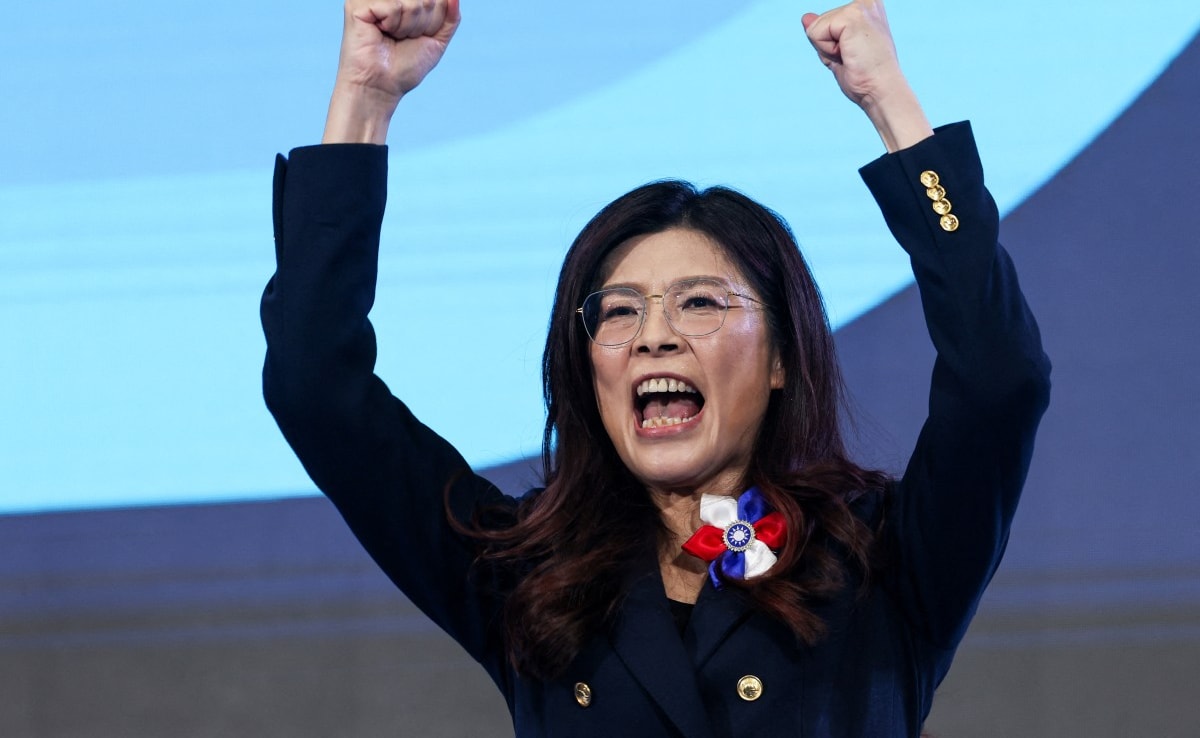
The mainstream media loves a "peace mission" narrative. It's clean. It’s hopeful. It sells papers to people who want to believe that a handshake in a gilded Beijing hall can halt the grinding gears of geopolitical inevitability. When the leader of Taiwan’s opposition party lands on the mainland and calls it a "journey to peace," the press corps eats it up. They frame it as a diplomatic breakthrough or a daring de-escalation.
They are dead wrong.
What we are witnessing isn’t a bridge to stability. It is the tactical erosion of Taiwanese sovereignty under the guise of "dialogue." To call this a peace mission is to ignore the fundamental mechanics of how authoritarian powers absorb neighbors. By treating the Chinese Communist Party (CCP) as a standard negotiating partner rather than an existential threat, the opposition isn't preventing war; they are providing the blueprint for a bloodless annexation that will eventually turn bloody.
The Dialogue Trap
The "lazy consensus" among political commentators is that talking is always better than not talking. This sounds logical. In a boardroom, you negotiate a merger. In a divorce, you talk through the assets. But international relations with an expansionist power don’t follow the rules of a Harvard Business Review case study.
When the opposition visits Beijing, they aren't negotiating from a position of strength. They are participating in a performance. The CCP uses these visits to create a "Good Taiwan/Bad Taiwan" dichotomy.
- The "Good" Taiwan: The side that concedes, accepts the "1992 Consensus," and acknowledges a singular Chinese identity.
- The "Bad" Taiwan: The democratically elected government that insists on autonomy and international recognition.
By engaging in this theater, the opposition validates the CCP’s claim that the current government in Taipei is the sole obstacle to peace. It shifts the blame for regional tension from the aggressor (the one flying fighter jets into the ADIZ) to the defender. This isn't diplomacy. It’s an asymmetric psychological operation designed to fracture Taiwanese society from within. I have seen this play out in corporate hostile takeovers: the buyer bypasses the board to talk to disgruntled shareholders, promising them "synergy" while planning to gut the company and fire the staff.
The Economics of Surrender
Let’s talk about the money. Proponents of these visits often cite trade as the ultimate stabilizer. They argue that closer economic ties make war too expensive. This is the "Golden Arches Theory" of conflict, and it has been debunked by every major conflict of the last century, most recently in Ukraine.
Interdependence is not a shield; it is a leash.
For years, the argument was that Taiwan’s semiconductor dominance—the "Silicon Shield"—would protect it. But the "peace journey" crowd wants to deepen reliance on mainland markets for agricultural exports and tourism. This is strategic insanity. Every time a Taiwanese politician goes to Beijing to "open markets," they are handing over a kill switch.
If your economy depends on the goodwill of a regime that claims ownership of your territory, you aren't a partner. You are a vassal in waiting. The "peace" being offered is a slow-motion economic integration that makes physical resistance impossible when the squeeze eventually comes.
Dismantling the "People Also Ask" Delusions
Does dialogue reduce the risk of a miscalculation?
This is the favorite talking point of the "peace" camp. They argue that open channels prevent accidental war. Brutal truth: The CCP doesn't "miscalculate." Their escalations are calibrated. They know exactly where the line is. "Dialogue" with an opposition party that holds no executive power doesn't clear up confusion; it creates it. It sends mixed signals to Washington and Tokyo about Taiwan’s resolve. If the world thinks Taiwan is ready to fold, the incentive to defend it vanishes.
Can Taiwan maintain the status quo through negotiation?
The status quo is a decaying orbit. Beijing has spent the last decade changing the "status quo" through island building, maritime harassment, and diplomatic isolation. Negotiating for the status quo is like negotiating for a slower-acting poison. You’re still dying; you’re just grateful for the pace.
The Dangerous Logic of the "1992 Consensus"
The backbone of these visits is usually a reaffirmation of the "1992 Consensus"—the idea that there is "one China" with "different interpretations."
Let's call this what it is: a linguistic shell game.
In Beijing’s dictionary, "different interpretations" does not exist. There is one China, and they own it. By clinging to this 30-year-old relic, the opposition is trying to use a map from 1992 to navigate a 2026 minefield. The CCP has spent the last five years explicitly stating that the "one country, two systems" model used for Hong Kong is the only blueprint for Taiwan.
The opposition is essentially walking into a house on fire and trying to discuss the wallpaper. It is a refusal to acknowledge that the CCP’s goals have fundamentally shifted from "coexistence" to "absorption."
The Cost of "Peace"
Imagine a scenario where this "peace journey" succeeds in the way the opposition hopes. Trade flows. Rhetoric cools. Direct flights increase.
Now, look at the fine print.
To maintain that "peace," Taiwan must:
- Self-censor on the global stage.
- Slow down defense procurement to avoid "provoking" the mainland.
- Allow CCP-aligned media and business interests to permeate its domestic politics.
This isn't peace. It’s a managed surrender. Real peace comes from deterrence, not deference. History is littered with the corpses of small nations that thought they could charm their way out of being a meal.
The opposition leader isn’t bringing home a branch of olive. He’s bringing home a Trojan Horse. He is trading Taiwan’s long-term survival for short-term political relevance, hoping the voters back home will mistake the absence of immediate gunfire for the presence of lasting security.
The truly contrarian view isn't that we should stop talking. It’s that we must recognize that talking under these specific conditions is an act of hostility against Taiwan’s own democracy. It provides the CCP with the domestic cover it needs to tell the world that "reunification" is a peaceful internal matter, thereby neutralizing international intervention.
Stop calling it a journey to peace. Start calling it what it is: an audition for the role of regional administrator under a flag that isn't yours.
Deterrence is expensive, loud, and uncomfortable. It requires buying missiles instead of building malls. But deterrence is the only thing that keeps the peace. Handshakes in Beijing are just the prelude to the silence that follows a takeover.