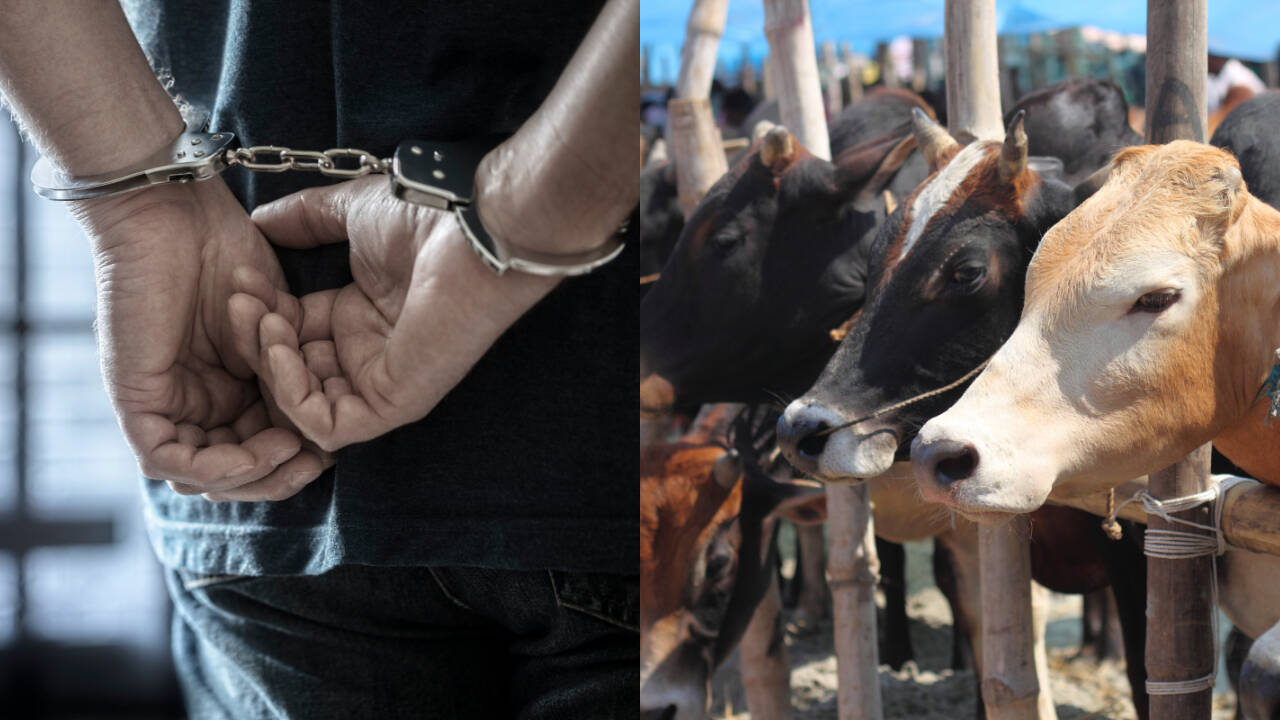
Two brothers in Texas convinced roughly 2,200 people to hand over $240 million for cattle that didn't exist.
Let that sink in for a second.
When headlines break about a massive Texas cattle investment fraud, people immediately picture naive city slickers getting hustled by smooth-talking cowboys. That's completely backwards. In my years tracking agricultural finance and alternative asset scams, the biggest victims of livestock Ponzi schemes aren't clueless outsiders. They're doctors, retirees, seasoned business owners, and folks who actually understand how commodities work—or at least think they do.
The brothers behind this $240 million scheme didn't just get lucky. They weaponized a very specific blind spot in the American investment market. Following their federal conviction for orchestrating one of the largest cattle-related investment frauds in U.S. history, the real story isn't just that they stole millions. It's how easily an unregulated slice of agriculture fooled thousands of people who thought they were buying into hard, tangible assets.
Why Cattle Investments Are a Magnet for Massive Fraud
If you've ever looked into alternative investments outside the stock market, you know the pitch. Stocks feel abstract. Crypto feels like vapor. Gold sits in a vault doing nothing.
Cows, on the other hand, eat grass, gain weight, and sell for cash.
That psychological appeal is exactly what makes livestock scams so lethal. Investors want something real they can picture standing in a pasture. When fraudsters pitch a cattle investment program, they lean heavily into the romance and apparent simplicity of ranching. They tell you that global beef demand is rising, supply chains are tight, and your money goes directly toward buying head of cattle that will be raised, fattened, and sold at a guaranteed profit.
Here is the problem. Almost nobody who invests in these programs ever drives out to a feedlot in West Texas to count ear tags.
Even if you did show up at a ranch, how would you know which steer belongs to you? You wouldn't. Cattle move constantly between ranches, backgrounding operations, and commercial feedlots. Ownership records in the livestock industry rely heavily on trust, brand inspections, and paper manifests that are absurdly easy for a dishonest operator to forge or double-pledge.
In the case of the Texas brothers convicted of defrauding 2,200 victims, the mechanics followed a classic, brutal playbook. Prosecutors laid out how the operation promised steady, double-digit returns backed by real cattle herds. Early investors got paid on time, which created a wave of word-of-mouth referrals across churches, country clubs, and tight-knit professional networks. Meanwhile, the actual herd size never came close to matching the hundreds of millions of dollars flowing into the company's bank accounts.
How the $240 Million Texas Scheme Actually Worked
Most Ponzi schemes collapse within a couple of years because the math catches up to them too fast. Getting to $240 million across 2,200 investors requires serious operational theater.
You can't just rent a post office box and take wire transfers. You have to look like a legitimate agribusiness powerhouse. That means owning some real land, running some actual cattle through local auctions, and flashing a lifestyle that screams generational ranching wealth.
From what federal court records and Department of Justice filings show in major Texas livestock prosecutions, these schemes survive by exploiting the gap between securities law and agricultural contracts.
When someone sells you a joint venture agreement, a cattle management contract, or a profit-sharing arrangement on livestock, they rarely register it with the U.S. Securities and Exchange Commission (SEC). Why? Because registering a security forces you to open your books, undergo independent audits, and disclose every single risk factor in plain English. Instead, fraudsters frame the deal as a direct purchase of physical property—specifically, cattle—paired with a management service agreement.
It's a clever legal dodge, at least until federal investigators kick down the door.
Under the Howey Test—the Supreme Court standard that determines what counts as an investment contract—if you hand over money with the expectation of profits derived from someone else's efforts, you're buying a security. Calling it a "cattle care agreement" doesn't change the law. Yet promoters routinely tell investors that SEC rules don't apply because "you own the cows."
The Illusion of Physical Collateral
Let's talk about the biggest lie in alternative investing. Promoters love saying your principal is "100% asset-backed."
In theory, if a cattle operator goes bankrupt, you still own the steers, right? You can just sell them and get your money back.
In reality, when a $240 million fraud implodes, investigators usually find one of three things:
- Phantom herds. The cattle simply never existed. The ear tag numbers on your quarterly statement were typed up on a spreadsheet in an office.
- Double-pledged collateral. The same 5,000 head of cattle were "sold" to ten different investor groups and pledged as collateral to a commercial agricultural bank for a line of credit. When the dust settles, the commercial bank holds a senior perfected lien under the Uniform Commercial Code, leaving individual investors with zero legal claim to the animals.
- Commingled funds. Investor cash meant for buying feeder calves went straight toward paying off earlier investors, funding personal real estate, buying private planes, or covering massive operating losses from terrible commodity trades.
Honestly, the moment a promoter tells you an agricultural investment is "risk-free" or offers "guaranteed fixed returns," you should run. Anyone who has spent ten minutes around real cattle ranching knows that nature doesn't do fixed returns. Droughts wipe out pastures. Feed prices spike overnight. Bovine respiratory disease can tear through a lot in a week. Market prices swing wildly based on packer capacity and export tariffs.
Real ranchers sweat every single season. Scam artists promise smooth, predictable quarterly checks.
What Investigators and Regulators Miss Until It's Too Late
People always ask how a scheme reaches 2,200 victims before law enforcement steps in. Shouldn't someone have noticed $240 million moving around?
The truth is uncomfortable. Financial regulators are reactive by design.
Neither the SEC nor the Commodity Futures Trading Commission (CFTC) has agents patrolling Texas county roads counting livestock. Regulators rely on tips, whistleblower complaints, and suspicious activity reports from banks. As long as new investor money keeps pouring in to pay existing investors their promised returns, nobody complains. Everybody thinks they found a golden goose.
Bankers rarely blow the whistle early either. To a regional bank, a cattle company moving tens of millions of dollars through commercial checking accounts looks like a booming agricultural success story. Large wire transfers are completely normal in the beef industry, where a single transaction for a few thousand head of feeder cattle easily runs into the millions.
By the time a few investors notice late payments and call the Texas Attorney General or the FBI, the money is already gone. In large-scale frauds like this one, federal prosecutors typically recover only a fraction of the $240 million through asset forfeitures—seizing ranches, luxury vehicles, bank accounts, and whatever actual livestock remain on the property. Victims end up waiting years for court-appointed receivers to liquidate assets and distribute pennies on the dollar.
Red Flags That Expose Livestock and Commodity Scams Immediately
If you're looking at private agricultural deals, timber investments, oil and gas working interests, or cattle partnerships, you need a ruthless filter. I've seen too many smart people get burned because they trusted a handshake, a shared church pew, or a slick brochure full of sunset photos over a Texas pasture.
Watch for these specific warning signs before wiring a dime:
- Guaranteed or smoothed-out returns. Real agriculture is volatile. If a prospectus promises a flat 10%, 12%, or 15% return regardless of live cattle futures on the Chicago Mercantile Exchange, it's a Ponzi structure.
- No independent third-party audit. If the company refuses to provide financial statements audited by a reputable, independent CPA firm—not a local bookkeeper on their payroll—walk away immediately.
- Lack of UCC lien searches. If you supposedly own physical cattle, your ownership or security interest should be verifiable. Without proper Uniform Commercial Code filings and brand inspections verified by an independent third party, you don't own anything.
- Affinity pressure. Fraudsters target tight-knit groups—retirees, medical professionals, religious congregations, or agricultural associations—because people lower their guard when a friend says, "I've been getting paid every quarter for three years."
- Unregistered securities disguised as property sales. Ask directly whether the offering is registered with the SEC or filed under a legitimate Regulation D exemption (like Rule 506(b) or 506(c)). Check the promoters on FINRA BrokerCheck and the SEC's EDGAR database.
What To Do If You Suspect Fraud or Want to Vet an Alternative Deal
Don't rely on the promoter's references. Every Ponzi operator has a list of happy early investors ready to vouch for them—because those people are being paid with new victims' money.
Start by verifying the legal entity through the Secretary of State in the state where the business operates, such as the Texas Secretary of State, and look for any history of civil lawsuits, tax liens, or regulatory enforcement actions. If you're dealing with livestock or commodities, check whether the firm or its principals have ever been sanctioned by the CFTC, the SEC, or the USDA's Packers and Stockyards Division.
If you've already invested in a cattle or agricultural program and payments have suddenly slowed down, excuses about "weather delays," "bank processing issues," or "software upgrades" are classic signs of an imminent collapse. Document every contract, wire confirmation, and account statement immediately. Contact a securities fraud attorney and file a formal tip with the SEC's Office of the Whistleblower or the FBI's Internet Crime Complaint Center before the remaining assets disappear.